

TL;DR:
- Strong rental descriptions help tenants visualize their life in the unit by using specific details and lifestyle proof.
- A three-layer structure—hook, practical details, and lifestyle imagery—enhances engagement and inquiry quality while ensuring Fair Housing compliance.
Most landlords spend real time and money on photos, lease agreements, and property maintenance, then write their rental description in ten minutes and wonder why the inquiries are thin or wrong. The reality is that examples of strong rental descriptions consistently outperform vague, generic listings because they do one thing most ads skip: they help the right tenant picture their life in your unit before they ever schedule a tour. This article gives you a working framework, four detailed description examples you can model directly, a side-by-side comparison, and practical tips to keep your listings performing in 2026 and beyond.
Table of Contents
- Key takeaways
- What makes examples of strong rental descriptions work
- Four detailed examples with explanations
- Comparing the four description styles
- Practical tips for writing and maintaining great rental listings
- My honest take on why most rental listings fail
- How Room Rental Manager helps you put this into practice
- FAQ
Key takeaways
| Point | Details |
|---|---|
| Layered structure converts | Use a hook, functional details, and lifestyle proof to keep readers engaged from the first line to the last. |
| Specificity beats adjectives | Exact move-in dates, parking details, and walk times build more trust than words like "convenient" or "spacious." |
| Compliance protects you | Neutral, factual language keeps your listing Fair Housing Act compliant and widens your qualified applicant pool. |
| Headlines drive clicks | Property type plus standout feature plus location produces higher click-through rates than generic titles. |
| Iteration improves results | Tracking inquiry quality over time tells you exactly which description elements are and are not working. |
What makes examples of strong rental descriptions work
Before you look at any specific ad copy, you need a framework for evaluating what you read and write. Industry professionals sometimes call this "property copy" or "listing narrative," but the underlying mechanics apply whether you rent single rooms or entire homes.
The three-layer structure
Top-performing rental descriptions follow a consistent pattern: a hook that earns attention, practical details that answer the reader's functional questions, and lifestyle proof that makes the tenant feel the space before visiting. Skip any layer and the listing either bores the reader or leaves them with unanswered questions that stop them from submitting an inquiry.
Language precision over generic praise
Phrases like "great location" and "cozy space" tell a tenant almost nothing. A 12-minute walk to the Green Line tells them everything. Vivid, precise language in your headline and opening prevents skimming and keeps the reader engaged long enough to convert. Replace adjectives with facts wherever possible.
Friction reducers
Tenants think in terms of daily routines, not square footage. Descriptions that call out free laundry, parking, and transit access reduce the mental friction of imagining life in your unit. Place your strongest friction reducers near the top of the listing. This is what some property marketing professionals refer to as a "friction ladder," where the biggest convenience wins appear first, followed by secondary details.
Fair Housing Act compliance
This one is non-negotiable. Neutral, factual descriptions protect you legally and widen your qualified applicant pool. Avoid any phrasing that implies a preference for or against someone based on race, religion, sex, familial status, disability, or national origin. That includes indirect signals like "perfect for young professionals" or "quiet neighborhood for mature tenants." Describe the property. Let the applicant decide if it fits their life.
SEO and platform searchability
Rental platforms use the text in your listing to match it to search queries. Mentioning the neighborhood name, nearby transit, and specific amenities helps your listing surface when the right tenant is searching. This is not about stuffing in keywords. It is about being specific enough that the words you use naturally overlap with what your ideal applicant types into a search bar.
- Lead with your strongest asset in the headline and first sentence
- Specify exact bedroom and bathroom count, square footage when known, and floor level
- Name the neighborhood, not just the city
- List parking, laundry, and pet policy explicitly rather than leaving them to filter searches
- State move-in date and lease length to reduce back-and-forth before the first contact
Pro Tip: Keep house rules factual and upfront. Stating "no smoking anywhere on the property" or "one pet under 50 pounds permitted with a $300 deposit" is clear and compliant, while phrasing like "looking for responsible adults" opens you to fair housing scrutiny.
Four detailed examples with explanations
The following descriptions are modeled on real listing patterns that consistently generate quality inquiries. Each one is built on the layered structure above, and each explanation breaks down exactly why the copy works.
1. Urban apartment with transit access
Headline: Sunlit 2-Bed, 1-Bath in Midtown with Private Parking and Walk-Score 95
Natural light floods this 850-square-foot apartment from the east-facing living room through to the renovated kitchen with quartz counters and stainless appliances. One assigned parking spot is included in rent. The building provides keycard laundry on every floor. You are a 9-minute walk to the Metro and two blocks from the weekend farmers market on Oak Street. Available August 1. Lease term: 12 months. No smoking. One cat or small dog permitted with a $350 deposit.
Why it works: The headline follows the proven pattern of property type plus standout feature plus location, which makes it specific and searchable. The first sentence creates a sensory image without using inflated adjectives. Parking and laundry are placed early because they answer the two questions most urban renters ask first. The move-in date and lease term eliminate two of the most common back-and-forth exchanges. Pet policy is factual and specific, not coded language.
2. Single-family home with outdoor space and school proximity
Headline: 3-Bed, 2-Bath Home with Fenced Backyard in Lincoln Park, Available Sept 1
This 1,400-square-foot home sits on a quiet residential street with a fully fenced backyard, two-car garage, and a covered front porch. The kitchen was updated in 2023 with new cabinetry and a gas range. Central air and heat. In-unit washer and dryer. Lincoln Elementary is a 0.6-mile walk, and the district park with a playground is one block east. Rent is $2,200 per month. Security deposit: one month's rent. Available September 1 for a 12-month lease. No smoking. Pets considered on a case-by-case basis.
Why it works: Notice what this description does not say. It does not say "great for families" or "perfect for kids," because those phrases reference familial status and can create fair housing exposure. Instead, it describes factual attributes: a fenced yard, a school's walking distance, a park with a playground. Separating marketing claims from eligibility language lets tenants draw their own conclusions while keeping the listing fully compliant. The 2023 kitchen update is a specific detail that signals the landlord maintains the property.
3. Pet-friendly unit near green space
Headline: Bright 1-Bed Near Riverside Dog Park, Parking and Laundry Included
A sun-filled one-bedroom on the second floor of a well-maintained six-unit building, one block from Riverside Park and its off-leash dog area. Your rent covers one covered parking spot and in-unit washer/dryer hookups. Heat and water are also included. The apartment has refinished hardwood floors, an updated bathroom with a walk-in shower, and a deep closet in the bedroom. Transit line 42 stops half a block away. Available October 15. Lease: 12 months. Cats and dogs welcome, up to two pets, combined weight under 80 pounds. $400 pet deposit. No smoking.
Why it works: This listing leads with the pet benefit in the headline, which immediately self-selects the right audience and filters out applicants who would be bothered by pets. Calling out the off-leash park by name tells the reader you know the neighborhood. Listing heat and water as included removes a common financial anxiety early. The pet policy is detailed enough that a tenant can immediately assess whether their situation qualifies. Posting clear upfront house rules like these reduces mismatch inquiries significantly.
4. Luxury condo with lifestyle-forward copy
Headline: 2-Bed Condo with Rooftop Terrace and Concierge in Downtown Arts District
Perched on the 14th floor of a full-service building, this two-bedroom, two-bathroom condo delivers city views from floor-to-ceiling windows in the open living and dining area. The chef's kitchen features a gas range, wine fridge, and waterfall island. Building amenities include a fitness center, rooftop terrace with grills, a 24-hour concierge, and two assigned underground parking spaces. In-unit laundry. One block from the Arts District gallery corridor and three blocks from the central business district. Available November 1. 12 or 24-month lease terms available. Income verification and credit check required. No smoking. No pets.
Why it works: This description earns the right to use elevated language because every claim is specific. "Floor-to-ceiling windows," "waterfall island," and "rooftop terrace with grills" are concrete details, not vague luxury claims. Blending vivid hooks with clear facts is what prevents a high-end listing from reading like a brochure with no substance. Stating income verification and credit check requirements upfront is both legally sound and a time-saver. No pets and no smoking are stated clearly without editorial commentary.
Comparing the four description styles
The table below lets you quickly assess how each example differs in approach, compliance posture, and the type of inquiries it is built to attract.
| Feature | Urban apartment | Family home | Pet-friendly unit | Luxury condo |
|---|---|---|---|---|
| Headline strategy | Feature plus walkability score | Backyard plus neighborhood name | Pet benefit leads, park named | Lifestyle amenity plus district |
| Top friction reducer | Included parking and transit | Fenced yard, in-unit laundry | Pet welcome, park one block away | Two parking spots and concierge |
| Lifestyle proof | Walk to Metro and farmers market | Updated kitchen, covered porch | Off-leash park, hardwood floors | City views, arts district access |
| Fair housing posture | Fully neutral and factual | Property facts only, no demographic coding | Factual pet policy, no tenant type implied | Requirements stated objectively |
| Tenant self-selection tool | Transit proximity, no pet restriction | Yard and school proximity by distance | Pet deposit details, weight limit | Income verification stated upfront |
Pro Tip: When your listing matches the details you have entered into platform filters, such as pet policy, laundry type, and parking count, inquiry quality improves because you attract tenants who already know they qualify.
Practical tips for writing and maintaining great rental listings
Knowing what strong ads look like is only part of the job. You also need a repeatable process for writing them and keeping them current. These practices apply whether you manage one unit or fifty.
Start with your headline
Your headline is your first filter. It determines who clicks and who scrolls past. Use the formula that works: property type, standout feature, and location. "Two-Bed Near Green Line, Garage Included" outperforms "2BR Apartment For Rent" every time. Spend more time on your headline than on any single sentence in the body.
Use the friction ladder in your opening paragraph
Lead with the amenities that solve the most common tenant concerns. Parking, laundry, and utilities included should appear in the first 50 words if they apply. Specific logistical details like move-in dates and walk times do more for tenant trust than any amount of marketing language.
Describe experience, not dimensions
Tenants imagine daily routines more vividly than they process raw numbers. "Morning coffee on the south-facing balcony" works harder than "140-square-foot balcony." Both can be true at the same time. Pair your facts with brief experiential context.
Keep eligibility language separate and neutral
Your listing body is for marketing. Your application process is for eligibility screening. Avoid references to who the tenant "should be" in your listing copy. State requirements like income thresholds and credit minimums factually, in a dedicated section or in your application materials, not embedded in your lifestyle copy.
Update your listings based on real feedback
If the same question keeps appearing in your inquiries, your listing is missing that answer. Add it. If you are getting a high volume of unqualified inquiries, your friction reducers or eligibility criteria need to be more explicit. Treat your listing copy as a living document tied to your inquiry data.
- Review your listing every time a unit turns over
- Check competitor listings in your market to see what language and features they are leading with
- A/B test two different headlines when relisting to see which generates more qualified clicks
- Update seasonal details like utilities included during winter months
- Confirm that your platform filter settings match your narrative text exactly
Pro Tip: For quality lead guidance on what information your listing should include before publishing, walk through your own listing the way a skeptical tenant would. Ask: "What question would I still have after reading this?" Then answer it.
My honest take on why most rental listings fail
I've spent years looking at rental ads across platforms, and the most common failure I see has nothing to do with grammar or formatting. It is a fundamental orientation problem. Most landlords write listings about the property. Strong landlords write listings for the tenant.
The difference sounds small. In practice, it produces completely different copy. A property-focused description says "large living room with new carpet." A tenant-focused description says "the living room is big enough for a sectional and a home office setup, with new carpet throughout." Same facts. Entirely different experience for the reader.
I've also seen landlords get into trouble not because they intended to discriminate, but because they copied phrasing from an old listing without thinking about what it implies. Phrases like "great for students" or "quiet professional building" sound harmless but they are textbook fair housing red flags. The safest and most effective approach is the same: describe what the property has and does. Let the applicant decide if their life fits there.
The other thing I would push back on is the idea that updating listing copy is too much work. In my experience, the landlords who track their inquiry quality and revise their descriptions accordingly fill vacancies faster and deal with far fewer mismatched tenants. Your listing is not a static document. It is your first conversation with every future tenant. It deserves the same attention you would give any important conversation.
The landlords who treat their listing copy as a strategic tool, rather than a checkbox, are consistently the ones who have shorter vacancy windows and fewer tenant conflicts from the start.
— JAMES
How Room Rental Manager helps you put this into practice
Writing a great description is only the first step. Getting it in front of the right tenants, tracking who responds, and managing follow-up without losing threads across texts, emails, and platform messages is where most landlords lose time and leads.
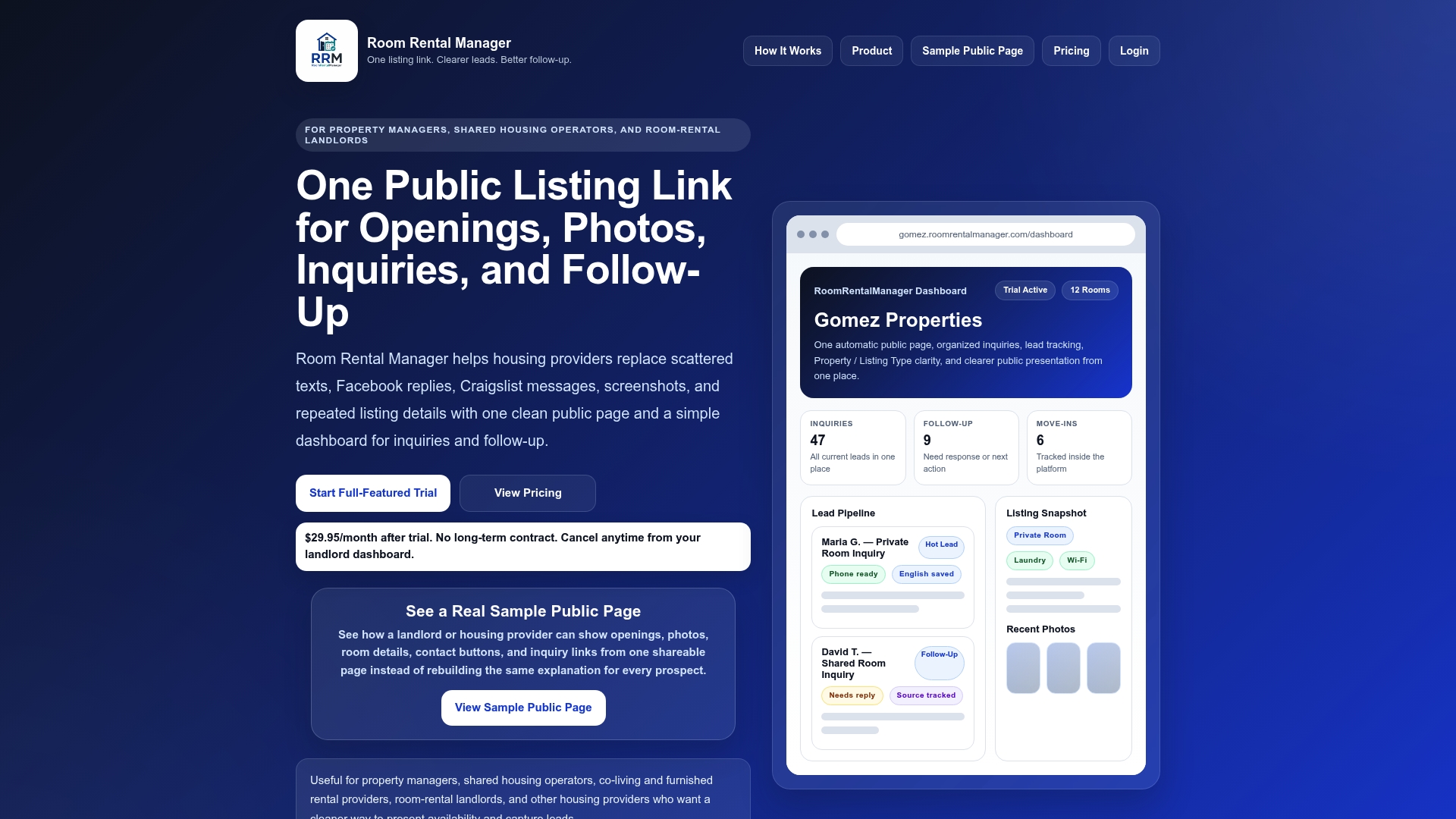
Room Rental Manager gives you one clean public listing page where your description, photos, amenities, and contact options all live in one place. Share one link instead of retyping your listing details across Craigslist, Facebook Marketplace, and a dozen message threads. The platform also includes rental inquiry tracking so you can see where your best leads come from and which listing elements are converting. When it is time to update your description, you change it once and every shared link reflects the update automatically. Explore the full set of landlord tools at Room Rental Manager's resources to see what a professional listing workflow looks like when everything runs from one dashboard.
FAQ
What should every strong rental description include?
Every effective description needs a specific headline, the key amenities near the top, a clear move-in date and lease term, and an explicit pet and smoking policy. Specificity in every detail reduces unqualified inquiries and builds tenant trust before the first contact.
How do I write a rental description that complies with fair housing laws?
Stick to factual property descriptions and avoid any language that implies a preference for or against a tenant based on protected characteristics like familial status, religion, or national origin. Describe what the property has, state eligibility requirements separately in your application, and avoid phrases like "perfect for couples" or "ideal for students."
How long should a rental listing description be?
Most high-performing rental descriptions run between 100 and 200 words in the body, plus a headline. Long enough to cover the hook, key amenities, logistics, and house rules, but short enough that a renter can read it in under 60 seconds without skimming past the important parts.
How often should I update my rental listing description?
Update your listing every time a unit turns over, and revise it whenever you notice a pattern in the questions tenants ask during initial inquiries. Recurring questions signal that your listing is missing information tenants need to decide whether to apply.
Does the listing headline really matter that much?
Yes. Headlines that combine property type, a standout feature, and location consistently produce higher engagement than generic titles. A headline like "Sunlit 2-Bed with Parking Near Transit" tells a tenant immediately whether the listing fits their needs, which filters for quality before they even read the body copy.