
TL;DR:
- A furnished rental description should feature specific, measurable details about furnishings, fees, and policies to attract qualified tenants. Using clear structure, bullet points, and targeted language tailored to renter types enhances conversion and trust. Transparency and concise inventory lists are key to reducing inquiries and filling vacancies efficiently.
A furnished rental description is a structured listing that communicates turnkey living benefits, specific furnishing details, and clear policies to help renters make fast, confident decisions. The best furnished rental description examples share one trait: they replace vague claims with concrete facts. Instead of "cozy and modern," they say "queen bed, blackout curtains, fully equipped kitchen with a drip coffee maker." This guide breaks down exactly what to include, shows you real examples across property types, and explains the specific language that attracts qualified renters and cuts down on back-and-forth messages.
1. What makes a furnished rental description high-converting
A high-converting listing follows a logical structure: headline with price and basics, opening hook, property specs, amenities, location perks, house rules, and a clear call-to-action. Each element serves a specific purpose. Skip one and you create a gap that forces renters to ask questions, which slows down your lead pipeline.
The headline is your first filter. It should include the monthly rent, number of bedrooms and bathrooms, property type, and one location highlight. "Furnished 1BR/1BA Apartment in Midtown Atlanta, $1,850/mo, All Utilities Included" tells a renter everything they need to decide whether to keep reading. A headline that says "Nice furnished apartment available" tells them nothing.
Your opening hook should emphasize the turnkey outcome. Describing rentals as "turnkey" with specific furnishing details outperforms generic "furnished" language because it signals move-in readiness. Phrases like "plush queen bed," "fully equipped kitchen," and "in-unit washer and dryer" answer the practical questions renters carry into every search.
Pro Tip: Write your opening hook as if the renter is standing outside the door with their suitcase. What are the first three things they need to know before they step inside?
The amenities section works best as a scannable bullet list. Structured, skimmable descriptions with bullet points convert better than dense paragraphs full of vague adjectives. Short, benefit-driven lines keep renters engaged and make your listing easier to compare against others.
2. How to write for professional tenants like travel nurses
Travel nurses and corporate relocators are the most active segment of the mid-term furnished rental market. They search with specific criteria and make decisions fast, often within 24 to 48 hours of finding a listing. Your description needs to match their decision process, not a general audience's browsing habits.
Furnished descriptions targeting travel nurses should emphasize the following decision-driver keywords:
- Utilities included (specify which ones: electric, water, gas, WiFi)
- Pet-friendly with weight limits and deposit amounts stated clearly
- In-unit laundry (not shared, not on-site, in-unit)
- Blackout curtains or soundproofing features for shift workers
- Proximity to medical facilities with a specific distance or drive time
- Flexible lease terms aligned with 13-week contract cycles
Pricing transparency is non-negotiable for this audience. Travel nurses work on stipends with fixed housing allowances. If your all-in monthly cost is unclear, they move on. State the base rent, what utilities are included, the security deposit amount, and any additional fees on the first read. Burying fees in a later message is the fastest way to lose a qualified lead.
Understanding utility inclusions and fee structures helps renters evaluate whether a furnished rental fits their budget before they ever contact you. Spell it out in the listing so the renter can do the math themselves.
Work-related amenities matter more than aesthetic ones for this group. A dedicated desk with a monitor, fast WiFi with a stated speed, and a quiet building policy will outperform a description that leads with "stylish decor" every time.
3. Furnished rental description examples with breakdowns
The following examples cover three common property types. Each one demonstrates the structural principles from Section 1 applied to a real scenario.
Example 1: Studio apartment for a travel nurse
"Furnished Studio, $1,600/mo All-In, 0.8 Miles from Tampa General Hospital. Move-in ready studio with a full-size bed, blackout curtains, and a fully stocked kitchen including a coffee maker, toaster, and cookware set. In-unit washer/dryer. High-speed WiFi (300 Mbps) included. Quiet building, no parties. Available January 15 for a minimum 30-day stay. Security deposit: $1,600. No smoking. Small pets under 25 lbs welcome with a $200 pet deposit."
Why it works: The headline leads with price and proximity to a named hospital. The body answers the top five questions a travel nurse asks before reaching out: what's included, is there laundry, what's the WiFi speed, what are the rules, and what does it actually cost. Room-by-room bed and bath details allow renters to self-screen accurately, which means fewer mismatched inquiries for you.
Example 2: Two-bedroom serviced apartment for corporate relocation
"Furnished 2BR/2BA Apartment in Downtown Denver, $3,200/mo. Two queen bedrooms, each with a closet and blackout shades. Two full bathrooms. Open-plan living area with a 55-inch TV, sofa, and dining table for four. Fully equipped kitchen: dishwasher, microwave, full-size refrigerator, and cookware. In-unit laundry. Covered parking included. Building gym and rooftop access. Utilities included except electricity (avg. $80/mo). Available March 1, minimum 60-day lease. Security deposit: one month's rent."
Why it works: This description covers the layout room by room, which is exactly what a corporate renter or HR coordinator needs to confirm the space works for two people. Specifying "two queen bedrooms, each with a closet" removes a common source of follow-up questions. Noting the average electricity cost shows transparency without hiding a variable expense.
Example 3: Vacation home listing for short-term guests
"Furnished 3BR/2BA Beach House in Gulf Shores, AL, $285/night (3-night minimum). Three bedrooms: one king, two queens. Two full bathrooms. Fully equipped kitchen with a gas range, blender, and full cookware set. Private backyard with a gas grill. Outdoor shower. Parking for two vehicles. No pets. No smoking indoors. Check-in: 4 PM, Check-out: 10 AM. Cleaning fee: $150. Sleeps 6."
Why it works: Holiday rental examples like this one lead with the nightly rate and minimum stay upfront, which filters out guests who cannot meet the minimum before they even read further. The bed configuration answers the most common question for group travelers. The cleaning fee is stated clearly, not buried in a checkout message.
Pro Tip: For vacation home listings, always state the maximum occupancy. "Sleeps 6" prevents the 10-person group from booking a 6-person property and disputing the rules later.
| Property type | Key detail to lead with | Most common renter question answered |
|---|---|---|
| Studio for travel nurse | Price and hospital proximity | Is laundry in-unit? |
| 2BR serviced apartment | Room-by-room layout | Does it work for two people? |
| Vacation home | Nightly rate and bed config | What does it sleep and cost? |
4. Common pitfalls that kill renter trust
Most furnished rental descriptions fail not because they say the wrong things, but because they say nothing specific at all. Here are the most common mistakes and how to fix each one.
1. Using adjectives instead of facts. "Cozy," "charming," and "modern" are not descriptions. They are opinions. Replace every adjective with a measurable detail. "Cozy" becomes "650 sq ft, one bedroom, south-facing windows." "Modern kitchen" becomes "stainless steel appliances, quartz countertops, and a dishwasher."
2. Hiding fees and policies. Transparency on lease terms, move-in dates, utilities, and house rules reduces mismatched inquiries and builds trust. A renter who discovers a $300 cleaning fee after asking for details feels misled. State every fee in the listing itself.
3. Ignoring your target renter's specific needs. A description written for a general audience will not convert a travel nurse or a corporate relocator. Decision-driver language adapted to professional renters increases qualified leads. Know who you are writing for and address their specific checklist.
4. Writing in dense paragraphs. A wall of text signals effort for the reader. Renters scan listings before they read them. If your amenities are buried in a paragraph, they will not be found. Use bullet points for amenities, house rules, and fees.
5. Omitting the call-to-action. Every listing should end with a clear next step. "Message me to schedule a showing" or "Apply through the link below" tells the renter exactly what to do. Listings without a CTA leave renters uncertain and reduce follow-through.
6. Listing decor style instead of practical inventory. Many furnished listings fail because they describe aesthetic choices rather than decision-grade specifics like bed size, kitchen appliance completeness, and bathroom layout. A renter does not care that the throw pillows are "boho chic." They care whether there is a coffee maker and enough closet space for a 13-week stay.
5. How to optimize your listing for search and lead generation
Search visibility for furnished apartment listings depends on the same principles as any content: use the words your audience searches for, structure the content for easy reading, and make the next step obvious.
Start with your headline and first two sentences. These are the most indexed parts of any listing on platforms like Furnished Finder, Zillow, or your own website. Include terms like "furnished apartment," "utilities included," "short-term rental," and your city or neighborhood name in the first 50 words. Do not save them for the middle of the description.
Use structured formatting throughout:
- Lead with the most important information (price, location, availability)
- Use bullet points for amenities and house rules
- Break specs into a dedicated section with clear labels (bedrooms, bathrooms, kitchen, parking)
- End with a CTA that includes your preferred contact method
Platform-specific optimization matters. Furnished Finder, for example, uses category tags for amenities. Filling out every available tag increases your listing's visibility in filtered searches. A renter searching for "pet-friendly furnished apartment near hospital" will only find your listing if those attributes are tagged, not just mentioned in the text.
Structuring your rental listing to highlight ready-to-live benefits and concrete inclusions directly improves lead quality. Renters who arrive at your listing already knowing the price, layout, and policies are more likely to inquire and more likely to convert.
Pro Tip: Include your phone number or a direct inquiry link at the end of every listing. Renters who are ready to move fast will not hunt for your contact information.
Filling vacancies faster comes down to removing every obstacle between a renter's first read and their first message to you.
Key takeaways
Strong furnished rental descriptions convert because they replace vague claims with specific, scannable facts that answer renter questions before they are asked.
| Point | Details |
|---|---|
| Lead with concrete details | Replace adjectives like "cozy" with measurable facts: bed size, square footage, appliance list. |
| State all fees upfront | Include rent, deposit, utilities, and any extra fees in the listing to build trust and filter leads. |
| Write for your specific renter | Travel nurses, corporate relocators, and vacation guests each need different decision-driver language. |
| Use scannable formatting | Bullet points for amenities and house rules outperform dense paragraphs for renter engagement. |
| End with a clear CTA | Every listing needs a stated next step so qualified renters know exactly how to reach you. |
What I've learned writing rental descriptions that actually convert
I have reviewed hundreds of furnished rental listings over the years, and the gap between the ones that generate steady inquiries and the ones that sit vacant for weeks is almost never about the property itself. It is always about the description.
The most common mistake I see is what I call "decorator language." Owners write about the vibe of a space instead of the inventory in it. They say "warm and inviting living room" when they should say "sectional sofa, 65-inch TV, and a reading lamp by the window." The renter cannot sit on a vibe. They can sit on a sectional.
The second pattern I have noticed is that owners treat house rules as an afterthought, something to share after a renter expresses interest. This is backwards. Explicitly stating what is included in rent and house rules filters out unsuitable renters and increases conversion with the right ones. A no-smoking, no-parties policy stated upfront does not scare off good renters. It reassures them that the building is well-managed.
In 2026, renter expectations for furnished rentals have shifted noticeably toward specificity. Renters have been burned by listings that said "fully furnished" and arrived to find a mattress on the floor and a microwave. They now look for inventory-level detail: how many plates, what size bed, is there a desk, does the WiFi have a stated speed. The listings that answer these questions without being asked are the ones that close fastest.
The balance I aim for is persuasion through facts, not through adjectives. Every sentence in a description should either answer a question the renter has or give them a reason to move forward. If it does neither, cut it.
— JAMES
How Room Rental Manager simplifies your listing process
Managing furnished rental descriptions across multiple platforms means repeating the same information in texts, emails, and messages dozens of times. Room Rental Manager solves this by giving you one clean public listing page where your photos, property details, pricing, house rules, and contact options all live in one place.
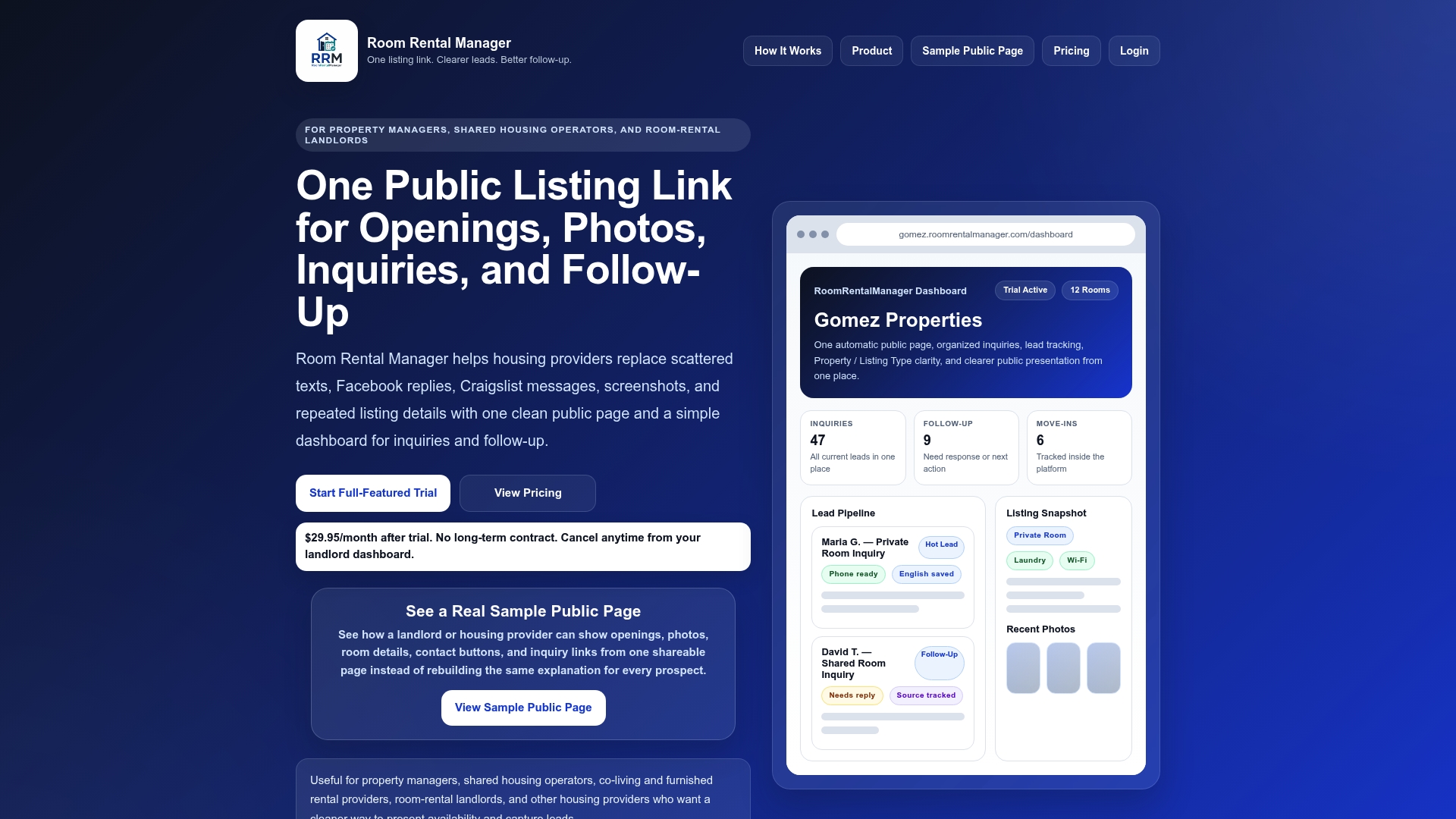
Instead of copying and pasting your description into every inquiry channel, you share one link. Renters get the full picture immediately, and you capture their interest, track where leads come from, and manage follow-up from a single dashboard. The platform is built specifically for furnished rental providers and room rental landlords who want to present their properties professionally without the administrative overhead. Explore the full landlord resource library to find templates, guides, and tools that support every stage of your listing process.
FAQ
What should a furnished rental description always include?
A furnished rental description should include the monthly rent, bed and bath count, specific furnishing inventory, utilities included, house rules, and a clear call-to-action. Concrete policies and fee details stated in plain language reduce post-booking confusion and message volume.
How long should a furnished rental description be?
A furnished rental description should be long enough to answer the top five renter questions without requiring a follow-up message. In practice, this means 150 to 300 words of structured content, with bullet points for amenities and house rules keeping the total readable and scannable.
What words attract travel nurses to furnished rental listings?
Travel nurses respond to listings that include "utilities included," "in-unit laundry," "pet-friendly," "blackout curtains," and proximity to a named medical facility with a stated distance. These decision-driver keywords align with professional renters' specific checklist and increase qualified inquiries.
How do I write a furnished rental description for a vacation home?
Lead with the nightly rate, minimum stay, and bed configuration. State the cleaning fee, check-in and check-out times, maximum occupancy, and pet and smoking policies upfront. Strong vacation home listings replace vague ambiance claims with specific inventory details that answer guest questions before they ask.
What are the most common mistakes in furnished rental descriptions?
The most common mistakes are using vague adjectives instead of specific inventory details, hiding fees until after initial contact, and writing in dense paragraphs instead of scannable bullet points. Replacing "fully furnished" with a room-by-room furnishing inventory list is the single fastest way to improve listing performance.