

TL;DR:
- Qualifying rental leads with a structured eight-question flow, rapid responses, and multi-platform listings reduces vacancy and attracts higher-quality tenants.
- AI tools automate screening and lead tracking, ensuring consistent applicant evaluation and minimizing lost inquiries, especially after hours.
- Implementing these strategies helps landlords fill units faster by enhancing communication, diversifying advertising channels, and optimizing operational efficiency.
Qualifying rental leads is defined as the process of filtering prospective tenants through verified income, employment, move-in timeline, and behavioral criteria before investing time in showings or applications. Landlords who skip this step lose an average of $57 per day per vacant unit while chasing unqualified prospects. Platforms like Zillow and Apartments.com now drive high inquiry volumes, but volume without a qualification system produces noise, not tenants. Tools like Leasey.AI and Gnosari have shifted the standard from manual phone calls to structured, automated pre-screening. This guide covers the exact questions, response tactics, platform strategies, and technology that separate landlords who fill units fast from those who stay stuck in vacancy cycles.
How landlords qualify rental leads: the essential screening questions
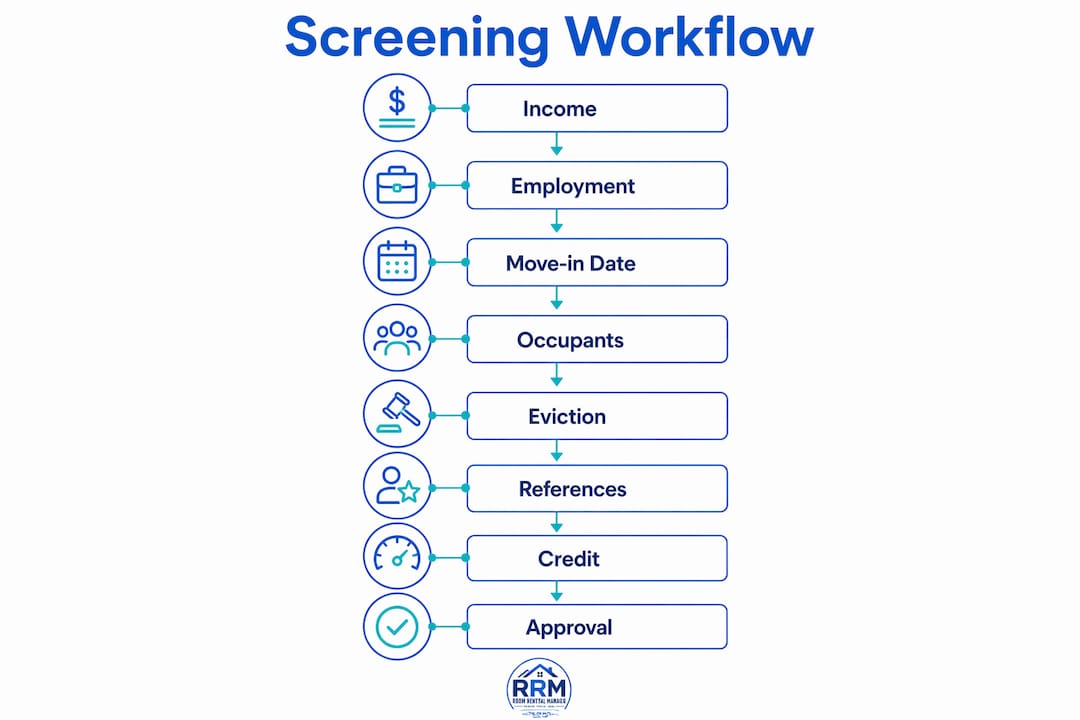
Qualifying rental applicants starts with asking the right questions in the right order. Eight screening questions balance thoroughness with application completion rates, with income verification set at the standard 3x monthly rent threshold. Fewer than six questions risk missing a disqualifier like an eviction history. More than ten questions cause applicant drop-off before you get the data you need.
The eight questions that form the core of any effective pre-screening flow are:
- Monthly income: Does the applicant earn at least 3x the monthly rent?
- Employment status: Are they currently employed, self-employed, or receiving verified income?
- Move-in date: Does their timeline align with your availability?
- Number of occupants: How many people will live in the unit?
- Pets: Do they have pets, and what type and size?
- Eviction history: Have they been evicted in the past five years?
- Document readiness: Do they have pay stubs, ID, and references available?
- Contact information: Can they be reached by phone and email for follow-up?
Each question serves a specific filtering function. Income and employment together confirm financial qualification. Move-in timing prevents you from holding a unit for someone who won't commit for 60 days. Eviction history is the single most predictive indicator of future tenancy problems, yet many landlords omit it from early conversations to avoid awkwardness.
Pro Tip: Frame the eviction question as part of a standard process rather than an accusation. "We ask all applicants about rental history as part of our standard review" removes the sting and keeps qualified applicants from feeling singled out.

The order of questions matters as much as the questions themselves. Start with income and move-in date. These two filters eliminate the largest share of unqualified leads immediately, which means you spend your time on the remaining prospects who actually fit your criteria.
How does response speed affect rental lead conversion?
Speed is the most underrated variable in tenant screening. Responding within 5 minutes to a rental inquiry makes a prospect 21 times more likely to convert than a response sent an hour later. That gap is not a minor advantage. It is the difference between filling a unit this week and extending vacancy by two to three weeks.
The financial math is direct. At $57 in lost rent per day per vacant unit, a 14-day delay in responding to and qualifying leads costs roughly $800 before you have even run a credit check. Landlords managing multiple units compound this loss across every property sitting idle.
"Landlords managing high inquiry volumes develop 'inbox blindness' that structured tools and personalized replies can mitigate." — Why landlords never reply
Inbox blindness is a real operational problem. When 40 inquiries arrive in 48 hours, generic messages get deprioritized. Landlords unconsciously sort toward messages that feel serious, and generic inquiries get ignored even when the sender is a qualified tenant. The fix is not faster reading. It is a structured intake system that treats every message the same way regardless of how it is written.
Personalized replies that reference listing specifics, such as the unit address, available date, or a detail from the listing description, signal to the applicant that they are dealing with a professional. This also filters out low-intent inquirers who sent the same message to 20 landlords. A prospect who responds to a specific reply is almost always more serious than one who does not.
Pro Tip: Set up a template reply that references your listing address, available date, and a direct link to your pre-screening questionnaire. This single step cuts your manual follow-up time by more than half while immediately separating serious prospects from casual browsers.
Understanding how rental contact options work for landlords also matters here. Offering multiple contact channels, including text, email, and form submissions, captures leads who prefer different communication styles and reduces the chance of missing a qualified applicant because of a single-channel bottleneck.
What role do listing freshness and platform diversification play?
A listing that was strong 45 days ago may be invisible today. Zillow's listing visibility decays after 30 to 60 days without updates, and the algorithm treats stale listings the same way Google treats outdated web pages. Refreshing photos or tweaking the description every 30 to 45 days resets ranking signals and restores exposure. This is not a reflection of property quality. It is a platform strategy that favors fresh content, and landlords who understand this stay ahead of it.
Professional listing photos and 3D tours generate 20 to 30% more views than listings with standard smartphone images. More views produce more inquiries, and more inquiries give you a larger pool of applicants to qualify. The math compounds quickly when you are also listed across multiple platforms.
Experienced landlords list on four to six platforms simultaneously. A multi-platform listing strategy reduces vacancy by 30 to 40% compared to single-platform reliance. Each platform attracts a different renter demographic, and no single platform captures the full market.
| Platform | Primary audience | Key advantage | Limitation |
|---|---|---|---|
| Zillow | Broad national renters | Highest traffic volume | Algorithm decay after 30-60 days |
| Apartments.com | Apartment seekers | Strong search filters | Less effective for single rooms |
| Facebook Marketplace | Local, budget-conscious renters | Free, fast reach | Lower signal-to-noise ratio |
| Craigslist | Price-sensitive renters | High volume, free | Significant spam and low-quality leads |
| Realtor.com | Serious, credit-aware renters | Higher-intent audience | Lower overall traffic than Zillow |
The practical takeaway from this table is that no single platform delivers both volume and quality. Zillow gives you reach. Realtor.com gives you higher-intent applicants. Facebook Marketplace fills gaps quickly but requires more filtering. Running all three simultaneously stabilizes your lead flow and shortens vacancy regardless of which platform has an algorithm shift in a given month.
For landlords who want to go beyond the major platforms, the rental advertising guide for 2026 covers alternative channels that many operators overlook entirely.
How can landlords use technology to qualify leads faster?
Manual phone screening takes 20 to 40 minutes per applicant. AI-powered pre-qualification tools compress that to seconds. Landlords lose 45 to 73% of rental inquiries that arrive outside typical office hours when relying on human-only response systems. Automated agents capture and engage those after-hours leads before a competitor does.
The current generation of AI tools for rental qualification includes:
- Leasey.AI: Handles inquiry intake, asks pre-screening questions via chat, and pre-fills applicant cards before a human ever reviews the file.
- Gnosari: Automates vacancy reduction workflows including lead capture, response sequencing, and showing scheduling.
- CRM platforms: Tools like Buildium and AppFolio track applicant status, response times, and pipeline stage across multiple units.
- AI email compositors: Generate personalized inquiry responses that reference listing specifics, reducing the time landlords spend writing individual replies.
The benefit of AI chatbot pre-qualification is not just speed. It is consistency. Every applicant gets the same eight questions in the same order, which means your qualification data is comparable across all leads. When you review 30 applicants, you are comparing apples to apples rather than trying to reconstruct what you asked each person over the phone.
CRM integration adds a second layer of value. When every applicant has a status, a timestamp, and a record of communications, you stop losing strong candidates to administrative chaos. High-volume inquiry management requires structured applicant pipelines and automated screening workflows to avoid letting qualified tenants slip through because a follow-up email was never sent.
Pro Tip: Use automation to capture and pre-qualify leads, but keep a human in the loop for the final screening call. Applicants who pass the automated filter and then speak with a real person convert at significantly higher rates than those who receive only automated communication.
Tracking where your leads come from is equally important. Rental inquiry tracking tools show you which platforms and which listing versions generate the most qualified applicants, so you can concentrate your time and listing budget where it actually produces results.
Key takeaways
Landlords who qualify rental leads effectively combine a structured eight-question screening flow, sub-five-minute response times, multi-platform listing strategies, and AI-assisted intake tools to minimize vacancy and maximize tenant quality.
| Point | Details |
|---|---|
| Use an eight-question screening flow | Cover income, employment, move-in date, occupants, pets, eviction history, documents, and contact info. |
| Respond within five minutes | A five-minute response makes prospects 21x more likely to convert versus a delayed reply. |
| Refresh listings every 30-45 days | Zillow and similar platforms algorithmically decay stale listings, reducing your visibility and lead volume. |
| List on four to six platforms | Multi-platform advertising reduces vacancy by 30-40% compared to relying on a single channel. |
| Automate after-hours intake | AI tools capture 45-73% of leads that would otherwise be lost outside office hours. |
Why speed and structure matter more than most landlords realize
I have watched landlords with genuinely great properties sit on vacancies for six weeks while landlords with average units fill them in five days. The difference is almost never the property. It is the system behind the property.
The conventional wisdom says tenant screening is about finding the right person. That is true, but it misses the first problem: most landlords never get to screening because they lose the lead before the conversation starts. A qualified tenant who sends an inquiry at 9 PM on a Sunday and gets no response until Tuesday morning has already toured two other units. You did not lose them because they were unqualified. You lost them because you were slow.
The second mistake I see constantly is over-relying on a single platform. Landlords who built their entire lead flow on Zillow in 2022 and 2023 were blindsided when algorithm changes cut their inquiry volume in half. Platform dependency is a real operational risk, and the fix is straightforward. Spread your listings, track your sources, and never let one platform account for more than 40% of your inquiries.
The third thing I would push back on is the idea that more screening questions equal better screening. They do not. Ten questions feel like an interrogation. Eight questions feel like a professional process. The goal is to get the applicant to complete the form and give you accurate information. A form they abandon halfway through is worse than no form at all.
The landlords I have seen do this best treat qualification as a communication exercise, not just a data collection exercise. They respond fast, they ask focused questions, they use tools to handle the volume, and they stay consistent. That combination fills units faster than any single tactic on its own.
— JAMES
How Room Rental Manager helps you qualify leads without the chaos
Qualifying rental leads is only as effective as the system behind it. Room Rental Manager gives landlords and property managers one clean listing page that collects inquiries, tracks lead sources, and organizes applicant information from a single dashboard. Instead of managing texts, emails, Facebook messages, and Craigslist replies in separate places, you share one link and every inquiry comes to you in one place.
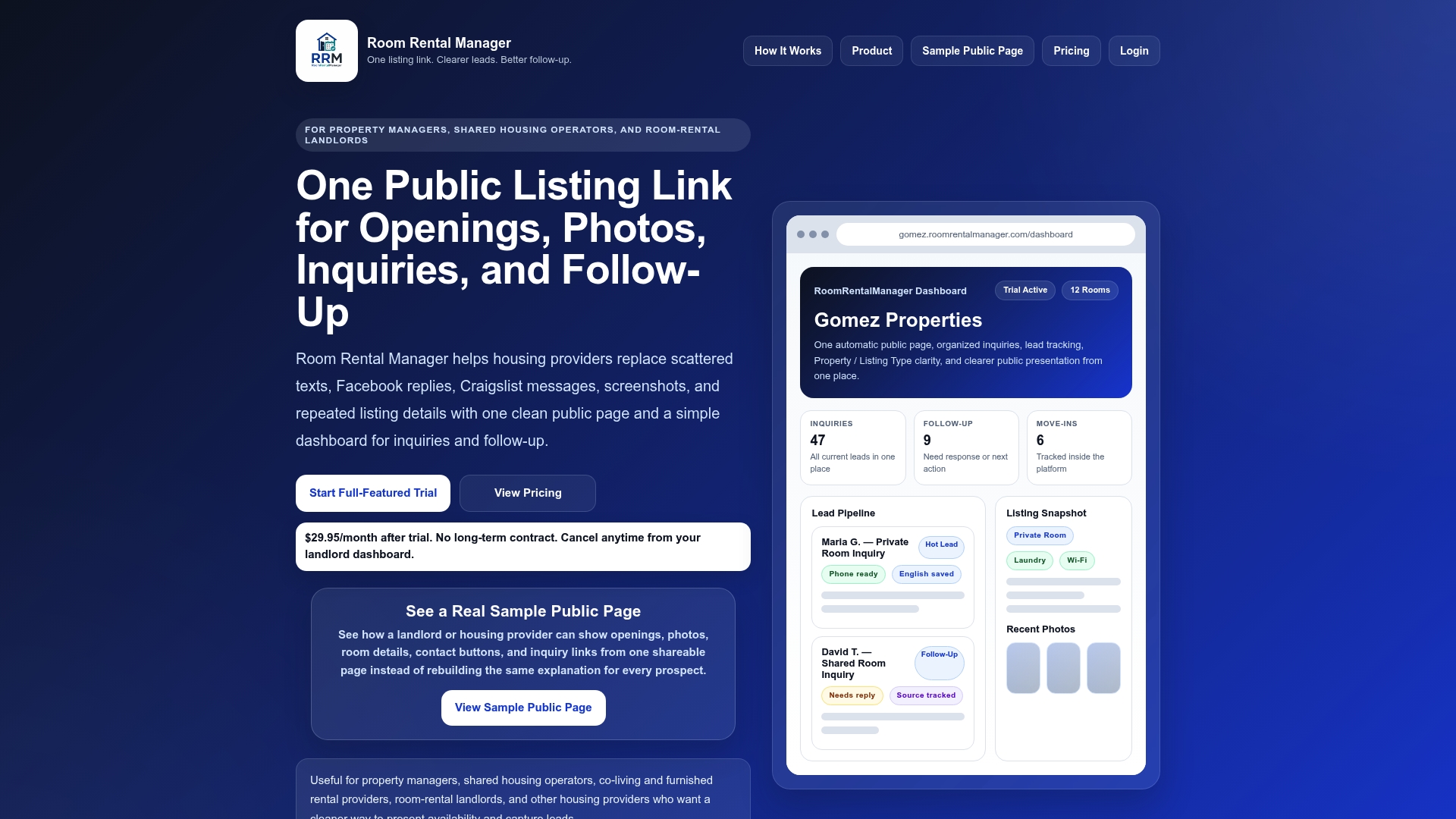
Room Rental Manager's lead management tools support fast response, structured follow-up, and multi-platform visibility without requiring you to rebuild your workflow from scratch. If you are losing leads to slow responses or scattered communication, the software for room rental landlords is built specifically to solve that problem. Start presenting your rentals more professionally and stop letting qualified tenants slip through the cracks.
FAQ
What are the most important questions to ask rental applicants?
The eight most important screening questions cover income at 3x rent, employment status, move-in date, number of occupants, pets, eviction history, document readiness, and contact information. This set balances thoroughness with completion rates and surfaces disqualifiers early.
How quickly should landlords respond to rental inquiries?
Responding within five minutes increases prospect conversion by 21 times compared to delayed responses. Every day a unit sits vacant costs approximately $57 in lost rent, making response speed a direct financial priority.
Why do landlords miss rental inquiries from qualified tenants?
Landlords miss qualified inquiries primarily because of inbox blindness caused by high message volume, after-hours timing, and generic message formatting. Structured intake tools and automated responders reduce this loss significantly.
Does listing on multiple platforms actually reduce vacancy?
A multi-platform strategy reduces vacancy by 30 to 40% compared to single-platform reliance. Experienced landlords list simultaneously on four to six platforms including Zillow, Realtor.com, Facebook Marketplace, and Apartments.com to stabilize lead flow.
What do letting agents typically charge landlords for tenant screening?
Letting agent fees range from below 10% to above 20% of monthly rent depending on the region and scope of services provided. Landlords who manage their own screening avoid these fees entirely by using structured qualification workflows.