

Most landlords treat rental advertising like a second job, checking messages at midnight, copy-pasting listing details into five different platforms, and manually tracking leads on sticky notes or cluttered spreadsheets. That grind feels normal, but it is not inevitable. Automation technology has quietly reshaped what is possible, shifting the work from constant manual effort to smart, structured systems that run in the background. This article breaks down exactly where the time goes, how automation reclaims it, and what landlords need to know before trusting any tool to do the heavy lifting.
Table of Contents
- The real time drains in traditional rental advertising
- How automation transforms inquiry handling and lead management
- Syndication and vacancy reduction: The measurable time impact
- Understanding limitations: When automation may not deliver maximum ROI
- Why nuance matters: Hard-won lessons about rental advertising automation
- Streamline your rental advertising: Next steps for landlords
- Frequently asked questions
Key Takeaways
| Point | Details |
|---|---|
| Automation shifts manual tasks | Rental advertising automation replaces time-consuming inquiry handling with fast, structured workflows. |
| Vacancy reduction is measurable | Syndication and organized lead follow-up can cut vacancy days by over a third according to case studies. |
| Proper setup is critical | Automation only delivers time savings if listing info, templates, and routing are well configured. |
| Benefits scale with volume | Landlords with multiple properties or high inquiries see greater time savings from automation. |
| ROI claims need context | Treat case studies as illustrative, not universal, since outcomes depend on local factors and setup quality. |
The real time drains in traditional rental advertising
Before you can appreciate what automation fixes, you need to see clearly what it is replacing. Most landlords spend time on the same repetitive tasks every single vacancy cycle, and those tasks add up faster than they realize.
Here is what a typical manual rental advertising process looks like:
- Writing a new listing from scratch for each vacancy, even when the property details barely change
- Posting that listing separately to multiple platforms like Craigslist, Facebook Marketplace, and local groups
- Answering the same five questions from every prospective tenant via text, email, and direct message
- Manually scheduling showings, often going back and forth three or four times to find an open slot
- Following up with leads who never responded, guessing who was still interested
- Keeping track of who applied, who toured, and who dropped out across a mix of notes and memory
Every one of those steps demands your direct attention. Miss one message and a qualified tenant moves on to the next available unit. Reply too slowly and your vacancy sits another week. According to rental inquiry handling research, automated rental inquiry handling shifts landlord effort from 24/7 manual availability to instant intake, qualification, and routing steps. That shift is not small. It is the difference between your rental business running you and you running your rental business.
Manual inquiry management is not just slow. It is structurally broken. Every step depends on your personal availability, which means every delay is a direct cost to your vacancy rate and your sanity.
The landlords who find the most relief from automation are often those managing shared housing or furnished rentals, where inquiry volume tends to be higher and turnover is more frequent. Accessing solid room rental landlord resources can help you identify which parts of your workflow are most ripe for automation. Using the right software for room rental landlords means you can finally stop being the bottleneck in your own leasing process. Many landlords also benefit from integrating listing management tools to keep their platforms synchronized.
How automation transforms inquiry handling and lead management

Once you automate inquiry intake, the change in daily workload is immediate and measurable. Instead of fielding every message manually, a properly configured system handles the first several steps for you.
Here is how a modern automated inquiry flow works in practice:
- A prospective tenant submits an inquiry through your listing page or contact form
- An automated response goes out instantly, acknowledging receipt and asking qualifying questions such as move-in date, budget, and occupancy
- Responses get routed based on preset rules, so unqualified leads are filtered and qualified leads get flagged for your attention
- Interested and qualified prospects receive a scheduling link and book their own showing without requiring back-and-forth messages
- Automated reminders go out before the showing, reducing no-shows significantly
The result is that by the time you sit down to look at your leads, only the serious, pre-screened applicants need your actual attention. Refer to this automated rental inquiry guide for a deeper breakdown of how this flow can be configured for different rental types.
| Task | Manual time per lead | Automated time per lead |
|---|---|---|
| Initial inquiry response | 5 to 15 minutes | Under 1 minute |
| Qualifying questions | 10 to 20 minutes | 0 minutes (handled automatically) |
| Scheduling a showing | 15 to 30 minutes | Under 5 minutes |
| Sending reminders | 5 to 10 minutes | 0 minutes |
| Tracking lead status | Ongoing, inconsistent | Real-time dashboard view |
The numbers in that table are conservative. Multiply them across 10, 20, or 30 leads per vacancy cycle and you are looking at dozens of hours saved per month. Tools built specifically for rental inquiry tracking give you a single place to see every lead, their status, and what action is needed next without digging through texts and emails.
Pro Tip: Set up your qualifying questions before your listing goes live, not after inquiries start coming in. The upfront investment of 30 minutes designing those questions will save you hours of sorting through unqualified leads once the listing is active.
Dynamic lead routing is one of the most underrated features of modern automation. Rather than treating every inquiry equally, smart routing tools prioritize leads based on criteria you define, such as move-in timeline or budget alignment. This ensures your follow-up energy goes to leads most likely to convert. Building a strong room rental lead management system means fewer wasted conversations and faster decisions on both sides.
Syndication and vacancy reduction: The measurable time impact
Listing syndication is the practice of automatically pushing your rental listing to multiple platforms from a single source. Instead of logging into four separate websites and updating each one whenever your price or availability changes, syndication handles it automatically. The time savings are real, and so is the impact on vacancy duration.
A published automation case study found that combining syndication with faster, more organized lead handling can shorten lease-up and reduce vacancy-related time costs. In one documented example, a property manager using automated syndication and response tools reduced vacancy by 38%, a dramatic result that translates directly into saved time and recovered revenue.
| Approach | Average time to lease | Monthly hours on lead management |
|---|---|---|
| Fully manual | 4 to 6 weeks | 15 to 25 hours |
| Partial automation | 2 to 4 weeks | 8 to 12 hours |
| Full automation with syndication | 1 to 3 weeks | 3 to 6 hours |
For landlords managing a single property, these gains are meaningful. For shared housing operators or room rental lead management professionals with multiple units turning over regularly, the cumulative savings can represent one to two full days of recovered work time every month.
The real mechanism here is speed. When a vacancy is listed on multiple platforms simultaneously and inquiries are handled within minutes rather than hours, qualified tenants do not have time to go elsewhere. Your funnel fills faster, you reach lease signing sooner, and the vacancy cost clock stops ticking. Landlords managing multiple housing types benefit especially from a unified system that keeps all listings current without manual updates across each platform.
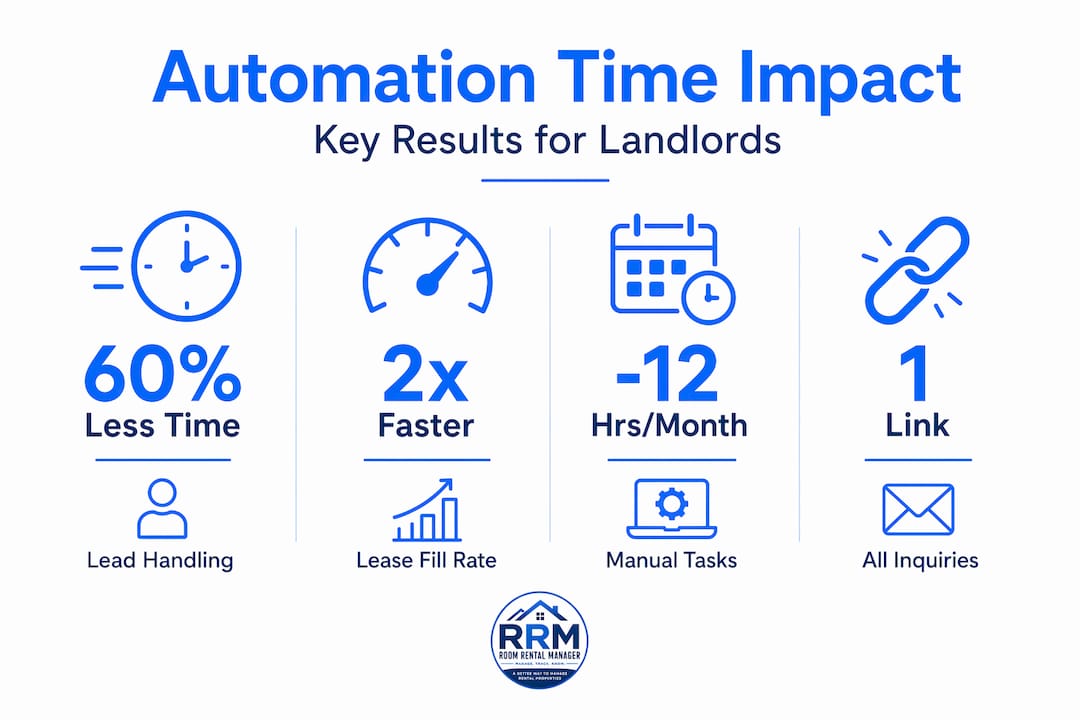
Vacancy cost is a time cost. Every extra day a unit sits empty is not just lost rent. It is also the time you spend actively managing that vacancy, answering more inquiries, scheduling more showings, and doing more follow-up. Automation compresses that timeline significantly.
Understanding limitations: When automation may not deliver maximum ROI
Automation is not a magic fix you install and forget. Many landlords make the mistake of assuming that any automation is better than none, then end up confused when the time savings do not materialize. The truth is that poor setup creates new problems just as fast as it eliminates old ones.
Here are the most common ways automation setups break down:
- Inaccurate listing data. If your automated listing syndication pushes outdated rent prices, wrong availability dates, or incorrect photos, you will receive inquiries based on false information. That means more time correcting misunderstandings, not less.
- Poorly written response templates. A canned response that sounds robotic or leaves out key details frustrates prospects rather than qualifying them. Good templates require real thought and testing.
- Ignored routing rules. If you build routing logic but do not check it regularly, leads can fall into the wrong bucket, meaning qualified tenants get no follow-up and unqualified leads clog your queue.
- No feedback loop. Automation without review is automation that silently misfires. You need to spot-check responses, review lead data, and adjust templates as your listings evolve.
As this automation case study notes, ROI results from automation should be treated as context-specific rather than guaranteed benchmarks. A 38% vacancy reduction is a real outcome in a specific, well-configured context. It is not a promise that every landlord will hit the same number by flipping a switch.
Pro Tip: Before going live with any automation tool, run a test inquiry yourself. Walk through the entire experience as if you were a prospective tenant. Check that every automated response is accurate, professional, and moves the conversation forward. This five-minute test can catch setup errors that would otherwise cost you leads.
Understanding this context is especially important when selecting room rental software or evaluating different software for room rental landlords. The best tools give you control over the setup and make it easy to monitor what is working, so you can adjust quickly when something is not. Resources on how to attract quality tenants highlight that automation paired with strong listing quality consistently outperforms automation alone.
Why nuance matters: Hard-won lessons about rental advertising automation
Here is the uncomfortable truth that most automation content glosses over: landlords who get the biggest time savings from automation are not the ones who found the best tool. They are the ones who did the hard setup work first.
We have seen landlords adopt three different automation platforms in a single year and report that none of them saved meaningful time. When you dig into why, the answer is almost always the same. The listing data was inconsistent, the response templates were copied from a generic source without customization, and the routing rules were never reviewed after the initial setup. The tool was not the problem. The process underneath the tool was.
Automation rewards preparation. When your listing details are accurate, your qualifying questions are sharp, and your routing logic reflects how you actually want to handle leads, the time savings are dramatic and real. When those foundations are missing, automation just speeds up a broken process. Fast chaos is still chaos.
The other lesson worth sharing is that ROI claims in case studies should inform your expectations, not set them. As the automation case study data shows, outcomes vary based on setup quality, market conditions, and the types of properties involved. A landlord in a high-demand urban market with clean listing data and well-tested templates will see very different results than one in a slower market with outdated photos and a generic auto-reply.
The landlords who thrive with automation treat it as an ongoing system, not a one-time installation. They review lead data monthly, update templates seasonally, and revisit routing rules whenever something in their market changes. Reviewing best practices for landlords regularly keeps that system sharp and ensures the setup continues to deliver actual time savings rather than a slow drift back to manual effort.
The bottom line is this: automation is one of the most powerful tools available to landlords today, but it works best when you respect both its capabilities and its limits.
Streamline your rental advertising: Next steps for landlords
Managing rental advertising manually is exhausting, but switching to automation does not mean losing control of your process. Room Rental Manager gives landlords and property managers in shared housing and furnished rental markets a single, structured platform to present listings, collect inquiries, and track leads without repeating themselves across a dozen different channels.
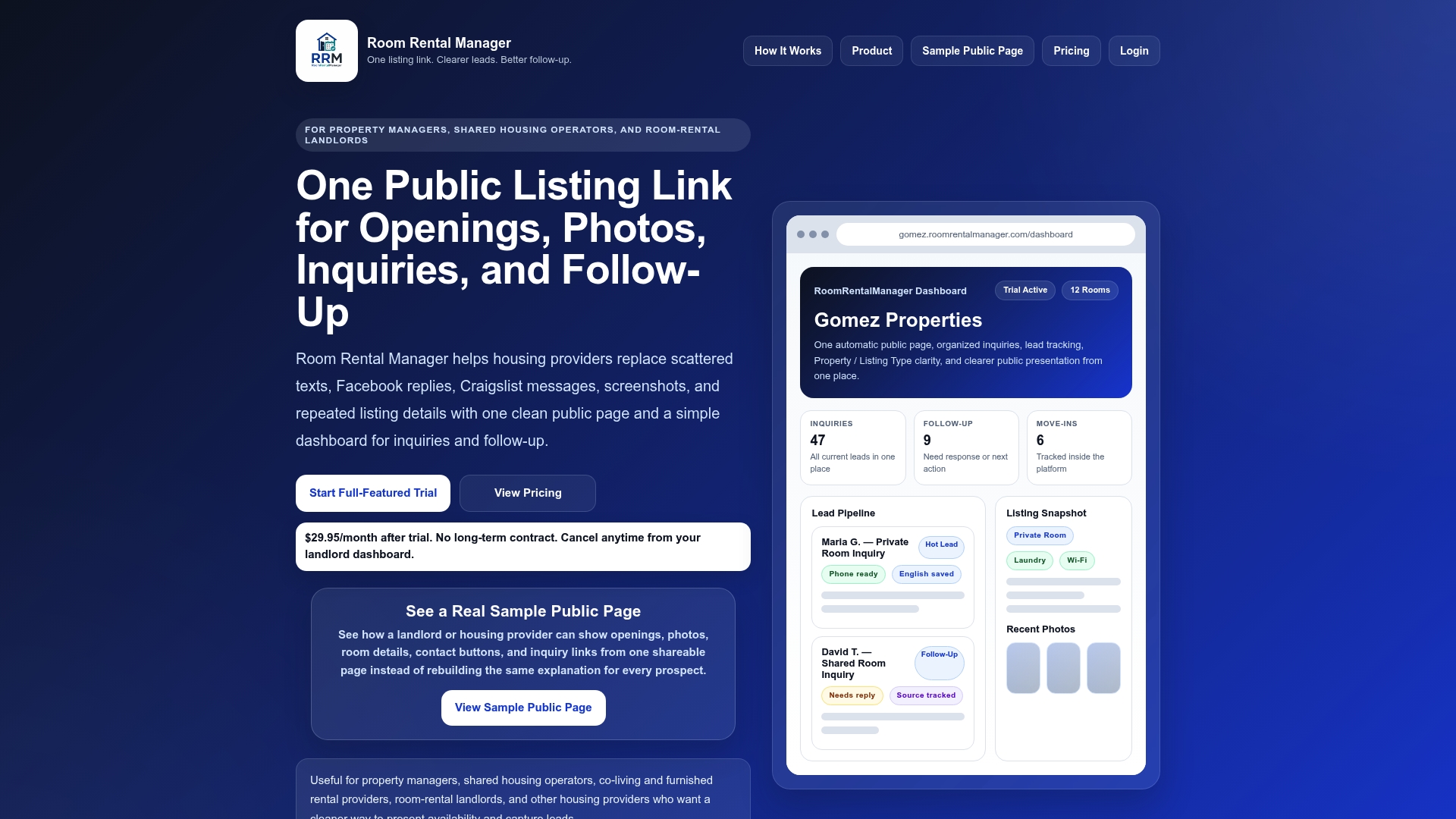
Instead of juggling texts, emails, Facebook replies, and screenshots, you can share one clean link, capture every inquiry in one place, and follow up systematically. The rental inquiry tracking tools built into the platform mean you always know where each lead stands, and the lead management software helps you move qualified prospects through your leasing process faster. If you are ready to stop losing time to manual processes, Room Rental Manager gives you the structure to make that shift today.
Frequently asked questions
What is rental advertising automation?
Rental advertising automation uses technology to handle listing creation, inquiries, qualification, and scheduling, reducing manual landlord effort. According to rental inquiry research, it replaces 24/7 manual availability with instant intake and structured lead routing.
Can automation guarantee reduced vacancy times?
Automation can significantly shorten vacancy, but actual results depend on proper setup and ongoing management. Evidence from case studies shows that syndication plus organized lead handling can compress lease-up timelines, though individual outcomes vary.
Are automation tools suitable for small landlords?
Yes, automation tools can help even single-property landlords save time, but their value increases with multiple listings or high inquiry volume. As rental automation guides note, even basic automation shifts effort away from constant availability toward focused, qualified follow-up.
What setup mistakes can cause automation to fail?
Common mistakes include incorrect listing info, poor template design, and ignoring routing rules, all of which can quietly undermine the benefits of automation. The automation case study data makes clear that ROI results are context-specific and depend heavily on setup quality rather than the tool alone.