

TL;DR:
- Effective tenant attraction requires defining the target demographic and tailoring listings, visuals, and pricing to their needs.
- A multi-platform digital presence, high-quality photos, and transparent policies significantly improve vacancy fill rates and tenant retention.
Most landlords assume a decent listing and a competitive price are enough. They post on one platform, wait, and wonder why inquiries trickle in slowly or stop completely. Understanding how room-rental businesses attract tenants today requires a sharper approach. The rental market has grown more competitive, and renters have more options, more information, and higher expectations than ever before. This guide breaks down the real strategies that fill vacancies faster, attract quality tenants, and keep them around long enough to make your investment worthwhile.
Table of Contents
- Key takeaways
- How room-rental businesses attract tenants: start with the right profile
- Listings and visuals that make renters stop scrolling
- Multi-platform marketing and digital presence
- Pricing strategy and transparent policies
- Tenant screening, move-in experience, and retention
- What I have actually learned watching landlords struggle
- Let Roomrentalmanager handle the pieces that slow you down
- FAQ
Key takeaways
| Point | Details |
|---|---|
| Know your ideal tenant | Define renter demographics and lifestyle needs before writing a single word of your listing. |
| Visuals are your first impression | High-quality, mobile-optimized photos and virtual tours drive significantly more inquiries than text alone. |
| Multi-channel presence matters | Syndicating your listing across platforms and social media reduces vacancy days by meeting renters where they search. |
| Pricing transparency builds trust | Competitive, clearly explained pricing with upfront policies reduces friction and attracts serious renters faster. |
| Retention starts at move-in | A strong onboarding experience directly increases renewal rates and generates referrals that fill future vacancies. |
How room-rental businesses attract tenants: start with the right profile
Before you write a headline or take a single photo, you need to know exactly who you are trying to reach. This is the step most landlords skip, and it costs them in wasted ad spend, mismatched inquiries, and longer vacancy cycles.
Start by segmenting potential renters based on lifestyle and demographics. Are you targeting working professionals who commute downtown? College students who need furnished, flexible-term rooms? Travel nurses or contract workers who need a 90-day stay with utilities included? Each group has a completely different set of priorities, and your marketing needs to speak directly to theirs.
Here is what defines a useful tenant profile for room-rental marketing:
- Budget range and payment expectations (weekly, monthly, income-to-rent ratio)
- Lifestyle preferences (quiet environment, pet-friendly, shared vs. private bath)
- Commute and transit priorities (proximity to hospitals, universities, transit hubs)
- Lease flexibility (short-term, month-to-month, long-term)
- Amenities that matter most (in-unit laundry, fast Wi-Fi, parking, furnished rooms)
Once you have this profile, align every element of your marketing to it. Your listing description, your photos, your pricing structure, and even the platforms you use should all reflect the renter you are trying to attract. This also shapes your SEO strategy. Long-tail keywords with 4+ words convert at nearly ten times the rate of broad search terms, which means "furnished room near downtown hospital with parking" will outperform "room for rent" every time.
Pro Tip: Survey your current or recent tenants. Ask them what made them choose your property and what almost stopped them. Their answers will tell you more than any market report.
Listings and visuals that make renters stop scrolling
Your listing is not just an information sheet. It is a sales conversation happening without you in the room. Most renters decide within seconds whether a property is worth their time, which means your visual content and headline carry enormous weight.
Renters searching on mobile devices respond strongly to vertical, lifestyle-driven images that show the space in real, livable context. A photo of a neatly made bed with morning light is more persuasive than a wide-angle lens shot of an empty room. Shoot with your phone in portrait mode. Show the closet space. Show the kitchen counter with a coffee mug. Make the renter feel like they already live there.

Virtual tours and AI-powered staging tools take this further. They let prospective tenants walk through the space remotely, which is now a standard expectation for serious renters. Properties that offer virtual tours get higher-quality inquiries because renters have already filtered themselves in before they contact you.
Your headline and opening sentence are equally critical. Compare these two examples:
- Weak: "2BR available now, $850/mo"
- Strong: "Sunny private room with in-unit laundry, off-street parking, and 10 minutes to downtown transit"
The first line of your listing should name the top three things your ideal tenant cares about. Do not bury them in paragraph three. Lead with them.
For the body of your listing, balance specificity with scannability. Use short bullet points for features and amenities, then write a short paragraph that sells the feeling of living there. Mention the neighborhood, the natural light, the quiet street, or the walkable coffee shop. Renters are not just renting a room. They are renting a version of their daily life.
Pro Tip: Create a rental listing page that consolidates your best photos, key details, and contact options in one shareable link. Sending one clean URL beats copy-pasting the same information into dozens of messages.
Multi-platform marketing and digital presence
Posting your listing in one place and hoping the right renter finds it is not a strategy. It is wishful thinking. One of the most reliable strategies for tenant attraction is syndicating your listing across multiple platforms and building a consistent digital presence that meets renters wherever they are looking.
Renters use a mix of channels including rental marketplaces, social media groups, search engines, and word-of-mouth referrals. Your vacancy needs to be visible across all of them. Here is a practical sequence to follow:
- List on major rental marketplaces first. These platforms have built-in search traffic and are where most renters begin.
- Post in relevant local Facebook Groups for renters, housing, and neighborhood communities. These drive fast, high-intent responses.
- Create short video content for Instagram Reels or TikTok showing the space in a walkthrough format. Social media marketing can increase rental inquiries by 25-40% through consistent, lifestyle-driven engagement.
- Claim your Google Business Profile if you operate multiple units. This improves local search visibility for people searching "rooms for rent near [neighborhood]."
- Use paid retargeting ads on social platforms to stay visible to renters who have already shown interest in your listing.
Consistency matters more than polish. Posting three times weekly with simple walkthroughs, neighborhood highlights, and market updates outperforms posting one professional video per month. Algorithms reward frequency, and renters reward familiarity.
For longer-term visibility, apply basic SEO thinking to every listing and page you publish. Answer the questions renters are actually typing into search engines: "rooms for rent near transit," "furnished room month-to-month," or "private room with utilities included." Tools like rental advertising automation can help you maintain this presence without spending hours each week on manual updates.
Pro Tip: Track which platform each inquiry comes from. After 30 days, you will know where your best leads originate and where to concentrate your time and budget.
Pricing strategy and transparent policies
Price is rarely the only reason a renter chooses you. But price confusion, hidden fees, and vague lease terms are among the top reasons they walk away without ever contacting you.
Setting competitive rent requires an actual market analysis, not a gut feeling or an outdated formula. The old 1% rule for pricing is unreliable for modern rentals and can distort your expectations about what the market will actually bear. Instead, check active listings in your neighborhood weekly. Note what is sitting vacant and what moves fast. Price slightly below the median for comparable units when you need to fill a vacancy quickly, then adjust upward as demand builds.
Transparent policies close deals that competitive pricing opens. Here is a comparison of what builds renter trust versus what creates friction:
| What builds trust | What creates friction |
|---|---|
| Clear move-in cost breakdown upfront | Vague "additional fees may apply" language |
| Written guest and quiet hours policy | Verbal-only rules that change later |
| Defined lease renewal and exit terms | Ambiguous month-to-month terms |
| Bundled services (Wi-Fi, utilities, renter's insurance) | Surprise bills for services assumed to be included |
| Fast, direct response to inquiries | Delayed replies or unanswered questions |
Transparent lease-signing builds trust and positions you as a professional operator, not just someone renting out a spare room. Renters who feel informed before signing are far more likely to stay beyond their initial lease.
Consider bundling optional services into your offering. 78% of renters want services like renter's insurance and rent reporting, yet only 33% receive them as part of their rental package. Offering these as bundled perks at a modest price premium can set you apart without requiring a major price reduction.
Pro Tip: List your total monthly cost, including all fees and utilities, directly in your headline. "All-in $975/mo" beats "$850 base plus fees" every time for serious renters.
Tenant screening, move-in experience, and retention
Attracting tenants is only half the equation. Keeping them is where the real return on investment lives. A 75% renewal rate translates directly into fewer vacancy days, less turnover cost, and steadier income. And it all starts with how you screen and onboard.
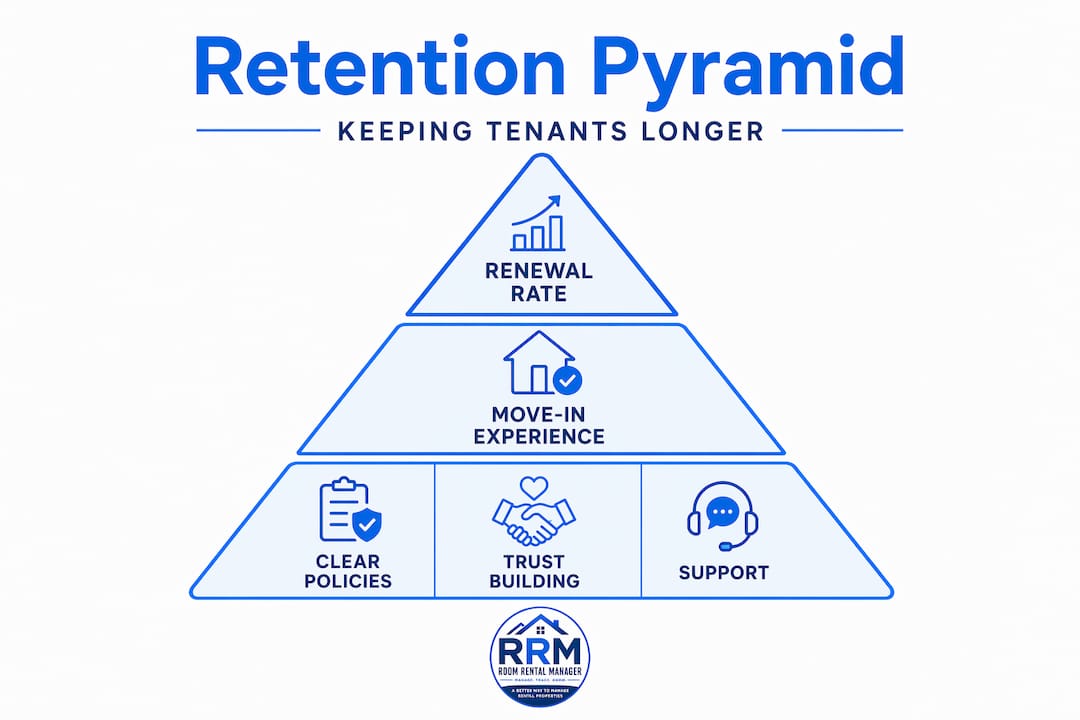
Effective screening does two things. It protects your property from high-risk tenants, and it signals to good tenants that you run a professional operation. Use consistent criteria for everyone: income verification, rental history, references, and a clear application process. Document your standards and apply them equally.
Once a tenant is approved, the move-in experience sets the tone for everything that follows. Key elements of a strong onboarding process:
- Pre-arrival communication confirming move-in time, parking, and access details
- A clean, move-in-ready space with no maintenance issues outstanding
- A welcome packet covering house rules, emergency contacts, and local neighborhood tips
- A digital or physical checklist for documenting the room's condition at move-in
- A follow-up message 48 hours after move-in asking if anything needs attention
The data on this is clear. Residents satisfied at move-in plan to renew at 55%, compared to only 32% of those who had a poor experience. That gap represents real money in occupancy rates.
"The move-in moment is the most important investment a multifamily operator can make." — Propmodo
Renters who feel welcomed and well-managed also become your best marketing channel. They refer friends, leave positive reviews, and 90% say online reputation influences their rental decisions. That means a great tenant experience is not just a retention strategy. It is a lead generation strategy.
Pro Tip: Use a lead management tool to track every inquiry from first contact through move-in. Knowing where each tenant came from and how long each stage took helps you identify and fix the gaps in your process.
What I have actually learned watching landlords struggle
I have spent years observing landlords with genuinely good properties sit on vacancies for weeks while worse properties down the street fill up in days. The difference almost never comes down to the property itself. It comes down to presentation, consistency, and how the landlord treats the rental as a business rather than a side task.
The biggest mistake I see is treating the listing as a one-time effort. Landlords post once, wait, and then wonder why nothing happened. Marketing room rentals is an ongoing activity. It requires weekly attention to your platforms, your response times, and your pricing relative to the market.
What I have seen work consistently is a combination of two things most landlords treat as separate: marketing quality and tenant experience quality. The landlords who fill vacancies fast and keep tenants long do both well. They put real effort into their photos and listing copy, and then they put equal effort into how they communicate from first inquiry through the first 30 days of tenancy.
The landlords I have watched struggle tend to focus on one or the other. Great marketing with a poor onboarding experience produces churn. A wonderful living situation with invisible marketing produces long vacancies.
My honest advice: invest one afternoon getting your listing presentation right, then build a simple follow-up routine for every new tenant. Those two things will do more for your occupancy rate than any advertising budget.
— JAMES
Let Roomrentalmanager handle the pieces that slow you down
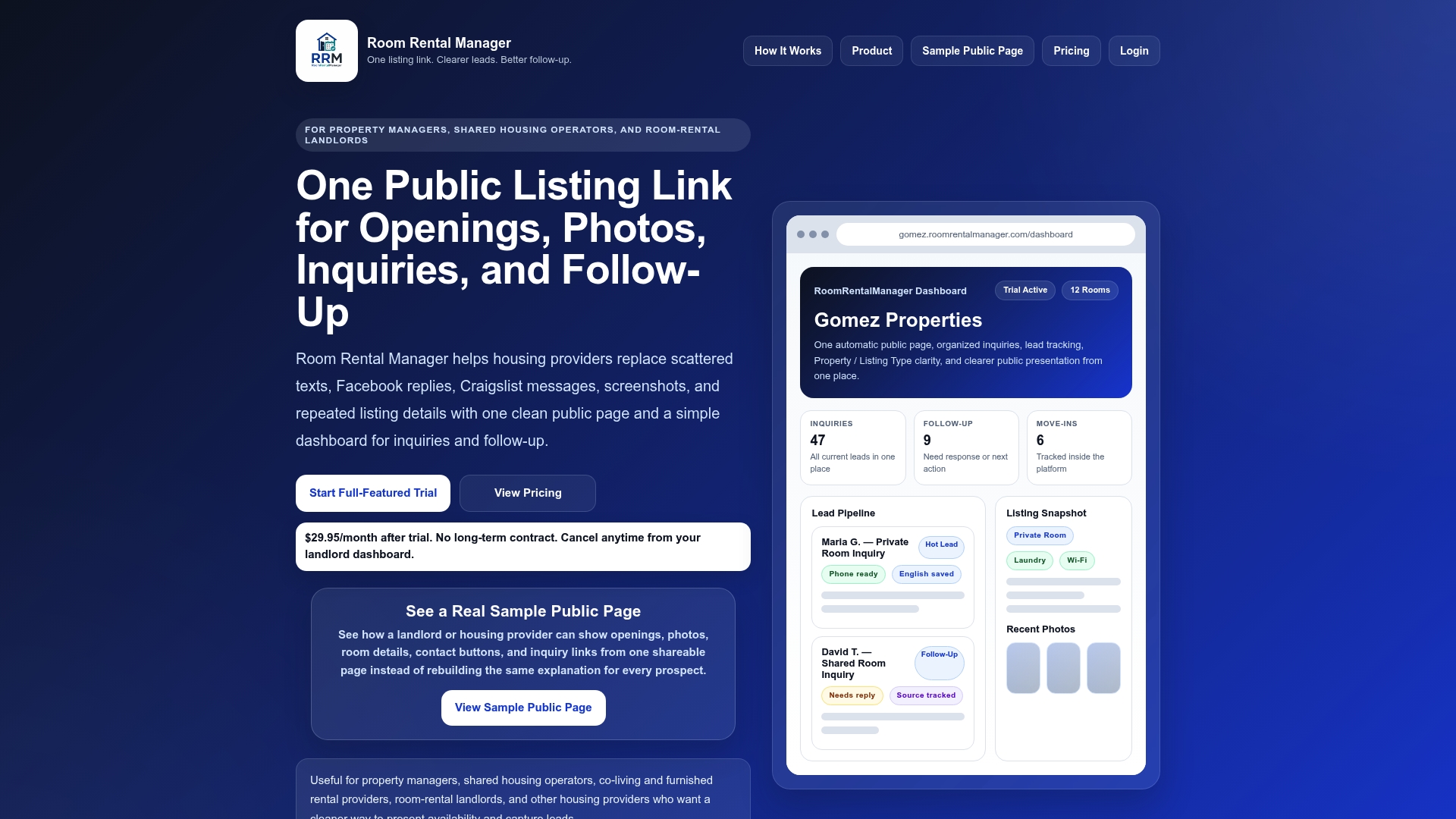
Managing inquiries across texts, emails, Facebook messages, and platform notifications is where good marketing goes to die. Roomrentalmanager was built specifically for room-rental landlords who want to present their properties professionally and track every lead without losing anyone in the shuffle.
With Roomrentalmanager, you create one clean public listing page with your photos, property details, availability, and contact options. Share a single link everywhere you market. Collect renter interest, track where each lead came from, and manage follow-up from one simple dashboard instead of hunting through message threads.
Explore the full set of landlord resources to learn how to sharpen your listings, manage inquiries, and build the kind of professional presence that attracts serious tenants. Or visit Roomrentalmanager to see how the platform works and start filling vacancies faster.
FAQ
How do room-rental businesses attract tenants quickly?
The fastest approach combines a well-written listing with high-quality photos, multi-platform distribution, and a competitive all-in price that is transparent about fees. Responding to every inquiry within a few hours also significantly improves conversion rates.
What platforms work best for marketing room rentals?
Major rental marketplaces generate the most search-based traffic, while Facebook Groups and Instagram drive fast, community-level engagement. Using multiple channels simultaneously reduces the time it takes to find a qualified tenant.
How important are photos for attracting renters?
Photos are the single most important factor in generating inquiries. Mobile-optimized, lifestyle-driven images perform best because most renters browse on their phones and make quick decisions based on visual appeal before reading the listing details.
What is the best way to retain tenants after move-in?
Tenants satisfied at move-in renew their lease at 55% versus 32% for those with a poor experience. Clear communication, a clean space on arrival, and a follow-up message within 48 hours are the highest-impact steps.
Should landlords offer bundled services to attract tenants?
Yes. Bundling Wi-Fi, utilities, or renter's insurance into a single monthly rate removes a major friction point for renters comparing options. It also justifies a slightly higher asking price while making your listing stand out from bare-bones competitors.