

TL;DR:
- Diversifying rental advertising across platforms like Zillow, Apartments.com, and Facebook Marketplace increases vacancy fill rates more effectively than relying on a single site in 2026.
- Creating specific property descriptions, using video walkthroughs, and responding promptly within two hours significantly improve tenant quality and reduce no-shows.
- Employing a systematic approach with regular listing updates and centralized inquiry management maximizes exposure, saves time, and shortens vacancy periods.
Rental advertising without Craigslist is a fully viable strategy in 2026, and landlords who diversify across platforms consistently fill vacancies faster than those who rely on a single channel. Craigslist's declining trust signals, inconsistent lead quality, and lack of tenant screening tools have pushed serious property managers toward purpose-built alternatives. Platforms like Zillow, Apartments.com, and Facebook Marketplace now reach far larger, more targeted audiences. This guide covers the best alternative rental platforms, how to write listings that convert, how video marketing pre-qualifies tenants, and how to manage inquiries so no lead goes cold.
What are the best alternative rental platforms to Craigslist?
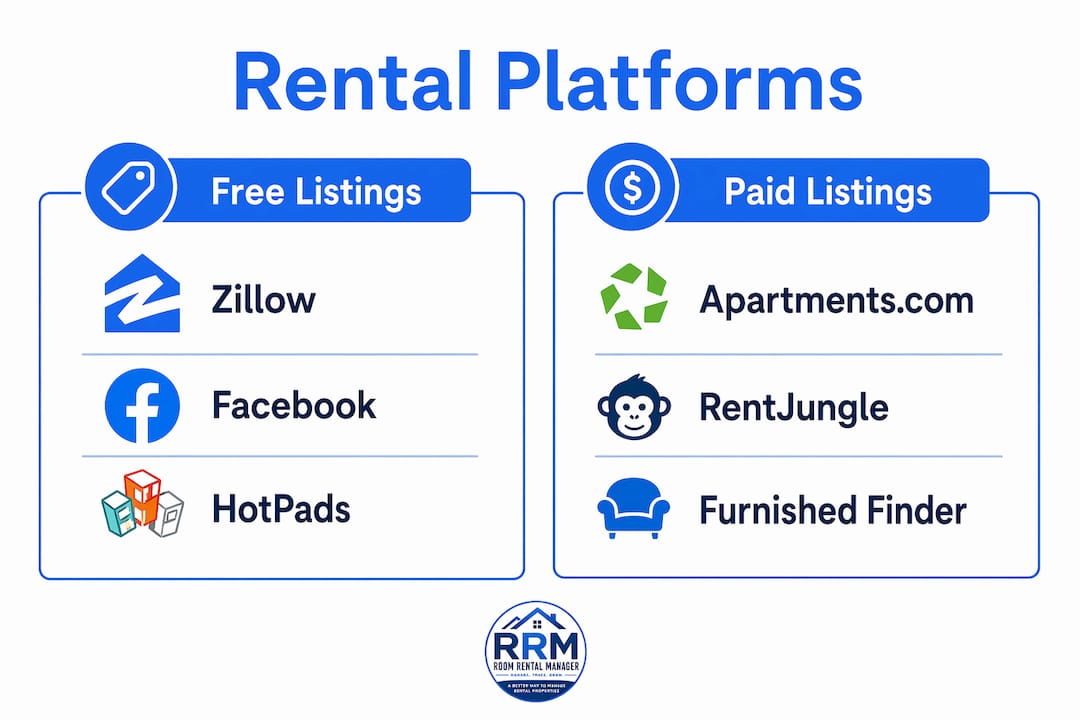
Multiple platforms reduce vacancy risk by exposing your property to curated audiences that a single listing site simply cannot reach. The five platforms that consistently deliver results for residential landlords in 2026 are Zillow, Apartments.com, Facebook Marketplace, HotPads, and RentJungle. Each serves a distinct renter segment, which is exactly why using all of them together outperforms any single-platform approach.
Zillow attracts serious, purchase-minded renters who are already comfortable with detailed property data. Its Rental Manager tool allows free listings for the first property, with paid syndication to HotPads and Trulia included. Apartments.com draws renters who are actively searching by neighborhood and price range, and its CoStar-backed data infrastructure gives listings strong search visibility. Facebook Marketplace reaches a local, mobile-first audience and generates high inquiry volume, though lead quality varies more than on dedicated rental sites. HotPads specializes in map-based search and attracts urban renters who prioritize location above all else. RentJungle aggregates listings from other sites, giving your property additional exposure without extra work.
The table below compares these platforms across the factors that matter most to landlords managing properties for rent listings.
| Platform | Cost | Audience type | Key strength |
|---|---|---|---|
| Zillow | Free (1 listing) / Paid | Purchase-intent renters | Broad reach, HotPads syndication |
| Apartments.com | Free / Premium tiers | Active apartment searchers | CoStar data, strong SEO |
| Facebook Marketplace | Free | Local, mobile-first renters | High volume, fast inquiries |
| HotPads | Free via Zillow | Urban, map-focused renters | Location-based discovery |
| RentJungle | Free (aggregated) | Broad residential renters | Passive syndication |
Niche platforms deserve attention too. If you manage furnished rentals or short-term housing, sites like Furnished Finder or Roomies.com reach specific renter types who rarely browse Zillow. Local community boards, university housing portals, and employer relocation networks are also underused channels that deliver pre-qualified leads at zero cost. The key insight is that multi-platform listings create diverse exposure and dramatically increase your odds of finding the right tenant quickly.
One practical note on cost: traditional booking intermediaries charge fees ranging from 5% to 15% per booking, which compounds quickly across multiple vacancies per year. Direct-listing platforms eliminate that cost entirely while still providing secure inquiry infrastructure.
How to create rental listings that attract high-quality tenants
Specific, transparent descriptions attract qualified tenants, and exact details like room sizes and proximity to transit outperform generic listings by matching tenant search filters directly. A listing that says "bedroom is 12x14 feet with a double closet, 5-minute walk to the Green Line" will surface in more filtered searches and generate fewer time-wasting inquiries than one that says "spacious room near transit."
The elements that separate a high-converting listing from a forgettable one come down to four areas:
- Precise measurements and amenities. State exact square footage, ceiling height if above standard, and every included amenity. Renters filter by washer/dryer, parking, and pet policy. If your listing omits these, it disappears from filtered results entirely.
- Search-filter keywords. Phrases like "off-street parking," "in-unit laundry," "hardwood floors," and "central air" are not just descriptive. They are the exact terms renters type into search filters. Use them verbatim.
- Proximity language. "0.3 miles from downtown," "10-minute drive to the airport," and "walking distance to Whole Foods" give renters a mental map of the location before they visit.
- Honest condition notes. Mentioning that the kitchen was renovated in 2023 or that the building has a new roof builds credibility and reduces surprise-based tenant turnover.
Photography is not optional. Natural light, wide-angle shots, and photos of the kitchen and bathroom increase listing clicks and tenant inquiries significantly. Shoot during mid-morning when light is soft and even. Avoid flash photography, which flattens rooms and makes spaces look smaller. A $50 clip-on wide-angle lens for a smartphone produces results that rival professional photography for most residential listings.
Pro Tip: Write your listing description in two layers. The first two sentences should answer the renter's three core questions: how much, how many bedrooms, and where. Everything after that sells the lifestyle. Renters decide in seconds whether to keep reading, so lead with facts and follow with appeal.

Avoid the common mistake of saving your best details for the end of the description. Renters scan, not read. The headline and first two sentences carry 80% of the conversion weight. If your strongest selling point is a private backyard or a garage, put it in the headline.
How does video marketing increase rental inquiries?
Video-first listings with 30 to 60 second walkthroughs significantly increase conversion rates by allowing renters to qualify themselves before scheduling showings. This single change reduces no-shows and attracts higher-intent applicants. A renter who has already watched your walkthrough and still requests a showing is far more likely to apply than one who showed up based on photos alone.
The rental market is shifting toward video-first discovery, where landlords using short walkthrough videos attract higher-intent leads who self-qualify before viewing. This saves meaningful time on unsuitable applicant showings, which is one of the most underappreciated costs in property management. A single wasted showing can consume 90 minutes of your day when you factor in travel, preparation, and follow-up.
HOMI is a platform built specifically around this model. It allows landlords to upload walkthrough videos, manage inquiries in-app, and keep all tenant communication in one place rather than scattered across texts, emails, and platform messages. The in-app inquiry management feature is particularly useful for landlords running multiple listings simultaneously, since it eliminates the coordination overhead that causes leads to go cold.
Creating a walkthrough video does not require professional equipment. A steady smartphone, good lighting, and a simple script covering the entry, main living areas, kitchen, bathroom, and any outdoor space produces a video that converts well. Keep it under 90 seconds. Narrate as you walk, mentioning specific features rather than just panning the camera. "This is the kitchen, which was fully updated in 2024 with quartz countertops and new appliances" is more persuasive than silence over footage.
Pro Tip: Update your listing video every 60 to 90 days even if the property has not changed. Fresh video content signals to platform algorithms that your listing is active, which improves organic ranking without paying for premium placement.
Platforms that support video natively, including Facebook Marketplace and Zillow's listing pages, give video-enabled listings preferential display. Renters also share video listings more readily than photo-only listings, which generates organic reach you cannot buy.
Best practices for managing rental inquiries and maintaining listing visibility
Responding promptly and clearly to tenant inquiries dramatically increases your chances of securing a qualified tenant, because renters apply to multiple listings simultaneously and choose the landlord who replies first and most helpfully. Speed is a competitive advantage in rental advertising, and most landlords underestimate how quickly a lead goes cold.
Follow these steps to build an inquiry management system that keeps you ahead of competing listings:
- Set a response target of under two hours during business hours. Renters who do not hear back within a few hours typically move on to the next listing. A brief, clear reply that confirms availability and offers a showing time is enough to hold their interest.
- Use a structured response template. Include the monthly rent, availability date, key amenities, and a direct offer to schedule a viewing. This eliminates back-and-forth and positions you as organized and professional.
- Track every inquiry by source. Knowing which platform generated each lead tells you where to invest more time and where to pull back. Without source tracking, you are advertising blind.
- Perform a soft update every 7 to 14 days. Platforms penalize static listings by dropping them in search results over time. Minor edits such as refining a sentence in the description, swapping one photo, or updating the availability date trigger the algorithm to re-index your listing and restore its ranking.
- List across at least three platforms simultaneously. Multi-platform exposure creates diverse audience reach that a single platform cannot replicate. Stagger your posting times so listings appear fresh on each platform independently.
The most common mistakes landlords make in this phase are vague descriptions that generate low-quality inquiries, slow responses that cede leads to faster competitors, and single-platform dependence that caps their audience artificially. A landlord who lists only on one site and responds to inquiries once a day is operating at a fraction of their potential fill rate.
Centralizing your inquiry management is the practical solution to the coordination problem. Tools like Room Rental Manager let you share one link that collects renter interest from any source, tracks where each lead came from, and keeps follow-up organized in a single dashboard. This is especially valuable when you are advertising across Facebook Marketplace, Zillow, and Apartments.com at the same time, since each platform generates inquiries in a different format.
For landlords managing rental vacancy advertising across multiple properties, the organizational overhead of multi-platform advertising is the primary bottleneck. Solving that bottleneck is what separates landlords who fill units in days from those who carry vacancies for weeks.
Key takeaways
Rental advertising without Craigslist works best when landlords combine multi-platform listings, specific property descriptions, video walkthroughs, and fast inquiry responses into a single repeatable system.
| Point | Details |
|---|---|
| Use multiple platforms | List on Zillow, Apartments.com, Facebook Marketplace, HotPads, and RentJungle to maximize audience reach. |
| Write specific descriptions | Include exact measurements, amenity keywords, and proximity language to match tenant search filters. |
| Add video walkthroughs | A 30 to 60 second walkthrough pre-qualifies tenants and reduces no-shows at showings. |
| Perform soft updates regularly | Edit listings every 7 to 14 days to prevent algorithm penalties and maintain organic ranking. |
| Respond within two hours | Fast, structured responses secure leads before competing landlords can reply. |
What I've learned from years of watching landlords advertise rentals
The landlords I see filling units fastest are not the ones spending the most on premium placements. They are the ones who treat their listing like a product page and their inquiry inbox like a sales pipeline. That shift in mindset changes everything about how you write, photograph, and respond.
The biggest mistake I see repeatedly is landlords who write a listing once, post it on one platform, and then wonder why they are getting low-quality inquiries two weeks later. The listing has gone stale in the algorithm, the description was never specific enough to filter out unqualified renters, and there is no video to help serious applicants self-select. The result is a calendar full of no-shows and a vacancy that drags on.
Video is the single highest-leverage change most landlords have not made yet. I have watched landlords cut their average days-to-fill in half simply by adding a 60-second walkthrough to their existing listings. Renters who watch a video and still request a showing are genuinely interested. That changes the entire dynamic of the showing itself.
The soft update practice is another insight that most landlords dismiss until they try it. Platforms are built to surface active, engaged listings. A listing that has not been touched in three weeks looks abandoned to the algorithm, regardless of how good the photos are. Two minutes of minor editing every ten days is one of the highest-return habits in rental advertising.
My honest recommendation is to stop thinking about advertising rentals online as a one-time task. It is an ongoing process that rewards consistency, specificity, and speed. The landlords who treat it that way rarely carry a vacancy for more than two weeks.
— JAMES
Manage your rental leads without the Craigslist chaos
Advertising across Zillow, Apartments.com, and Facebook Marketplace generates leads from multiple directions at once. Without a system to track them, the best inquiries fall through the cracks.
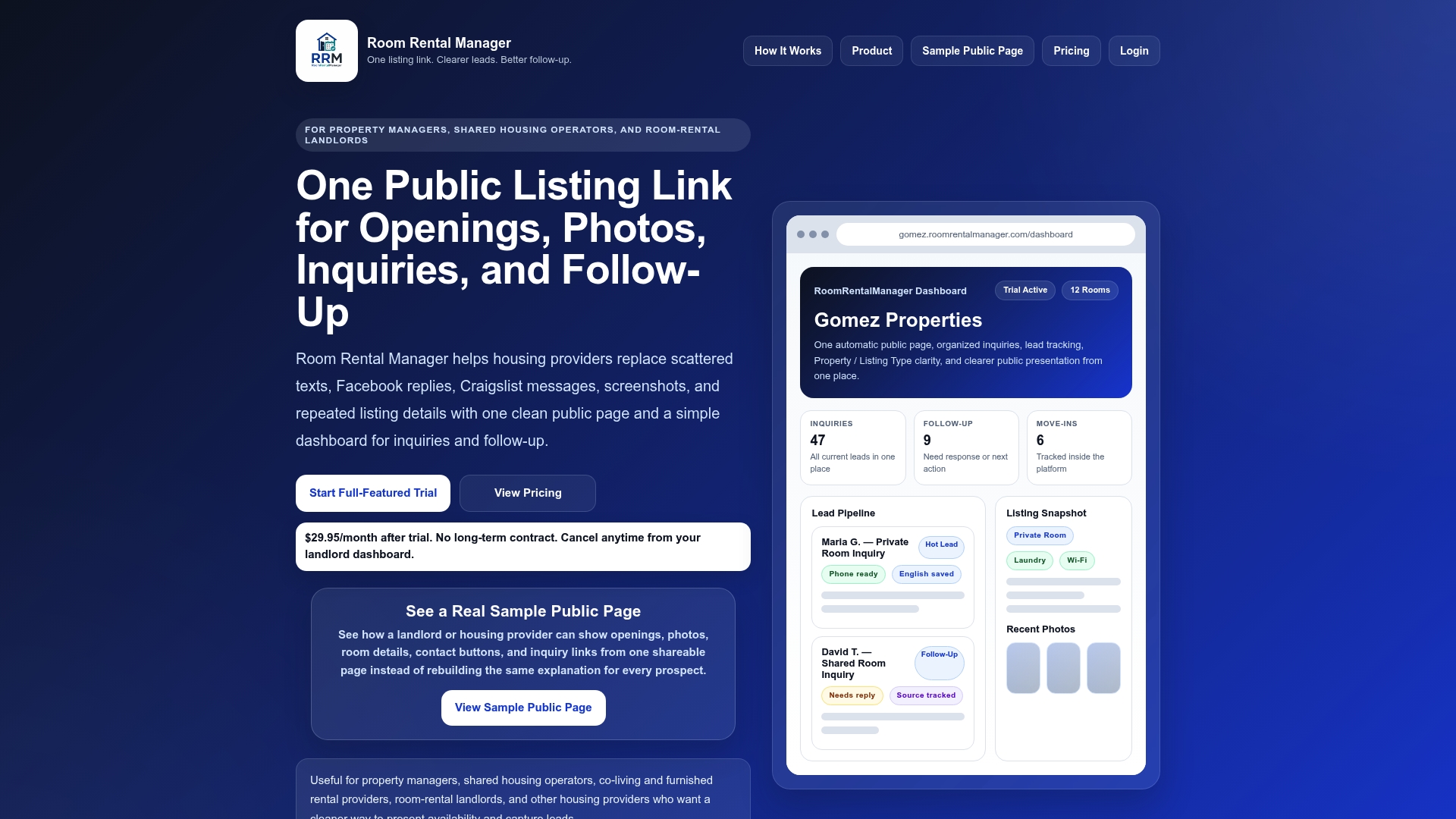
Room Rental Manager gives landlords one clean public listing page that collects renter interest, tracks lead sources, and keeps follow-up organized from a single dashboard. Instead of juggling texts, emails, and platform messages, you share one link and manage everything in one place. Explore the full set of landlord tools and resources at Room Rental Manager, or see how rental inquiry tracking keeps your pipeline moving from first contact to signed lease.
FAQ
What are the best sites for rental advertising without Craigslist?
Zillow, Apartments.com, Facebook Marketplace, HotPads, and RentJungle are the top platforms for residential rental advertising in 2026. Listing across all five simultaneously maximizes audience reach and reduces time-to-fill.
How often should I update my rental listing to stay visible?
Perform a soft update every 7 to 14 days by making minor edits to your description or swapping a photo. This triggers platform algorithms to re-index your listing and prevents it from being buried by newer posts.
Does video really help attract better tenants?
A 30 to 60 second walkthrough video allows renters to self-qualify before requesting a showing, which reduces no-shows and increases the quality of applicants who do visit. Platforms that support video natively also give those listings preferential display in search results.
How quickly should I respond to rental inquiries?
Respond within two hours during business hours. Renters apply to multiple listings at once and typically choose the first landlord who replies with clear, helpful information including rent, availability, and a showing offer.
Is it worth listing on multiple platforms at the same time?
Listing across multiple platforms exposes your property to distinct renter audiences that no single site captures alone. The added time investment is minimal compared to the reduction in vacancy days that multi-platform advertising consistently delivers.