
Managing multiple room rental listings across messaging apps, spreadsheets, and social sites overwhelms small property managers and leads to missed inquiries. Many mainstream property management solutions either gatekeep branding tools for large portfolios or price advanced tenant workflows out of reach for operators with under 100 units. This side-by-side review compares listing workflow, pricing tiers, and branding options in three room rental management platforms so you can find one that cuts follow-up chaos without committing to an enterprise contract.
Table of Contents
Room Rental Manager
At a Glance
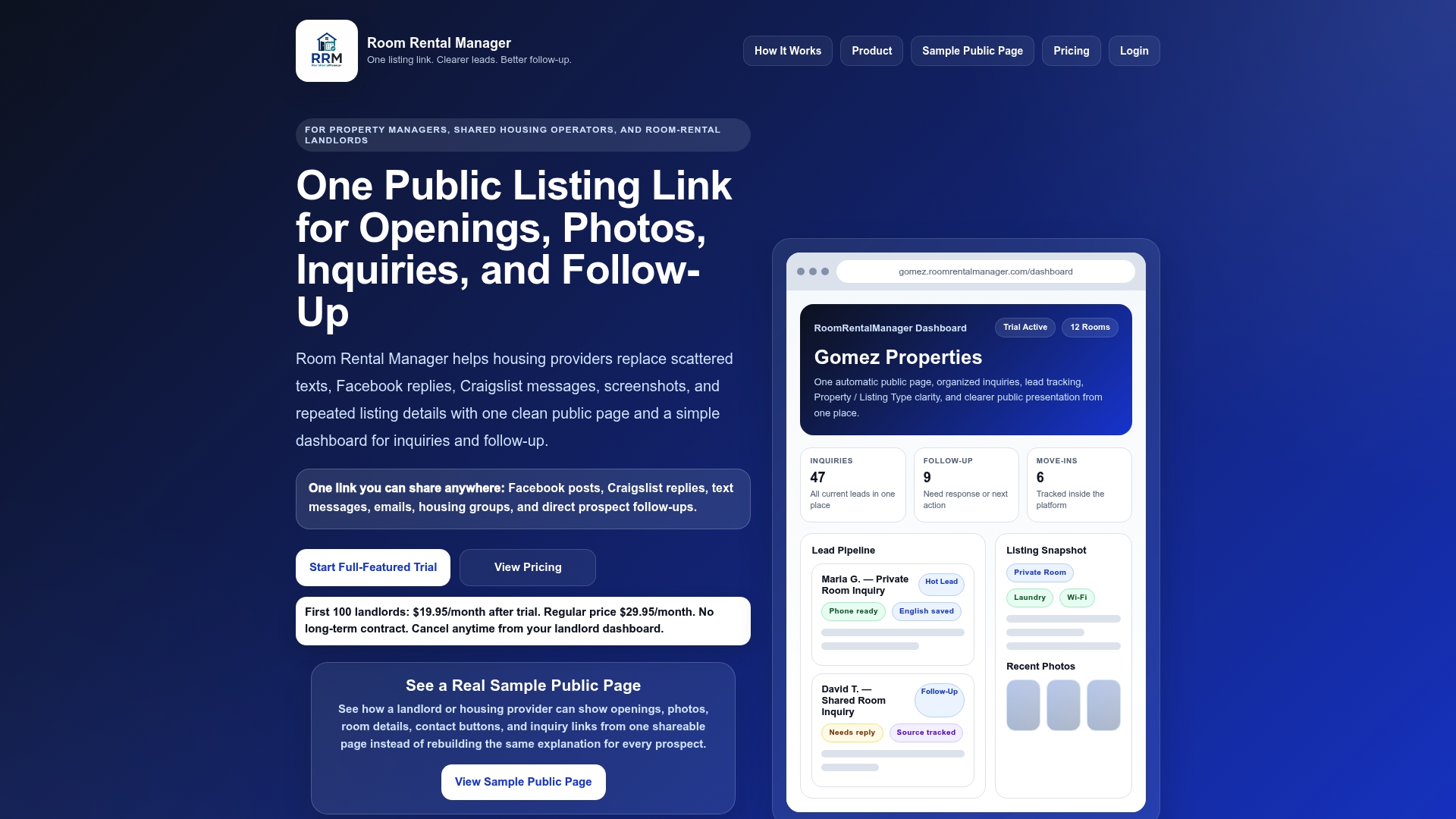
Creates a single, shareable public listing page so you stop repeating the same details across texts, Craigslist posts, and Facebook replies. The platform centralizes inquiries, lets you track lead sources, and presents listings and photos from one clean dashboard.
Core Features
Room Rental Manager builds a public listing page from entered property details and photos, then collects inquiries on that page. It tracks and organizes leads centrally so follow-up does not live in scattered messages.
The product supports multiple housing types including shared rooms, private rooms, apartments, and mobile homes. It also includes inquiry and application workflows, plus AI-assisted descriptions and multilingual support for wider reach.
Key Differentiator
Provides an organized, professional public listing page combined with integrated inquiry and follow-up management tailored specifically for small-scale room and housing rentals. That pairing is tuned to the realities of room-by-room listings where each lead requires rapid, consistent replies.
Pros
-
Reduces missed leads by consolidating inquiries into a single dashboard. You can see source, status, and next action without hunting through email or Messenger.
-
Presents a professional listing page that includes photos, details, and contact options so prospects get the full picture from one link.
-
Works across housing types. Whether you manage furnished rentals, rooms, or small multiunit portfolios, the same workflow applies and saves setup time.
-
Includes inquiry workflows and simple application steps so you can move prospects from interest to screening without juggling spreadsheets.
-
AI-assisted and multilingual description tools help craft clearer listings and reach nonnative speakers faster, which reduces back-and-forth and speeds responses.
Cons
- Best suited for small-scale operators; the platform may lack advanced features required by enterprise property management such as deep accounting, bulk API integrations, or complex permission hierarchies.
Who It's For
Small landlords, solo property managers, shared housing operators, and furnished rental providers who need tidy public listings and reliable lead follow-up. If you run a handful to a few dozen rooms and want fewer lost messages, this matches that operational scale.
Unique Value Proposition
A single public listing page that captures inquiries and logs lead sources changes how you manage outreach. Instead of copying the same message across channels, you share one link, collect interest, and keep track of follow-up from a dashboard that was built for rooms and shared housing.
Real World Use Case
A landlord managing 12 rooms across several properties creates unified public pages for each opening, funnels inquiries from Facebook, Craigslist, and referrals into one place, and uses the application workflow to screen prospects. That practice shortens response time and increases conversion of inquiries into move-ins.
Pricing
Launch special pricing is $19.95 per month for the first 100 landlords after a 7-day free trial. The regular monthly price is $29.95. Plans can be canceled anytime from the dashboard.
Website: https://roomrentalmanager.com
Rhenti
At a Glance
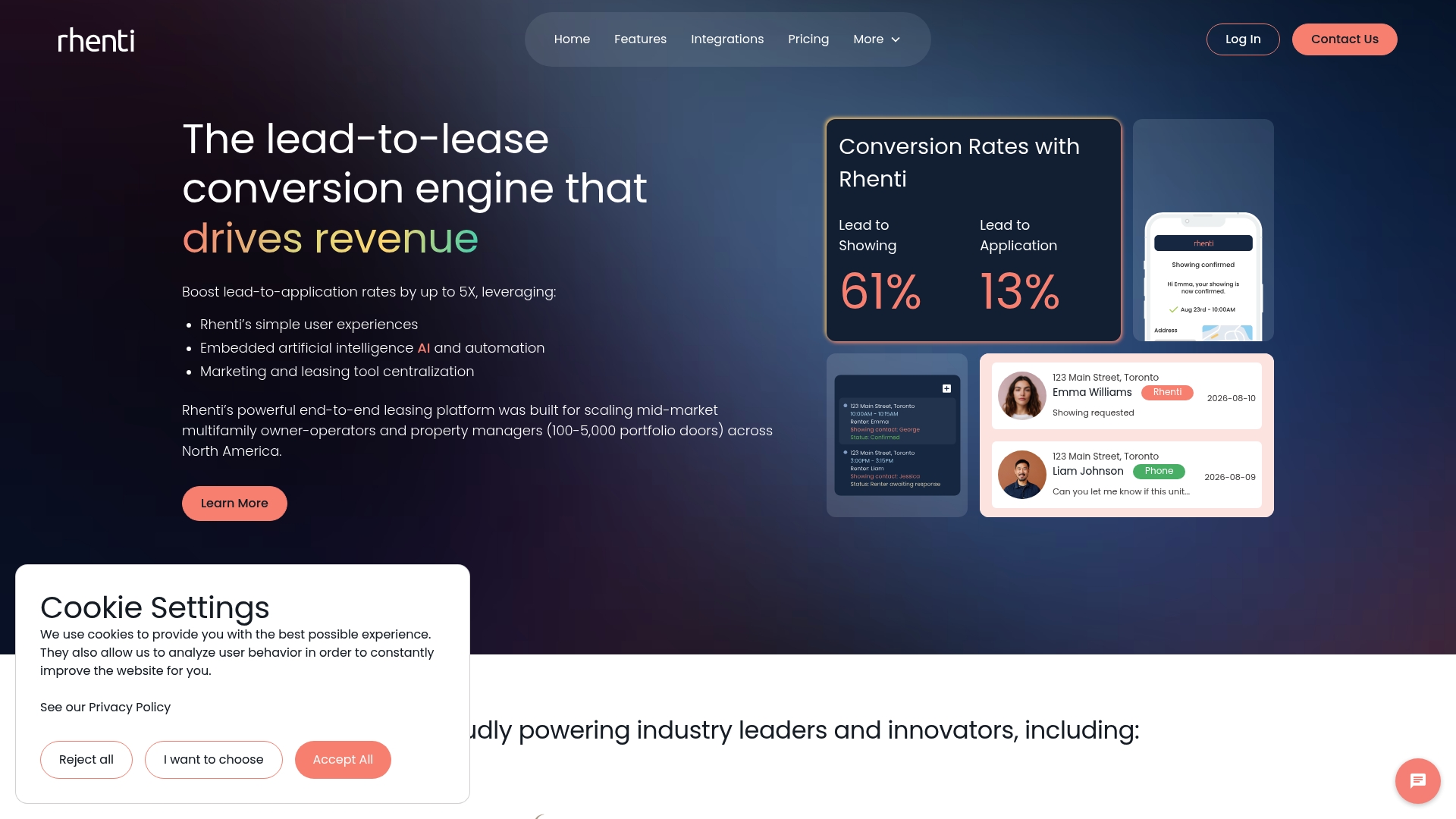
Rhenti's marketing materials position it for portfolios of 100–5,000 doors across North America, a specific target range that shapes its pricing and product design. The vendor advertises AI-driven automation and centralized leasing tools that move leads to applications and manage the full lease lifecycle.
Core Features
Rhenti centralizes listings and lead management with syndicated posting and tracking. The platform pairs a built-in CRM with chat and automated workflows to handle follow-up and tenant communication.
Digital tenant applications, e-signing, and deposit processing live in the same flow, plus scheduling and automated showings with mobile notifications. Integrations with common property management systems allow data to flow into accounting and unit records.
Key Differentiator
Rhenti emphasizes AI workflows tuned for multifamily and residential portfolios and full integrations with major property management systems. That combination targets teams that want automation without rebuilding their PM stack, especially mid-market portfolios that need scale but not enterprise customization.
Pros
- The vendor says Rhenti increases lead-to-application conversion rates, and the platform’s automated follow-up and listing syndication are built to deliver that result.
- Centralized listing management reduces copy-paste errors by keeping photos, descriptions, and availability in one place for syndication.
- Built-in CRM and chat let leasing staff capture inquiries and move prospects through digital applications without switching tools.
- Mobile apps and calendar integrations support on-the-go showings and automated reminders for prospects and teams.
- Integrations with major PM systems mean leases and applicant records can sync back into your accounting and operations workflows.
Cons
- Pricing varies by portfolio size and feature set, which can make straightforward budgeting difficult for smaller operators.
- The platform offers limited options for UI and branding customization, which may matter if you present a branded tenant portal.
- Several third-party reviews note that setup and integrations can be involved and may require technical assistance.
When It May Not Fit
If you manage fewer than 100 units or you need heavy UI branding, Rhenti’s model and pricing may not be cost effective. Teams without an IT resource should budget time and possible contractor help for integrations with Yardi or Entrata.
Notable Integrations
- Yardi
- Buildium
- Entrata
- Google Calendar and Outlook Calendar
- Credit check APIs (TransUnion) and income verification via Plaid
These connections support application vetting, calendar scheduling, and data sync back to your property management system.
Who It's For
Mid-sized property management firms and owners managing multiple units across North America who want to digitize leasing operations. Best for portfolios that sit inside the vendor’s 100–5,000 door target and have some technical resources.
Real World Use Case
A property manager with 200 units centralizes listings in Rhenti, automates showing schedules, collects digital applications, and routes approved applicants into their PM system. The vendor reports faster application processing and clearer marketing source tracking in that scenario.
Pricing
Rhenti’s pricing depends on portfolio size, selected features, and integrations. There is a basic Toolbox plan at $29 per door per month, with add-ons and system licenses that can increase total cost. Expect quotes to vary by integration and service level.
Website: https://rhenti.com
Tenantory
At a Glance
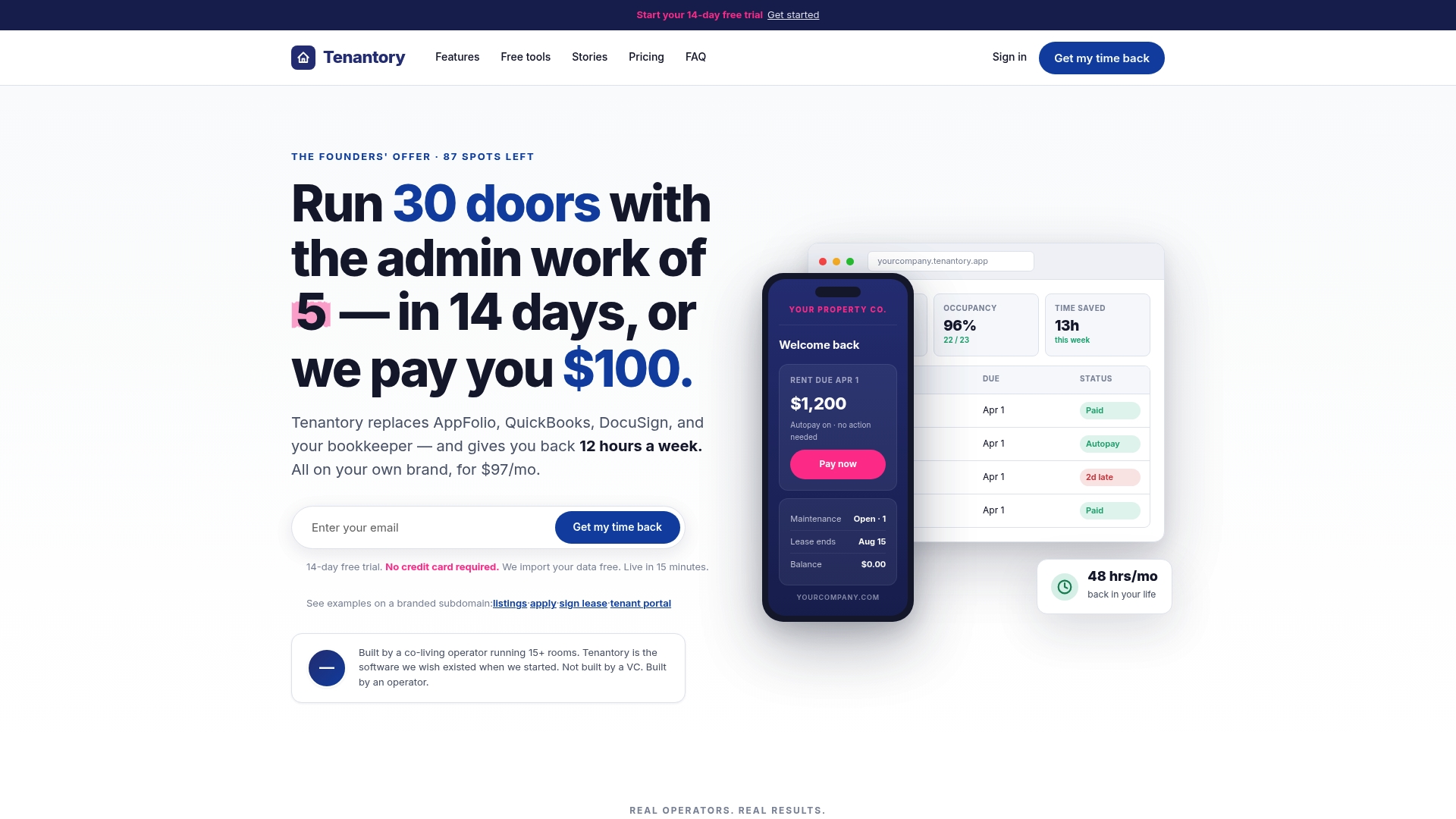
Tenantory advertises a Founders' rate of $99/month locked for life and a consumer starter tier at $39/month for up to five units, positioning itself as a low-cost alternative to legacy platforms. It is operator-built and aimed at landlords who want their own branded tenant experience.
Core Features
- Own branded tenant portal with domain customization so tenants see your logo and URL rather than a third-party brand.
- Automated rent collection supporting credit card and ACH, plus lease e-sign and document storage for move-in paperwork.
- Maintenance ticketing and vendor management to track requests, assign vendors, and log costs.
- Tenant screening is listed as FCRA-compliant; Tenantory's marketing materials state screening returns scores in about two minutes after application submission.
Key Differentiator
Tenantory's angle is clear: an operator-built platform that purposefully trades enterprise complexity for branding control and automation at a lower price point. That focus lets you present a professional, white-label front to tenants without the implementation burden of larger systems.
Pros
- Built by a rental owner with practical workflows, so day-to-day screens and automations match common landlord tasks rather than enterprise baggage.
- $39/month entry pricing makes it affordable for very small portfolios and solo owners who want modern features without high per-unit fees.
- White-label branding is supported across portals and domains, which helps co-living and boutique landlords keep a consistent public face.
- Automation for rent, maintenance, and screening reduces manual data entry and follow-up work, saving time on recurring tasks.
- The vendor offers free migration from other property management software, which lowers the friction of switching.
Cons
- Lacks several advanced enterprise features such as HUD compliance and ACH positive pay that larger portfolios sometimes require.
- Designed primarily for portfolios up to 300 units; scalability for much larger or corporate operations is untested here.
- As a newer, bootstrapped product, it has fewer third-party integrations and may require workarounds for legacy accounting or niche vendor tools.
When It May Not Fit
If you manage portfolios above 300 units or must meet HUD reporting and other institutional compliance, Tenantory will feel limited. Likewise, property management firms that rely on a broad ecosystem of third-party integrations or on enterprise-level treasury controls should look elsewhere.
Who It's For
Owner-operators and small to medium property managers running one to 300 units who want branding control, straightforward automation, and lower monthly costs. Especially relevant for co-living operators, single-family landlords, and small multifamily owners seeking a polished tenant-facing portal.
Real World Use Case
A co-living operator with 20 rooms replaced separate payment spreadsheets, a shared inbox for maintenance, and a generic tenant site with Tenantory. Using the branded portal and the automation above, the operator cut hours spent on collections and vendor follow-up each week, while presenting a single professional URL to prospects.
Pricing
Pricing starts at $39/month for up to five units. The vendor advertises a Founders' rate of $99/month locked for life for early adopters. Enterprise solutions begin at $1,499/month for larger customers.
Website: https://tenantory.com
Comparative Analysis of Room Rental Management Tools
When selecting room rental management software, landlords and property managers often require solutions tailored to their specific operational scale and features that address their core business needs. Here, we compare three platforms—Room Rental Manager, Rhenti, and Tenantory—to assess their strengths and considerations based on the information provided.
Feature Tailoring: Small-Scale Versus Large-Portfolios
Room Rental Manager excels in supporting individual landlords and small-scale operations. Its user-friendly inquiry tracking mechanism and multilingual listing capabilities provide significant value for managing shared housing and individual rooms. Rhenti, in contrast, caters to mid-sized portfolios managing 100–5,000 doors, affording centralized leasing features and integration with property management systems for portfolio synchronization. Meanwhile, Tenantory offers a unique advantage for small-to-medium landlords desiring branded front-ends and tenant-facing portals, presenting a polished user experience without integrating overheads. Consequently, landlords should evaluate their property's scale and branding needs when choosing the software.
Specific Workflow Integration and Automation
Automation and workflow tools differ significantly among these platforms. Room Rental Manager provides inquiry workflows that simplify lead conversion for small property operators. In contrast, Rhenti integrates automated showing schedules and mobile tools, enhancing operational functionality for staff managing larger portfolios. Tenantory focuses on task automation, such as renter screening and maintenance tracking, particularly effective for solo or small-scale managers looking to save administration hours. Thus, features catered to specific operational efficiencies can heavily influence the decision-making process.
Best Fit Recommendations
- Room Rental Manager: Best for landlords managing shared or single-unit rentals who need multilingual support and a user-centered inquiry dashboard.
- Rhenti: Appropriate for mid-size property managers requiring advanced integrations and automation for portfolios spanning 100–5,000 units.
- Tenantory: Suited for branding-conscious owners of up to 300 units looking for streamlined rent collection and tenant communication.
Our Pick
Room Rental Manager differentiates itself with its professional public listing page optimized for room and small-unit rentals, assisting operators in tracking origin sources and responding promptly to inquiries. While professionals tackling large-scale endeavors may benefit more from Rhenti, and Tenantory serves owners prioritizing custom branding, Room Rental Manager remains the fitting choice for small landlords in need of straightforwardly managing and promoting their properties.
Room Rental Management Software Comparison
Compare these leading platforms to identify the one best suited for your property management needs, focusing on features, pricing, and ideal use cases.
| Product | Core Feature | Key Differentiator | Best For | Pricing | Notable Limitation |
|---|---|---|---|---|---|
| Room Rental Manager | Centralized inquiry tracking and AI descriptions | Public listing page tailored for room rentals | Small landlords, solo property managers | $19.95/month introductory, then $29.95 | Lacks advanced enterprise features |
| Rhenti | CRM with e-signing and scheduling | AI workflows and PM system integrations | Mid-sized portfolios | $29 per door per month, varies with add-ons | Requires significant setup for integrations |
| Tenantory | Branded tenant portals with automation | Affordable, operator-focused design | Portfolios up to 300 units | $39/month (up to 5 units); $99/month locked | Limited scalability for large portfolios |
Simplify Your Room Rental Management with Room Rental Manager
Managing multiple room rentals across different platforms can feel overwhelming with scattered inquiries and repetitive communication. The article highlights the challenge of handling leads from Craigslist, Facebook, and other channels while maintaining a professional public presence. If you want to stop juggling messages and avoid missed opportunities, Room Rental Manager offers the perfect solution.
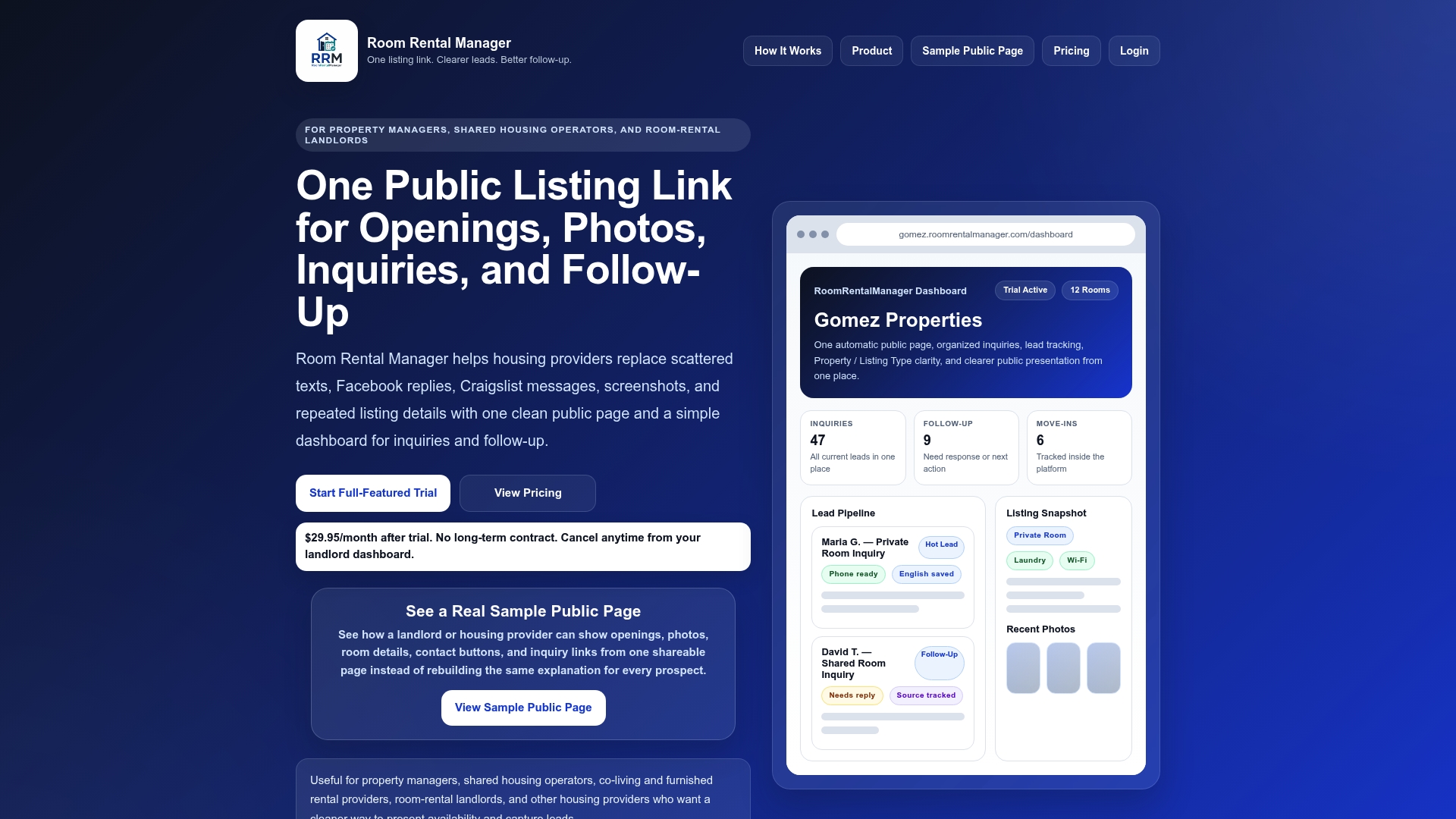
Room Rental Manager centralizes your listings into one clean, shareable public page that displays photos, property details, and contact options. You can collect and track renter inquiries all in one dashboard designed specifically for small-scale landlords and shared housing operators. Visit Room Rental Manager and start consolidating your leads so you can spend less time managing messages and more time filling your vacancies. Create your first listing today and see how easy lead follow-up can be.
Frequently Asked Questions
What features make Room Rental Manager suitable for small landlords?
Room Rental Manager is tailored for small landlords by providing a public listing page that captures inquiries and organizes them centrally. It offers a clean dashboard that consolidates leads and facilitates quick follow-ups, which is essential for managing a small portfolio effectively. Landlords should consider Room Rental Manager if they manage a handful to a few dozen rooms and want to minimize lost messages.
How does Room Rental Manager compare to Rhenti for lead management?
Rhenti provides strong centralized leasing tools and automated workflows that are particularly beneficial for mid-sized property management firms with larger portfolios. Room Rental Manager, on the other hand, excels in creating a simple, organized public listing page ideal for small-scale operators. Landlords managing fewer than 100 properties will find Room Rental Manager's features more aligned with their needs.
What unique benefits does Tenantory offer compared to Room Rental Manager?
Tenantory emphasizes branding control with its white-label tenant portal, allowing landlords to customize the tenant experience. In contrast, Room Rental Manager focuses more on streamlining inquiries and follow-ups for smaller operators. If branding is crucial for your property management, consider exploring Tenantory, but Room Rental Manager may still be the better choice for efficiency and lead tracking.
Can Room Rental Manager handle multilingual listings?
Yes, Room Rental Manager offers multilingual support to help reach a broader audience. This feature includes AI-assisted description tools that enhance the clarity of listings and speed up responses, making it easier for non-native speakers to engage. For landlords looking to attract a diverse range of tenants, this capability is a significant advantage.
What pricing options are available with Room Rental Manager for small landlords?
Room Rental Manager has a launch special pricing of $19.95 per month for the first 100 landlords, transitioning to a regular price of $29.95 afterward. This pricing structure is budget-friendly for small landlords who need a reliable management tool without extensive features that larger firms might require.