

TL;DR:
- Real-time rental availability updates are crucial for maintaining listing accuracy, boosting inquiry conversions, and enhancing AI search visibility. Automating data synchronization through webhooks ensures instant updates across platforms, reducing stale listings and building renter trust. Consistently reconciling availability data and integrating inquiry responses with current unit status maximizes occupancy and overall competitiveness.
Rental availability updates are defined as real-time changes to a unit's status, pricing, move-in date, and occupancy information across every listing channel a landlord uses. The role of rental availability updates goes far beyond simple record-keeping. Stale listing data costs landlords qualified leads, damages tenant trust, and now actively suppresses visibility in AI-powered search systems like Google Gemini. Tools like Buildium, Zillow, and Apartments.com have made real-time data syndication standard practice. Property managers who treat availability as a living field rather than a static entry close vacancies faster, convert more inquiries, and stay competitive in a market where AI agents scan listings daily.
How do rental availability updates affect inquiry conversion?
Timely rental updates are the single biggest factor separating landlords who fill vacancies in days from those who wait weeks. The connection between update frequency and leasing speed is direct and measurable.

Speed of response is the first lever. Responding to Zillow leads within 5 minutes increases the chance of qualifying that lead 21 times compared to responding in 30 minutes. That number means nothing if your availability data is wrong when you respond. A fast reply quoting a unit that already leased destroys credibility instantly.
Stale availability creates a trust gap that most landlords underestimate. When a prospective tenant contacts you about a unit listed as available and learns it has been gone for two weeks, they do not just move on. They mentally flag your listings as unreliable. Consistent availability data boosts renter trust and directly improves lead conversion rates across all portals.
Real-time syndication addresses this problem at scale. When your property management software pushes availability changes to Zillow, Apartments.com, and Facebook Marketplace simultaneously, you eliminate the window where a renter sees conflicting information. Leasey.AI reports that synchronized updates propagate across marketplaces within hours, reducing days-on-market for operators who use it consistently.
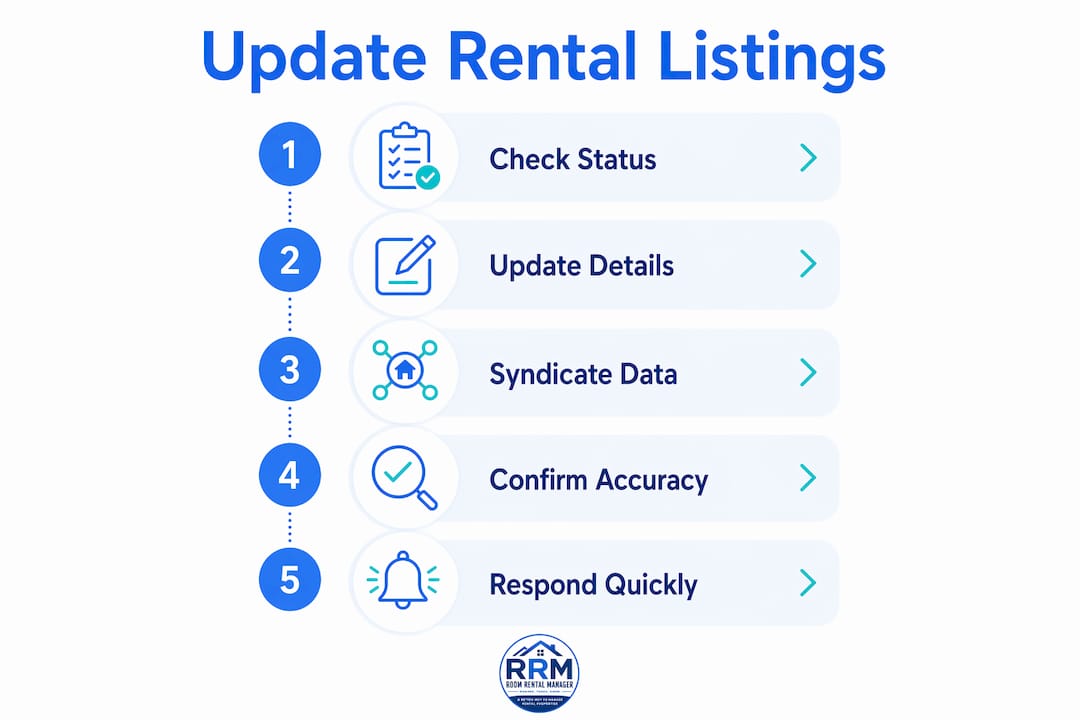
Automation also removes the human error factor. Manual updates depend on someone remembering to log in, find the right listing, and change the correct field. That process fails under pressure. Automated systems tied to your leasing workflow update availability the moment a lease is signed or a unit is vacated.
Pro Tip: Set up an automated trigger in your property management software so that availability status changes the moment a lease is countersigned, not when someone manually updates the portal.
Here is a practical sequence for improving conversion through better availability management:
- Audit every active listing across all platforms and confirm the availability date is accurate today.
- Connect your property management software to each portal via direct integration or a syndication service.
- Set response templates that pull current availability automatically so every reply is accurate.
- Track which portal each inquiry comes from to identify where stale data causes the most drop-off.
- Review availability accuracy weekly as a standing task, not a reactive fix.
What are the best practices for updating listings across platforms?
Maintaining rental listing accuracy across multiple portals requires a deliberate technical strategy, not occasional manual checks. The right approach depends on your market speed and the tools you use.
How often should you refresh availability data?
Update frequency is not one-size-fits-all. Rental listing status can change within hours on major portals in hot metro markets, requiring refreshes 2–4 times daily to avoid false positives in outreach lists. In slower suburban or rural markets, once-daily updates are generally sufficient. The key is matching your refresh rate to how fast units move in your specific area.
Webhooks vs. polling: which update method wins?
The technical method you use to push updates matters as much as the frequency.
- Webhooks push data the moment a status change occurs in your system. A unit marked as leased in Buildium triggers an instant update to every connected portal. This is the preferred method for high-volume operators.
- Polling-based systems check for changes on a schedule, such as every 15 or 30 minutes. Polling can deliver delayed or false availability notifications, meaning renters may still see a leased unit as available between polling cycles.
- Manual updates are the highest-risk option. They depend entirely on staff consistency and create the longest window for stale data to circulate.
| Update Method | Speed | Error Risk | Best For |
|---|---|---|---|
| Webhooks | Instant | Very low | High-volume operators |
| Frequent polling | Minutes | Low to moderate | Mid-size portfolios |
| Scheduled sync | Hours | Moderate | Slower markets |
| Manual updates | Hours to days | High | Single-unit landlords |
Cross-platform data reconciliation
Running listings on Zillow, Apartments.com, RentCafe, and your own website creates four separate data points that must match. Auditing listing data across all channels to reconcile availability, pricing, and amenities is now a baseline requirement for avoiding AI ranking downgrades. A unit showing $1,450 on Zillow and $1,500 on Apartments.com signals data disorder to both renters and algorithms.
Reconciliation should cover four fields at minimum: availability date, monthly rent, unit size, and included utilities. Any mismatch across portals creates confusion that costs you qualified leads.
Pro Tip: Build a simple spreadsheet that lists every portal where your units appear, then run a weekly spot-check comparing availability dates and rent figures across all of them. Discrepancies surface faster than you expect.
How do availability updates affect AI search rankings?
AI-powered search systems have changed the rules for rental property management visibility. Landlords who treat availability as a low-priority field are now paying for that choice in reduced exposure.
Google Gemini Agent Mode, which renters increasingly use to search for apartments, evaluates structured listing data including availability dates as a core relevance signal. Outdated availability causes AI systems to discount or filter listings, reducing visibility and the number of leads a property receives. An AI agent scanning listings daily will deprioritize a unit showing a move-in date from three months ago.
The impact of vacancy updates on AI ranking comes down to three factors:
- Data freshness. AI systems treat recently updated availability as a signal of an active, reliable listing. Stale dates suggest an abandoned or inaccurate record.
- Cross-feed consistency. Renters see multiple portals, and AI agents cross-reference data from Zillow, Apartments.com, and direct feeds. Conflicting availability dates across sources lower a listing's confidence score.
- Field completeness. AI recommendation engines favor listings with complete structured data. A missing or blank availability date is treated as incomplete, not neutral.
AI-driven search engines treat availability consistency and freshness as key relevance signals that directly affect community recommendation and visibility. Zumper has documented this shift, noting that multiple data points including availability guide AI recommendation relevance in ways that traditional SEO never did.
The practical implication is clear. Keeping availability current is no longer just a courtesy to renters. It is a technical requirement for staying visible in the channels where renters now search. Property managers who automate availability updates gain a compounding advantage as AI search adoption grows.
What operational strategies connect availability updates to lead management?
Availability data and lead inquiry management are two systems that must operate as one. Most landlords run them separately, and that gap is where qualified leads go cold.
The inquiry management process starts with a response that is both fast and accurate. Speed without accuracy wastes the opportunity. Accuracy without speed loses the lead to a faster competitor. Both depend on availability data being current at the moment of reply.
Here is a practical workflow for connecting the two systems:
- Set a response SLA of 5 minutes or less for all new inquiries during business hours. Use automated acknowledgment messages outside those hours.
- Build response templates that pull the current availability date, unit details, and showing slots directly from your listing system. Update these templates weekly at minimum.
- Match every response to the specific unit the prospect inquired about. Generic replies that do not reference the exact unit, floor, or availability date signal that you are not paying attention.
- Confirm showing availability in the first reply. Do not ask a prospect to call back to schedule. Give them two or three specific time slots in the initial message.
- Log every inquiry against the source portal and the unit status at the time of contact. This data shows you where availability gaps are causing the most friction.
Templated responses should include weekly-refreshed availability, confirmed showing slots, and unit-specific details to maximize conversion. This is not about automation replacing personal contact. It is about making sure every touchpoint reflects accurate information.
Pro Tip: Use rental inquiry tracking software to log the availability status at the time each inquiry arrives. If a prospect contacts you about a unit that was already leased, that is a data gap you need to close immediately.
The benefits of availability updates compound when your lead management system and listing data share the same source of truth. When a unit leases, the availability update should trigger automatically, close the inquiry queue for that unit, and redirect new contacts to the next available option. That level of integration is achievable with current tools and pays for itself in reduced vacancy time.
Key takeaways
Rental availability updates are the operational foundation that connects accurate listings, fast lead conversion, and AI-driven visibility into a single competitive advantage for landlords.
| Point | Details |
|---|---|
| Update frequency matters | Refresh listings 2–4 times daily in hot markets to prevent stale data from reaching renters. |
| Webhooks outperform polling | Event-driven updates push availability changes instantly, eliminating the delay gap that costs leads. |
| AI systems penalize stale data | Google Gemini and similar tools downgrade listings with outdated availability dates, reducing visibility. |
| Speed plus accuracy converts leads | Responding within 5 minutes with current availability information multiplies lead qualification odds. |
| Cross-platform consistency is required | Reconcile availability, rent, and amenities across Zillow, Apartments.com, and all other portals weekly. |
Why most landlords are still getting availability wrong
I have reviewed hundreds of rental listings across Zillow, Craigslist, and Facebook Marketplace over the years, and the pattern is consistent. The landlords losing the most leads are not the ones with bad photos or high prices. They are the ones with availability dates that are two weeks behind reality.
The industry conversation about AI search is accelerating fast. Google Gemini Agent Mode is not a future concern. It is scanning listings right now, and it is making ranking decisions based on data freshness. Most property managers I talk to are still thinking about availability updates as a manual task they handle when they remember. That mindset is now a competitive liability.
What most operators miss is the compounding effect. A stale availability date does not just cost you one lead. It costs you the AI ranking signal, the renter trust signal, and the response-speed advantage all at once. Fix one, and you get marginal improvement. Fix all three together, and your vacancy fill rate changes noticeably within a few weeks.
The landlords I have seen do this well share one habit. They treat availability as a contract field, not a marketing field. It gets updated the moment a status changes, not when someone gets around to it. They use automation where possible and human review as a backup, not the other way around.
My honest advice: start with a full audit of every portal where your units appear. Check availability dates, rent figures, and move-in windows. You will almost certainly find at least one listing showing information that is weeks out of date. Fix that first. Then build the system that prevents it from happening again.
— JAMES
How room rental manager keeps your listings current
Managing availability updates across texts, emails, Facebook replies, and Craigslist messages is where most landlords lose control of their data. Room Rental Manager solves this by giving you one clean listing page that centralizes your availability, photos, unit details, and inquiry intake in a single shareable link.
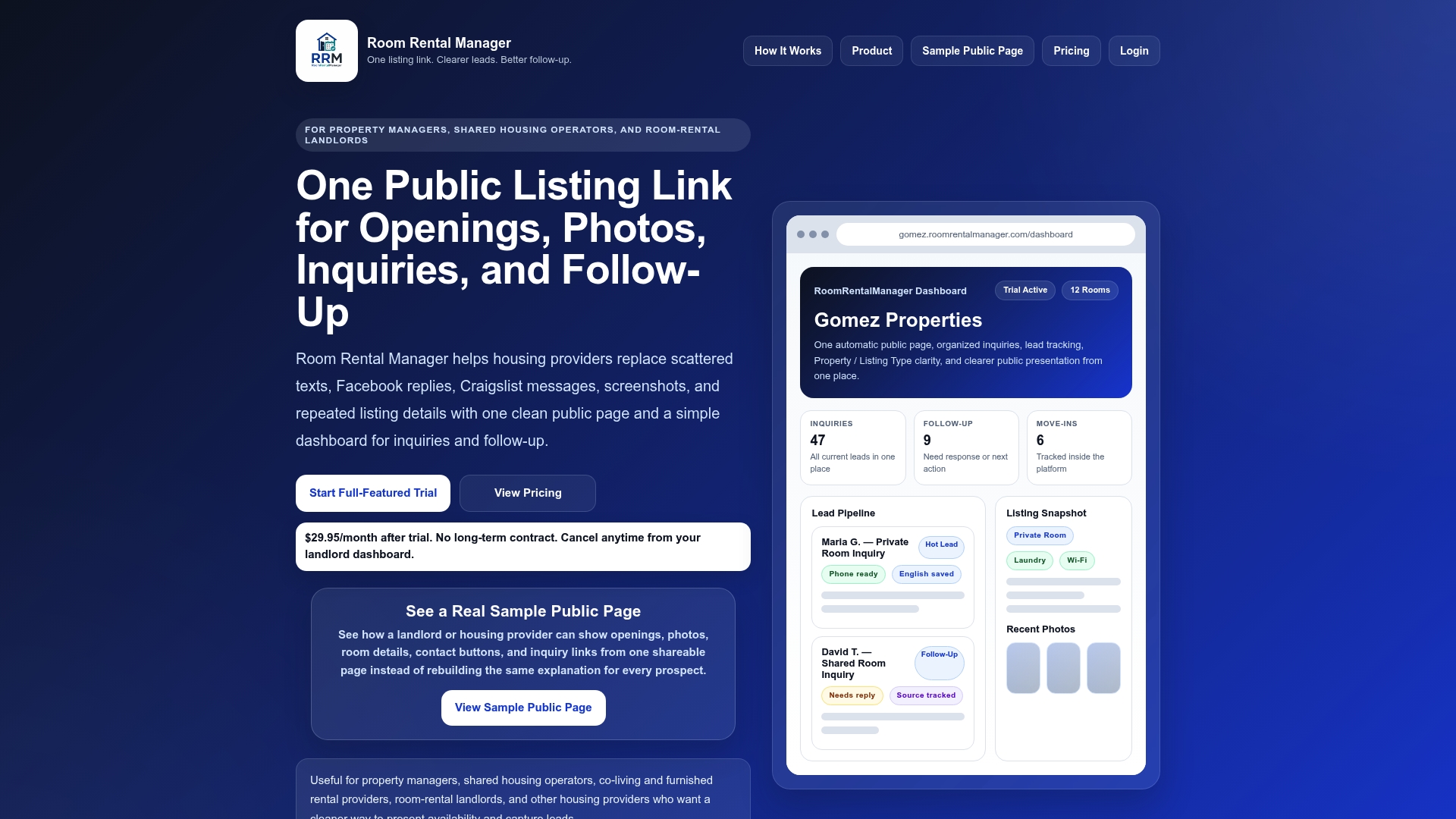
When availability changes, you update it once in your Room Rental Manager dashboard and every prospect who visits your link sees the current status immediately. No more outdated screenshots circulating in group chats. No more responding to inquiries about units that leased last week. The platform's lead management tools connect availability data directly to your inquiry workflow, so every response you send reflects what is actually available right now. If you manage shared housing, furnished rentals, or multiple room types, Room Rental Manager's software scales to handle all of them from one dashboard.
FAQ
What is the role of rental availability updates in leasing?
Rental availability updates keep listing data current across all portals, which directly affects tenant trust, inquiry conversion, and how quickly a vacancy fills. Stale availability is one of the leading causes of qualified leads going cold before they apply.
How often should landlords update rental availability?
In competitive metro markets, availability should be refreshed 2–4 times daily. In slower markets, once-daily updates are sufficient to prevent renters from encountering outdated listing information.
Do availability updates affect AI search rankings?
Yes. AI systems like Google Gemini Agent Mode treat availability freshness and cross-platform consistency as ranking signals. Listings with stale or conflicting availability dates are filtered out or deprioritized in AI-driven search results.
What is the fastest way to keep listings accurate across platforms?
Event-driven webhooks connected to your property management software push availability changes instantly to all listing portals. This method eliminates the delay gap that polling-based or manual update systems create.
How do availability updates connect to lead response strategy?
Every inquiry response should include the current availability date, unit-specific details, and confirmed showing slots. Responding within 5 minutes with accurate availability information increases lead qualification odds significantly compared to slower or generic replies.