

TL;DR:
- Shared amenities in rentals include facilities like gyms, laundry, parking, and outdoor spaces, used collectively by residents. Renters should verify access, hours, and usage conditions in writing before signing, focusing on daily essentials like laundry and parking. Comparing amenities across listings involves mapping costs, access methods, and realistic usage to select options that suit actual routines.
A shared amenities listing for renters details the communal facilities and features available in a rental property beyond what's inside your individual unit. These listings are the difference between a well-informed housing decision and a costly surprise after move-in. According to 2026 renter surveys, 65% of renters say air conditioning is required, 64% call in-unit laundry a necessity, and 42% prioritize off-street parking. That data tells you something critical: the amenities renters care most about are daily-use essentials, not luxury extras. Before you sign a lease, understanding exactly what shared facilities are available, how you access them, and what rules govern their use is the most practical thing you can do.
What does a shared amenities listing for renters include?
A shared amenities listing covers every facility or feature that residents of a building or shared housing arrangement use collectively rather than exclusively. This is distinct from in-unit amenities, which are features inside your private space such as a dishwasher, central air, or in-unit washer and dryer. Separating in-unit from community amenities clarifies expectations and prevents the common misunderstanding that community amenities are always conveniently accessible.

Shared apartment features typically fall into several categories. Fitness and wellness spaces include gyms, yoga studios, and pools. Convenience amenities cover laundry rooms, package lockers, and mail centers. Social and outdoor spaces include rooftop decks, courtyards, lounges, and barbecue areas. Practical infrastructure covers parking garages, bike storage, and storage units. Each category serves a different lifestyle need, and not all of them will matter equally to you.
The data on renter priorities is telling. 83% of renters consider fitness centers important or essential, and 68% report actually using them regularly. That gap between interest and usage is worth noting. A fitness center sounds appealing on a listing, but if it's overcrowded at 7 a.m. or poorly maintained, its real value drops fast. The same logic applies to every shared feature on a rental amenities checklist.
Pro Tip: When reviewing a shared amenities listing, divide features into two columns: "daily use" and "occasional use." Prioritize listings that score high on daily-use features that match your actual routine, not just the ones with the longest amenity list.
The table below summarizes the most common shared apartment features and how renters typically rank them:
| Amenity | Renter priority level | Usage frequency |
|---|---|---|
| In-unit laundry / laundry room | Very high | Daily to weekly |
| Fitness center | High | Several times per week |
| Secure parking | High | Daily |
| Package lockers | Moderate to high | Weekly |
| Outdoor spaces / rooftop | Moderate | Seasonal |
| Resident lounge | Low to moderate | Occasional |
| Pool | Low to moderate | Seasonal |
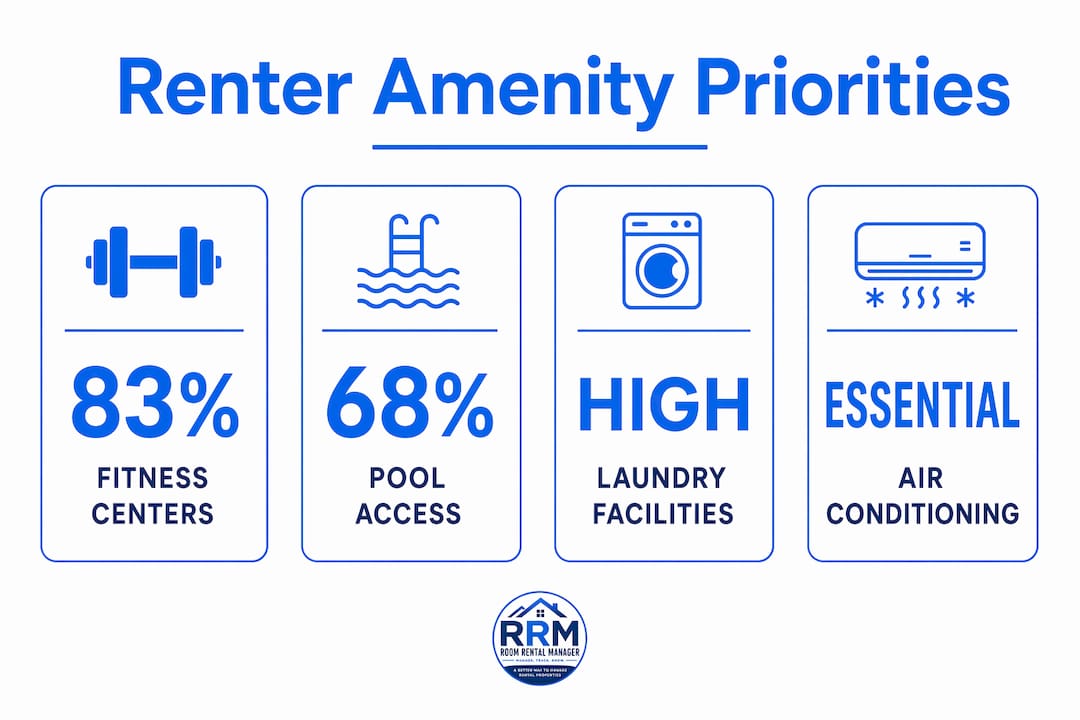
Understanding this breakdown helps you cut through listing descriptions that lead with pools and rooftop terraces while burying the fact that laundry is coin-operated in a single basement room.
How to evaluate access and availability in rental listings
Knowing that a shared amenity exists is only half the information you need. The access model determines whether that amenity is genuinely useful or just a marketing checkbox. Access models for shared amenities vary widely: some facilities are open to all residents at any time, others require a key fob or app-based entry, and some require advance reservations. Each model has real implications for your daily convenience.
Open access sounds ideal, but it often means no capacity control, which leads to overcrowding during peak hours. Fob or app-controlled access adds security and sometimes limits capacity, but it can also mean you're locked out during a system outage. Reservation-based amenities like rooftop event spaces or private dining rooms are the most restricted and the least useful for spontaneous use.
Seasonal closures and maintenance periods are another layer renters routinely overlook. A pool listed as a shared amenity may be closed from October through April. A fitness center may shut down for two weeks annually for equipment servicing. Community amenities can be unavailable or temporarily closed for maintenance or operational reasons, and most leases give landlords the right to modify or suspend amenity access without notice.
Here are the key verification steps to take before signing any lease that includes shared facilities:
- Ask for the amenity's operating hours in writing, not just verbally.
- Confirm whether access requires a fob, app, reservation, or is fully open.
- Ask when the amenity was last serviced or upgraded.
- Request the community policy document that governs amenity use, including guest rules.
- Ask whether amenity access is included in rent or billed as a separate fee.
- Confirm the process for reporting maintenance issues and the typical response time.
- Visit the property during peak hours (evenings and weekends) to observe actual usage and condition.
Pro Tip: At lease signing, request a written addendum or exhibit that lists every shared amenity, its access model, and its operating hours. This document protects you if an amenity is later removed or restricted.
Package lockers are a useful case study in why verification matters. Smart lockers for apartments offer secure, 24/7 access via PIN, QR code, or app, which is genuinely convenient. But not every building with "package management" has smart lockers. Some use a front desk with limited pickup hours. Knowing the difference before move-in saves real frustration.
How to compare shared amenities across multiple rental options
Comparing rental shared facilities across two or three listings requires a structured approach. Without one, you end up making decisions based on whichever listing had the nicest photos rather than which property actually fits your life. The goal is to map each amenity by three factors: what it costs (included in rent or extra fee), how you access it, and how often you'll realistically use it.
Start by building a simple comparison table for every property you're seriously considering. List each shared amenity in the rows and score each property across the three factors above. This format makes trade-offs visible. A property with a gym, rooftop, and package lockers sounds superior to one with just a laundry room and parking. But if the gym requires a $50 monthly add-on, the rooftop is reservation-only, and the package lockers overflow regularly, the simpler property may deliver more daily value.
Here is an example comparison table format you can adapt:
| Amenity | Property A | Property B | Property C |
|---|---|---|---|
| Laundry | In-unit, included | Shared room, $2/load | In-unit, included |
| Parking | Garage, included | Street only | Lot, $75/month |
| Fitness center | Open access, 24/7 | Fob access, 6am-10pm | Not available |
| Package lockers | Smart lockers, 24/7 | Front desk, 9am-6pm | Smart lockers, 24/7 |
| Outdoor space | Rooftop, reservation | Courtyard, open | None |
Daily friction versus convenience is the right frame for this analysis. An amenity that requires extra steps, fees, or scheduling creates friction every time you use it. An amenity that works automatically, like a parking spot included in rent, removes friction. Over a 12-month lease, those small differences compound into real quality-of-life impact.
Shared housing situations add another layer of complexity. If you're renting a room in a house with other tenants, shared amenities include things like the kitchen, living room, bathrooms, and outdoor spaces. In these cases, house rules governing shared spaces become as important as the amenities themselves. A beautiful shared kitchen means nothing if there are no clear rules about cleaning, storage, or guest use.
Pro Tip: For shared housing with roommates, ask the landlord or property manager for the house rules document before your tour ends. If no such document exists, that's a red flag about how shared spaces are managed.
Prioritizing must-have versus nice-to-have features depends entirely on your lifestyle. If you work from home, reliable parking and a quiet common area matter more than a pool. If you commute by bike, covered bike storage ranks higher than a rooftop deck. Must-have amenities tend to be daily essentials rather than flashy features, so build your comparison around what you actually do every day, not what sounds impressive.
Common pitfalls when relying on shared amenities
The most expensive mistake renters make with shared amenities is assuming that "listed" means "available." A listing that mentions a fitness center, pool, and rooftop lounge creates an impression that may not match reality at 6 p.m. on a Tuesday. Overestimating amenity availability is one of the most consistent sources of post-move-in disappointment.
Here are the most common pitfalls and how to avoid each one:
- Assuming amenities are always open. Many shared facilities have restricted hours or seasonal closures. Always confirm operating schedules in writing before signing.
- Ignoring fee structures. Some buildings charge separately for parking, storage, or fitness center access. Read the lease carefully for any amenity-related fees beyond base rent.
- Skipping the overflow question for package lockers. Package management overflow is a real operational problem in multifamily buildings. Ask how the building handles oversized deliveries or locker capacity issues.
- Underestimating shared item ambiguity. In shared housing, unclear ownership of shared items like cleaning supplies, kitchen tools, or outdoor furniture creates conflict. A move-in checklist that documents shared items and responsibilities prevents this.
- Not confirming utility responsibilities. Some shared amenities, like a shared washer/dryer or outdoor grill, may come with shared utility costs. Confirm who pays what before move-in.
- Trusting photos over in-person visits. Listing photos of shared spaces are often taken at their best. Visit during peak hours to see actual condition and usage levels.
- Forgetting to document the condition at move-in. Take dated photos of all shared spaces you'll use regularly. This protects you from being held responsible for pre-existing damage.
The shared item ambiguity problem deserves extra attention in roommate situations. Move-in checklists and clear usage guidelines significantly improve shared amenity upkeep and reduce conflict between residents. A five-minute conversation at move-in about who cleans the shared bathroom and when prevents months of tension.
Key takeaways
A shared amenities listing for renters is only as useful as the access, availability, and usage rules behind each feature. Renters who verify these details before signing a lease consistently report higher satisfaction with their housing choices.
| Point | Details |
|---|---|
| Separate in-unit from shared amenities | Treat community features as conditional, not guaranteed, when comparing listings. |
| Verify access models in writing | Confirm hours, fob or app requirements, and reservation rules before signing. |
| Use a comparison table | Map each amenity by cost, access, and realistic usage frequency across all listings. |
| Prioritize daily-use essentials | Laundry, parking, and package access matter more than seasonal or occasional features. |
| Document everything at move-in | Photograph shared spaces and request a written amenity addendum to your lease. |
Why the amenity list is the last thing you should trust
I've reviewed hundreds of rental listings over the years, and the amenity section is consistently the most optimistic part of any listing. Landlords list amenities at their theoretical best. A "fitness center" might be two treadmills and a weight rack in a converted storage room. A "rooftop lounge" might be three plastic chairs and a view of an HVAC unit. I'm not saying landlords are dishonest. I'm saying that listings describe potential, not reality.
The renters I've seen make the best decisions are the ones who treat the amenity list as a starting point for questions, not a list of confirmed features. They visit in person, they ask for the community rules document, and they talk to current residents if possible. Current residents will tell you in 30 seconds whether the gym is actually usable or whether the package lockers are always full.
The other mistake I see constantly is prioritizing impressive amenities over practical ones. A rooftop pool sounds better than a parking spot, but if you drive to work every day, the parking spot changes your life and the pool doesn't. High renter interest in fitness and parking translates into actual daily usage, which is exactly why those features consistently rank at the top of satisfaction surveys.
My honest recommendation: build your renter amenities checklist around your actual weekly schedule, not your ideal lifestyle. Then verify every item on that checklist before you commit to a lease. The five hours you spend doing this research will save you 12 months of frustration.
— JAMES
How Room Rental Manager helps renters find clear listings
When a landlord uses Room Rental Manager to create a listing, renters get one clean, organized page that spells out exactly what's included, what's shared, and how to ask questions. No more piecing together information from a Craigslist post, three text messages, and a blurry photo. Room Rental Manager gives landlords a single link to share, which means the shared housing details you need are in one place, presented clearly and consistently.
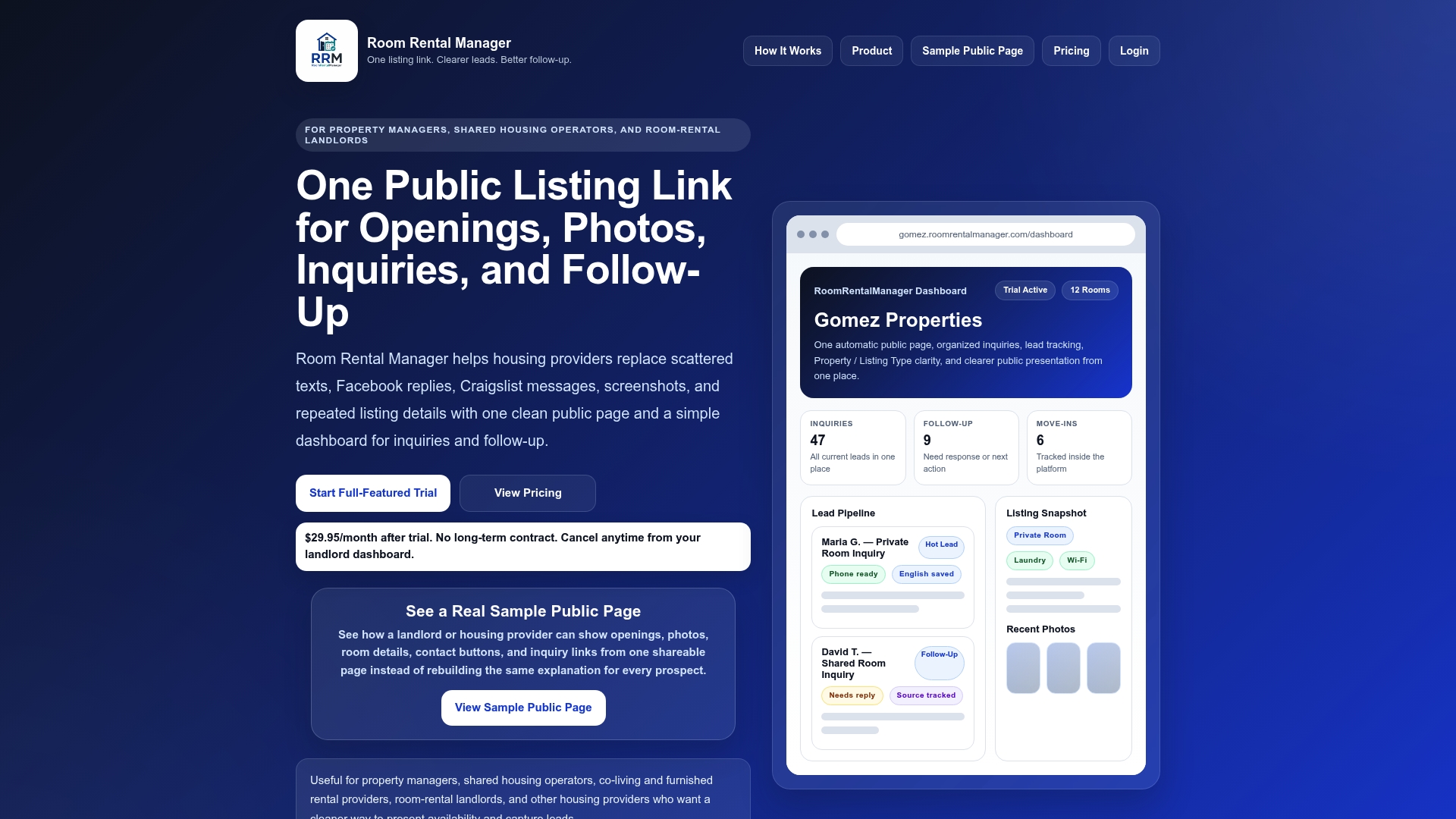
For renters comparing multiple options, that clarity is genuinely useful. You can review amenity details, contact the landlord directly, and track your inquiries without losing information across platforms. Landlords who use Room Rental Manager's rental listing tools tend to provide more complete amenity disclosures because the platform prompts them to. Explore landlord and renter resources at Room Rental Manager to see how organized listings make the comparison process faster and less stressful.
FAQ
What are shared amenities in a rental listing?
Shared amenities are facilities and features that all residents of a building or property use collectively, such as fitness centers, laundry rooms, parking areas, package lockers, and outdoor spaces. They differ from in-unit amenities, which are exclusive to your private unit.
Which shared amenities do renters value most in 2026?
According to 2026 survey data, renters rate air conditioning, in-unit laundry, and off-street parking as the top required amenities. Fitness centers rank high as well, with 83% of renters calling them important or essential.
How do I verify that shared amenities are actually accessible?
Ask the landlord or property manager for operating hours, access method (open, fob, app, or reservation), and the community policy document in writing. Visit the property during peak hours to observe real usage and condition before signing.
Are shared amenities always included in rent?
Not always. Some buildings charge separately for parking, storage units, or fitness center access on top of base rent. Always read the lease for any amenity-related fees and confirm the full cost of access before committing.
What should I document about shared amenities at move-in?
Take dated photos of all shared spaces you plan to use, and request a written addendum to your lease that lists each shared amenity, its access model, and its operating hours. This protects you if amenities are later restricted or if disputes arise over pre-existing conditions.