

TL;DR:
- A single page rental showcase consolidates property details, photos, and contact information to reduce repeated inquiries.
- Preparing high-quality media, detailed specs, and targeted branding before building ensures a polished, effective listing.
You've answered the same questions dozens of times. Sent the same photos via text. Pasted the same details into Facebook messages, emails, and Craigslist replies. A single page rental property showcase solves all of that by putting everything in one place. Prospects get the full picture without chasing you down. You stop repeating yourself. And instead of managing a scattered mess of inquiries across five platforms, you get one clean link that works as both a marketing tool and a tenant filter. This guide covers how to build that page, what to put on it, and how to make it work harder than any listing you have right now.
Table of Contents
- Key takeaways
- Single page rental property showcase: what to prepare first
- How to design and build your showcase page
- Common challenges when launching your showcase
- Measuring results and optimizing over time
- What I have learned about rental showcases that most guides skip
- Build your showcase with Room Rental Manager
- FAQ
Key takeaways
| Point | Details |
|---|---|
| One link beats scattered listings | A single page acts as a source of truth, reducing renter confusion and cutting repeat inquiries. |
| Preparation determines quality | Gather photos, property details, and branding before building to avoid a weak, templated result. |
| Mobile-first is non-negotiable | Most tenant inquiries come from phones, so design and load speed must prioritize mobile from the start. |
| SEO favors specificity | Pages targeting one address and property type consistently outperform generic listing aggregators in search. |
| Track every lead source | Use your showcase as a funnel to measure which marketing channels actually deliver quality applicants. |
Single page rental property showcase: what to prepare first
Before you touch any design tool or platform, your preparation determines how good the final page actually is. Landlords who skip this step end up with a generic template stuffed with vague descriptions that neither ranks in search nor converts curious browsers into actual applicants.
Start with your media assets. High-quality photos are the single biggest factor in whether a prospect stays on your page or leaves in three seconds. Shoot during daylight, use a wide-angle lens, and capture every room including storage, laundry, and outdoor space. If you can add a short walkthrough video or a virtual tour, do it. Professional photography and virtual tours measurably increase engagement and accelerate tenant commitments.
Next, gather every piece of factual property information you will need:
- Square footage and room dimensions
- Number of bedrooms and bathrooms
- Lease terms, available date, and rent amount
- Utilities included and parking situation
- Pet policy, smoking policy, and any HOA rules
- Appliances, laundry setup, and heating and cooling type
- Neighborhood details: transit access, nearby schools, grocery stores, and walkability
Write these down before you start building. Having them in front of you prevents the half-finished pages that sit with placeholder text for weeks.
You also need to think about who you are trying to attract. A furnished studio targeting traveling nurses requires a completely different tone and emphasis than a three-bedroom house targeting families. Define your target tenant before you write a single word, because that persona shapes your headline, your photos, and even which amenities you lead with.
Pro Tip: Create a simple one-page document with all your property facts, contact details, and preferred branding before logging into any platform. You will build twice as fast and the result will be significantly more polished.
On the cost side, platform choices range widely. Automated showcase tools start around $200 per listing, while newer software options with AI features run as low as $2.50 per active lease per month in 2026. For most independent landlords, a purpose-built rental management platform with a built-in listing page offers the best value because the listing and inquiry management are connected from day one.
| Preparation item | Why it matters |
|---|---|
| High-resolution photos and video | First impression drives bounce rate and inquiry volume |
| Complete property specs | Prevents back-and-forth questions from prospects |
| Tenant persona definition | Shapes copy tone, featured amenities, and lead capture fields |
| Branding assets and contact info | Creates trust and makes follow-up frictionless |
| Platform or software selection | Determines what features are available and how fast you can launch |
How to design and build your showcase page
Once your materials are ready, building the page becomes a straightforward execution task. The goal is a page that loads fast, looks professional on a phone, and converts curious visitors into submitted inquiries.
Here is a practical sequence to follow:
-
Pick a mobile-first template. Most rental inquiries originate from mobile devices, so a design that looks great on desktop but breaks on a phone will cost you applicants. Choose a template with large images, readable fonts at small sizes, and forms that work with one thumb. Mobile-first design with fast load times and minimal clicks on inquiry forms directly prevents tenant abandonment.
-
Write a specific headline. Do not write "Apartment for Rent." Write "Bright 2BR in Capitol Hill with Parking and In-Unit Laundry, Available August 1." The specificity communicates value immediately and aligns with the exact terms local tenants are searching for.
-
Structure your content in order of tenant priority. Lead with the hero photo, then rent and availability, then the gallery, then property details, then neighborhood information, then your lead capture form. Tenants want price and availability first. Bury it and they leave.
-
Build a proper media gallery. Use 8 to 15 high-quality photos ordered logically: living areas, kitchen, bedrooms, bathrooms, storage, outdoor space. If you have a virtual tour, embed it directly in the page rather than linking away to another tab. Keeping tenants on your page keeps them engaged.
-
Write neighborhood-specific copy. This is where most landlords leave real conversion opportunity behind. Custom neighborhood copy dramatically outperforms generic property descriptions because it matches what local tenants are actually searching for. Mention the closest coffee shop, the walk to the train, the name of the school district.
-
Optimize your page for search. A single page targeting one address and property type outperforms generic aggregator listings in local search. Use the full street address in your page title, your meta description, and your first paragraph. This alone can drive organic traffic without any paid advertising.
-
Add one clear call-to-action. Do not give prospects five options: call, text, email, fill out a form, schedule a tour. Pick one primary action and design everything toward it. A single well-placed inquiry form with three to four fields converts better than a cluttered contact section with multiple paths.
-
Install analytics tracking. Whether you use Google Analytics or your platform's built-in tracking, you need to know where your visitors are coming from and what they do when they arrive. Without this data, you are guessing at what is working.
Pro Tip: Treat your lead capture form like a pre-screening tool. Ask one qualifying question, such as move-in date or household size, alongside contact details. It filters out low-intent inquiries without adding friction for serious applicants.
When comparing design approaches, the contrast between a purpose-built rental showcase and a generic Craigslist post is significant.
| Feature | Generic listing post | Purpose-built showcase page |
|---|---|---|
| Mobile experience | Poor, inconsistent rendering | Designed for mobile from the ground up |
| SEO visibility | Low, competes with thousands of similar posts | Targets a single address, ranks locally |
| Lead capture | External contact, easy to ignore | Integrated form with direct routing |
| Media options | Limited photos, no video or virtual tour | Full gallery, embedded tours, video |
| Analytics | None | Full visitor tracking and source attribution |
| Content control | Platform dictates format | You control every word and image |
Common challenges when launching your showcase
The most common failure mode for rental property showcases is not a technical problem. It is lazy content. Template-based sites without custom content consistently underperform because they look identical to thousands of other listings and give search engines nothing unique to index. The fix is simple: write original descriptions, name specific neighborhood landmarks, and use photos that were actually taken of your property.
Here are the other problems that come up regularly and how to deal with them:
-
Stale information destroys trust. If a prospect lands on your page and sees a move-in date from three months ago or a "currently available" banner on a unit you already filled, you lose credibility instantly. Outdated property content increases bounce rates and damages your reputation with prospective tenants. Build a habit of reviewing your page every time anything changes.
-
Slow load times kill mobile conversions. Compress every image before uploading. A 6MB photo file has no place on a rental showcase page. Aim for images under 300KB each without visible quality loss. If your page takes more than three seconds to load on a mobile connection, you are losing applicants before they see your kitchen.
-
Broken or unanswered lead forms. Test your inquiry form before you start sharing the link. Fill it out yourself, check that the submission routes to the right inbox, and confirm the auto-reply fires correctly. Then check it again after any platform update. A form that does not work is worse than no form at all because it signals to tenants that you are not paying attention.
-
Forgetting to update availability status. The page should reflect reality at all times. If you have taken the property off the market, either redirect the URL or update the page to show that availability is closed. A tenant who inquires on a filled unit and gets no response becomes a negative review.
-
Ignoring tenant feedback signals. If you are getting repeated questions about something that should already be on the page, add it. Common gaps include parking specifics, pet deposit amounts, and utilities breakdown. Every recurring question is a signal that your page has a content gap.
Measuring results and optimizing over time
Filling one vacancy is a good outcome. Building a process that fills every future vacancy faster, with better-quality applicants, is the real goal. Your showcase page makes that possible if you track the right numbers.
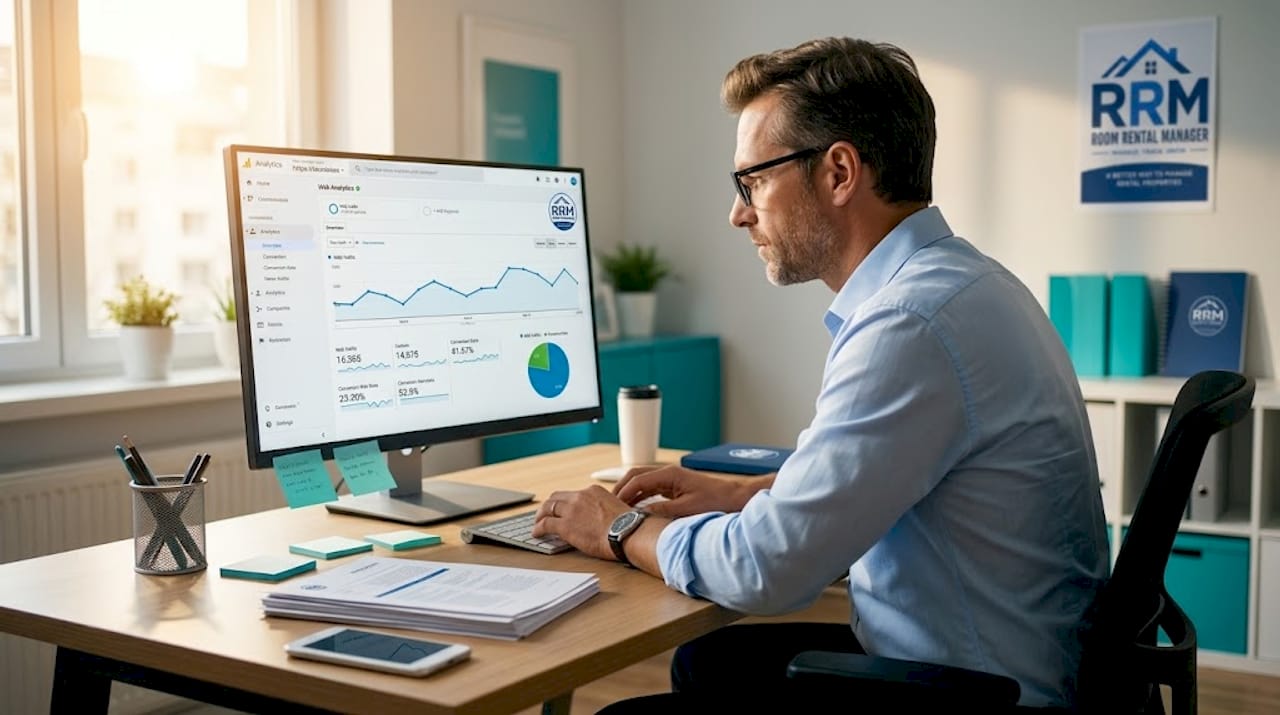
The metrics that actually matter for a rental showcase fall into three categories: traffic, engagement, and conversion.
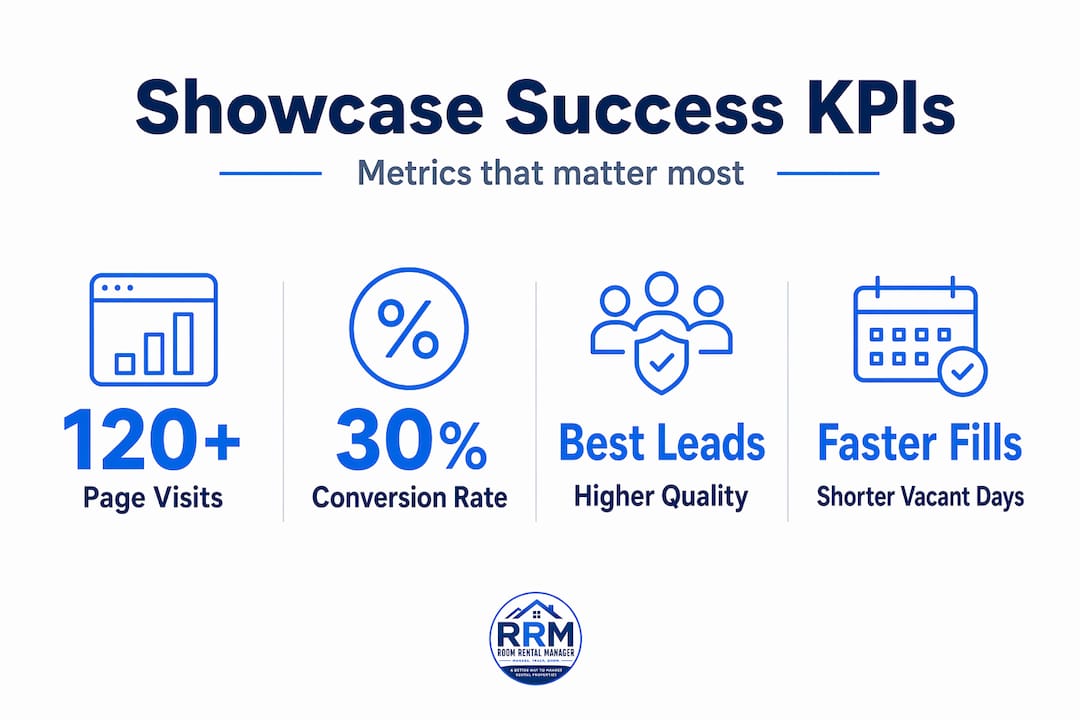
| Metric | What it tells you | How to use it |
|---|---|---|
| Page visits by source | Which marketing channels drive traffic | Reallocate budget to top-performing sources |
| Average time on page | Whether visitors are actually reading | Short sessions signal weak photos or unclear pricing |
| Inquiry form completion rate | How well your page converts visitors | Low rates point to form friction or missing info |
| Lead-to-showing ratio | Quality of inquiries captured | High drop-off means poor tenant-property fit in your copy |
| Days to vacancy fill | Overall funnel efficiency | Track over time to measure improvement |
Dedicated property page URLs allow you to run distinct campaigns from social media, paid ads, and Craigslist while tracking exactly which source delivers the best applicants. This is not something a shared listing platform can give you.
Beyond raw traffic, look at lead quality. If your page generates 40 inquiries but none of them convert to a showing, the traffic is not the problem. Your copy is attracting the wrong tenant. Go back to your target persona and tighten the language to speak directly to the renter you actually want.
Pro Tip: Refresh your showcase page every 30 days even if nothing major has changed. Add a new photo, update a neighborhood detail, or rewrite the headline slightly. This signals freshness to search engines and gives repeat visitors a reason to take another look.
Integrated lead capture and routing takes this further by automatically sorting, tagging, and following up with inquiries so nothing slips through the cracks. When your showcase is connected to a lead management system, you stop managing leads manually and start working from a prioritized list of the most qualified applicants.
Property management specialists increasingly treat the single page showcase not just as a marketing tool but as an asset management strategy. A polished, professional listing elevates property value perception and gives landlords real leverage in pricing decisions. If your presentation looks better than comparable units in the same neighborhood, you can justify a higher rent and attract tenants who are willing to pay it.
Check out the rental availability page benefits guide for a deeper look at how landlords are using dedicated listing pages to change their entire leasing process.
What I have learned about rental showcases that most guides skip
I have reviewed hundreds of rental listing pages, and the pattern that separates the ones that convert from the ones that sit idle is almost never about design. It is about specificity.
Most landlords default to generic language because it feels safe. "Great location, spacious rooms, lots of natural light." These phrases appear on tens of thousands of listings. They mean nothing to a tenant who is trying to decide between you and three other options on their phone at 9pm. The landlords who fill vacancies faster are the ones who write the uncomfortable specifics: the actual walk time to the nearest subway station, the name of the coffee shop across the street, the ceiling height in the living room. That level of detail signals confidence and builds trust before the prospect ever contacts you.
The other thing I see consistently is landlords treating their showcase page as a static document rather than a living marketing tool. The best property managers I have worked with treat the page the way a retailer treats a storefront window. It gets refreshed, repositioned, and updated based on what the numbers show. They run a Facebook ad to the page one week, a Google ad the next, and compare the inquiry quality from each source. That is how you stop guessing and start making decisions based on real data.
One more thing that almost nobody talks about: the relationship between your showcase page and your follow-up speed. A beautifully designed page that generates strong inquiries means nothing if your response time is 48 hours. Tenants looking for rentals are typically comparing three to five properties simultaneously. The first landlord to respond with something substantive usually gets the showing. Your page needs to be connected to a system that notifies you the moment a form is submitted, not to an email inbox you check twice a day.
— JAMES
Build your showcase with Room Rental Manager
If you are ready to stop repeating yourself across texts, emails, and listing platforms, Room Rental Manager was built exactly for this situation.
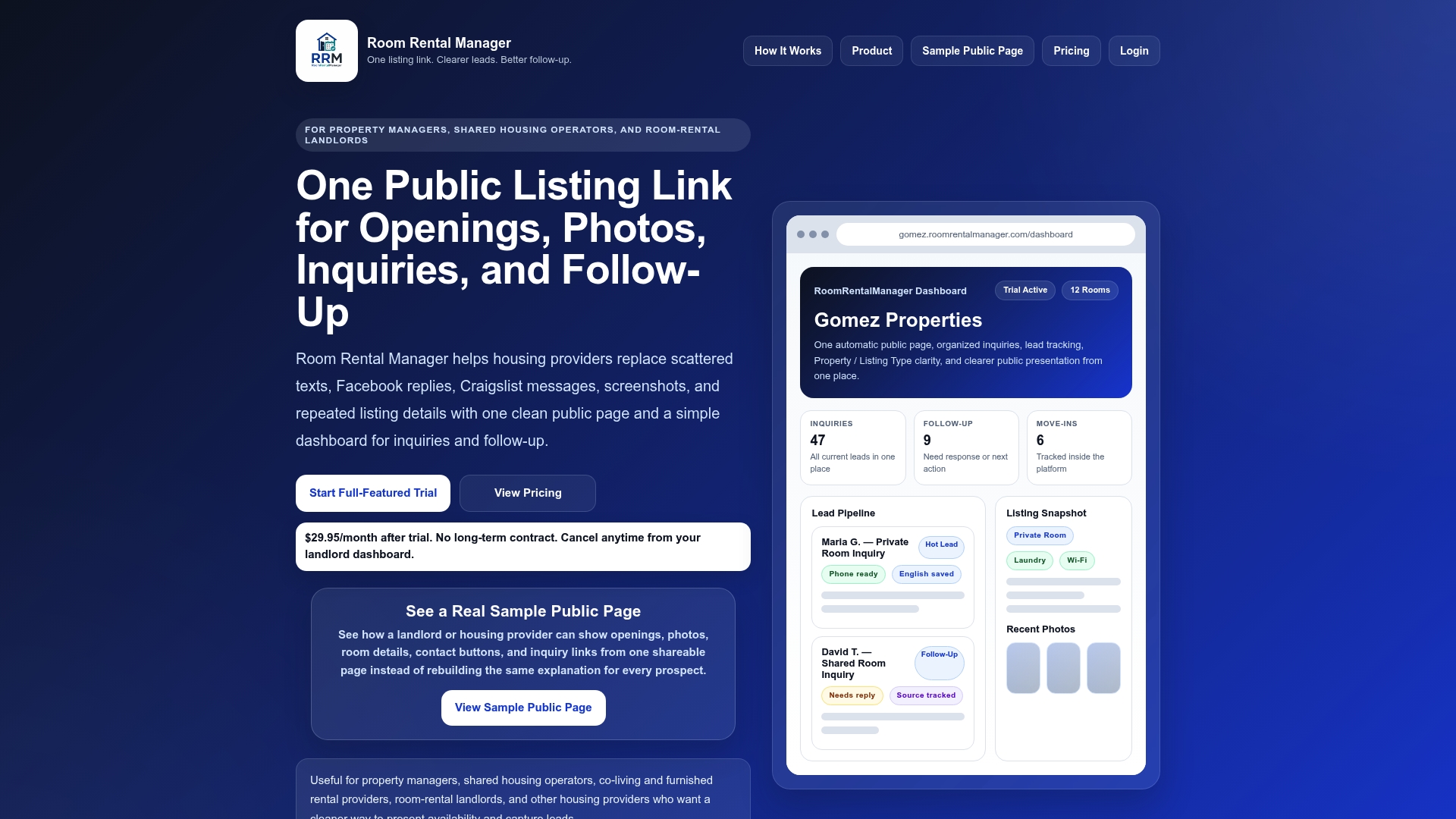
Room Rental Manager gives you one clean public page where your photos, property details, availability, and contact options all live together. You share one link. Prospects get everything they need. Inquiries come in through a single form that routes directly to your dashboard, where you can track lead sources, manage follow-up, and filter applicants without losing anything in your inbox. The platform is built for landlords who want to look professional without spending hours on tech.
Explore the software for landlords to see how the listing and lead management tools work together, or browse the landlord resource library for guides on pricing, marketing, and tenant screening.
FAQ
What is a single page rental property showcase?
A single page rental property showcase is one dedicated web page that presents all of a rental property's photos, details, availability, and contact options in one place. It replaces fragmented listings spread across multiple platforms.
How does a single page listing improve tenant inquiries?
A single page acts as a source of truth for prospects, reducing confusion from scattered or conflicting information and lowering the friction that stops tenants from reaching out.
Is a single page rental listing good for SEO?
Yes. Pages targeting one specific address and property type consistently outperform generic listing aggregators in local search results because they align precisely with the search terms tenants use.
How much does it cost to create a rental property showcase page?
Costs vary widely. Standalone single-property website tools run around $200 per listing, while all-in-one rental management platforms with built-in showcase features cost as little as $2.50 per unit per month in 2026.
What should every rental property showcase include?
At minimum: a strong headline with the address and rent, a high-quality photo gallery, a complete property detail section, neighborhood context, and a single clear inquiry form. Mobile-first design and local SEO copy will determine how well it performs.