

TL;DR:
- A rental lead is a prospective tenant who has shown interest through inquiry and enters your tracking system. Differentiating between raw inquiries, leads, and qualified leads is essential for effective property management and higher conversion rates. Tracking sources and behavioral signals help prioritize high-intent prospects and optimize leasing efforts.
A rental lead is defined as any prospective tenant who has expressed interest in a rental property through a direct inquiry, a listing platform message, a phone call, or a contact form submission. The term comes from sales pipeline vocabulary, where a "lead" is the first stage of a conversion funnel. In property management, understanding rental leads is the difference between filling vacancies fast and watching good prospects go cold. This article breaks down the rental lead definition, explains how to classify leads by quality, and gives you a practical system for tracking and converting them into signed leases.
What does rental lead mean in property management?
A rental lead, in property management terms, is a prospective tenant who has made contact and shown some level of interest in renting your property. The key word is "some." Not every inquiry is a lead, and not every lead is qualified to justify your full attention. ApartmentList defines a qualified apartment lead as one that clears three distinct dimensions: Intent Signal, Timing Alignment, and Conversion Readiness.
The industry distinguishes three tiers of inbound contact. A raw inquiry is someone who asked a basic question with no follow-up. A rental lead is someone who has shown enough engagement to enter your tracking system. A qualified lead is someone whose income, move-in timeline, and responsiveness suggest a realistic path to signing a lease. Treating all three the same is where most landlords lose time and money.
RealPage, one of the largest property management software providers in the country, describes this classification as foundational to any leasing operation. Without it, your conversion data is meaningless. You cannot improve what you cannot accurately measure.
Pro Tip: Label every inbound contact immediately as "raw inquiry," "lead," or "qualified lead" before you invest time in follow-up. This single habit prevents wasted calls and inflated pipeline numbers.
How is a rental lead different from a qualified applicant?
A rental lead and a qualified applicant are not the same thing, and confusing them is the most common leasing funnel mistake landlords make. A lead has expressed interest. A qualified applicant has demonstrated the ability and readiness to rent your specific unit right now.
Idoni Management, a Connecticut-based property management firm, conducted a leasing funnel audit that found landlords frequently receive strong lead volume but convert very few into actual applicants. The root causes are predictable:
- Income mismatch. The prospect cannot meet the standard income-to-rent ratio, typically 3x monthly rent.
- Documentation gaps. No pay stubs, no credit history, or an unwillingness to submit a formal application.
- Unrealistic move-in timeline. The prospect wants to move in six months from now, but your unit is available in two weeks.
- Curiosity, not commitment. They are browsing the market without a firm decision to move.
- Screening avoidance. They disengage once a background or credit check is mentioned.
Each of these failure points represents a leak in your leasing funnel. The fix is not to generate more leads. The fix is to qualify earlier in the conversation.
Pro Tip: Add two questions to your first contact response: "What is your target move-in date?" and "Is your gross monthly income at least 3x the rent?" These two answers filter out the majority of unqualified leads before you schedule a tour.
Treating every inquiry as a potential applicant leads to poor conversion and exhausts your leasing team. A disciplined qualification process protects your time and keeps your pipeline accurate.
How do property managers track and manage rental leads?
Lead tracking in rentals refers to the practice of recording every inbound inquiry, assigning it a stage in your leasing pipeline, and moving it forward with documented actions. Without a system, leads fall through the cracks. With one, you can see exactly where prospects stall and why.

The standard lead lifecycle
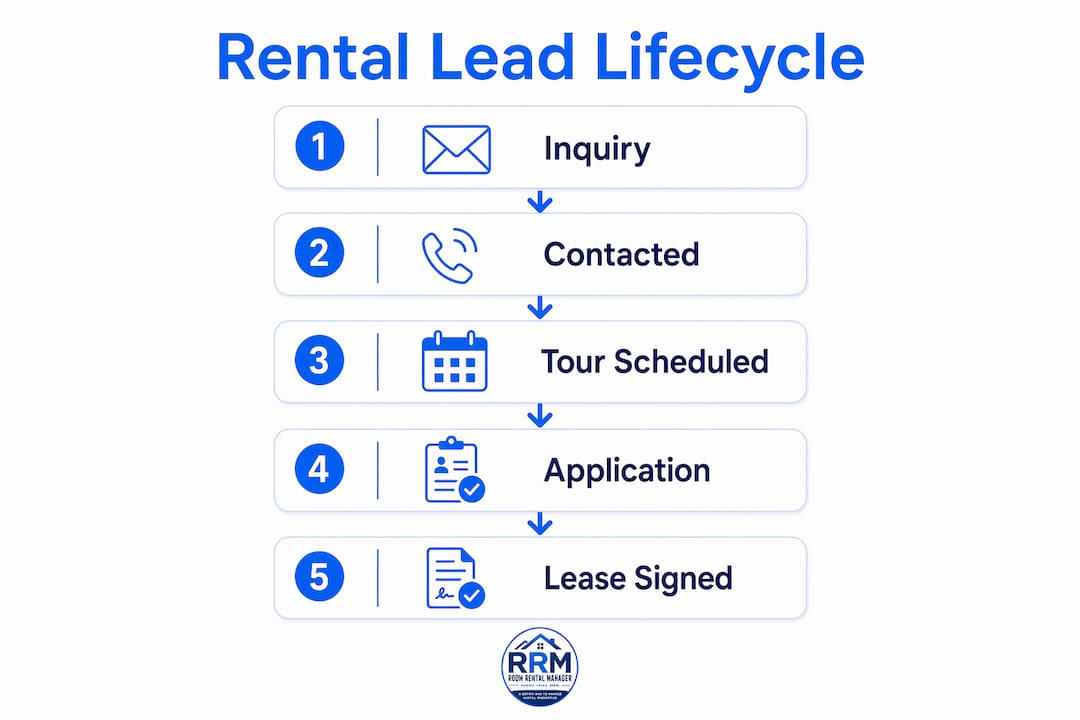
A structured lead pipeline typically moves through these stages:
- New Inquiry — First contact received via listing platform, phone, or form.
- Contacted — You have reached out and received a response.
- Tour Scheduled — A showing is confirmed with a date and time.
- Visited — The prospect has toured the unit.
- Application — A formal rental application has been submitted.
- Approval — The application has passed screening.
- Lease Signed — The deal is closed.
- Closed — The file is archived, either as a move-in or a lost lead.
Each stage requires a specific action to advance. A lead sitting in "Contacted" for five days without a tour scheduled is a stalled lead. Stalled leads become lost leads.
What lead source tracking actually tells you
Rental lead source tracking means recording where each inquiry originated: Zillow, Facebook Marketplace, Craigslist, a yard sign, a referral, or your own website. This data is not just administrative. Tracking lead source and stage shows you which channels produce tours and signed leases, not just raw inquiry volume.
| Lead Source | Inquiry Volume | Tours Booked | Leases Signed |
|---|---|---|---|
| Zillow | High | Medium | Medium |
| Facebook Marketplace | High | Low | Low |
| Referrals | Low | High | High |
| Property Website | Medium | Medium | High |
The table above illustrates a pattern most experienced landlords recognize. Referrals produce fewer raw inquiries but convert at a much higher rate. Facebook Marketplace generates volume but attracts low-intent browsers. Knowing this lets you allocate your listing budget where it produces results, not just traffic.
CRM software for rental lead management
CRM software centralizes tenant lead information, tracking source, preferences, communication history, tour scheduling, applications, and leasing outcomes across your entire portfolio. RealPage's property management CRM documentation describes this as the foundation of consistent follow-up and accurate conversion reporting.
Most lead loss arises from scattered communication, no assigned owner, or missing follow-ups. A centralized system solves all three. You can see every lead, who owns it, what stage it is in, and when the last contact was made.
Pro Tip: Assign every lead an owner within one hour of first contact. Unassigned leads are nobody's responsibility and almost always go cold.
What behavioral signals define high-intent rental leads?
High-intent rental leads display specific behaviors before they ever speak to you. Recognizing these signals lets you prioritize your time on prospects most likely to sign.
ApartmentList's 2026 criteria for qualified apartment leads identify the following behavioral indicators:
- Saved floorplans or favorited listings. A prospect who saves your listing is actively comparing options, not passively browsing.
- Repeated visits to the same listing. Multiple views of the same property page signal genuine consideration.
- Specific questions about property features. Asking about parking, pet policy, or utility inclusion shows they are mentally moving in.
- Response speed. A prospect who replies within hours is engaged. One who takes three days is not prioritizing your unit.
- Tour confirmation without prompting. When a prospect confirms a tour time without you having to chase them, their intent is high.
- Move-in timing within 30–60 days of your availability. Timing alignment is one of the three core dimensions of lead qualification.
"A qualified lead is not just someone who wants to rent. It is someone who wants to rent your unit, right now, and can prove they are able to." — ApartmentList, Qualified Apartment Leads 2026
Timing alignment deserves special attention. A prospect with a move-in window of 30–60 days from your available date is a realistic candidate. Someone looking six months out is a future lead, not a current one. Treat them differently. Keep future leads in a nurture list and focus your immediate energy on current-window prospects.
Listing quality also drives lead intent before first contact. A detailed, accurate listing with clear photos, pricing, and availability filters out low-intent browsers before they ever reach your inbox. The inquiries you receive from a complete listing are almost always higher quality than those from a vague one.
What are the best practices for converting rental leads?
Converting rental leads into signed leases requires a disciplined process at every stage of the funnel. The following practices address the most common conversion failures landlords face.
Respond within one hour
Speed is the single biggest conversion variable in rental lead management. A prospect who submits an inquiry at 7 p.m. and hears back at 9 a.m. the next day has already contacted three other landlords. Set up automated acknowledgment messages so every inquiry gets an instant response, even if the personal follow-up comes later.
Write listings that pre-qualify
Your listing is your first filter. Include monthly rent, income requirements, pet policy, available date, and lease term in every listing. Prospects who read these details and still inquire are far more likely to qualify. Vague listings attract volume. Specific listings attract quality.
Use lead source tracking from day one
Rental lead source tracking tells you which platforms produce your best tenants. Track every inquiry source from the first week you list a property. After 30 days, you will have enough data to cut underperforming channels and double down on productive ones.
Build a follow-up sequence
Most landlords follow up once and stop. A structured sequence looks like this:
- Day 1: Respond to inquiry with property details and a tour invitation.
- Day 2: Follow up if no response.
- Day 5: Send a final check-in message.
- Day 7: Mark the lead as inactive and move on.
This sequence respects the prospect's time while keeping your pipeline clean. Leads that do not respond within seven days rarely convert.
Diagnose your funnel leaks
Misaligned lead definitions distort conversion metrics. If your team counts every inquiry as a lead, your conversion rate looks terrible. If you count only qualified leads, it looks great. Neither picture is accurate unless your definitions are consistent. Audit your pipeline monthly. Identify the stage where most leads stall and fix that specific step.
Pro Tip: Use leasing best practices from revenue management frameworks to set pricing that attracts qualified leads rather than just volume. Overpriced units generate low-intent inquiries from people testing the market.
Key takeaways
A rental lead is only as valuable as the system you use to qualify, track, and follow up on it. The landlords who fill vacancies fastest are not the ones with the most leads. They are the ones who convert the right leads with the least wasted effort.
| Point | Details |
|---|---|
| Rental lead definition | A rental lead is a prospective tenant who has expressed interest and entered your tracking pipeline. |
| Three-tier classification | Separate raw inquiries, leads, and qualified leads to allocate your time accurately. |
| Behavioral signals matter | Saved listings, fast responses, and specific questions indicate high-intent prospects worth prioritizing. |
| Lead source tracking | Record where every inquiry originates to identify which channels produce actual leases, not just volume. |
| Funnel consistency | Consistent lead definitions across your team produce accurate conversion data and better leasing decisions. |
Why most landlords are measuring their leads wrong
I have spent years watching landlords celebrate high inquiry volume while their vacancy rates stay flat. The problem is almost never lead quantity. It is lead definition.
Here is what I see repeatedly: a landlord lists a unit, gets 40 messages in a week, and calls it a success. But when you dig into those 40 contacts, maybe 8 responded to a follow-up, 3 toured, and 1 signed. That is a 2.5% conversion rate on 40 "leads." The real question is whether those 40 contacts were actually leads at all, or just raw inquiries that never had any real intent.
The fix is not complicated, but it requires discipline. Consistent team alignment on lead definitions is the single most underrated practice in property management. When one person on your team counts every text as a lead and another counts only toured prospects, your pipeline data is fiction. You cannot make good decisions from fiction.
My honest advice: define your lead stages in writing, share them with everyone who touches your leasing process, and review them quarterly. The landlords who do this fill units faster, spend less on marketing, and have far less stress during turnover season. The ones who skip it keep wondering why their conversion numbers never improve.
— JAMES
How room rental manager helps you track and convert leads
If you are managing room rentals, shared housing, or furnished units, the lead management problem is even more acute. You are fielding texts, emails, Facebook messages, and Craigslist replies all at once, with no central record of who said what or where they came from.
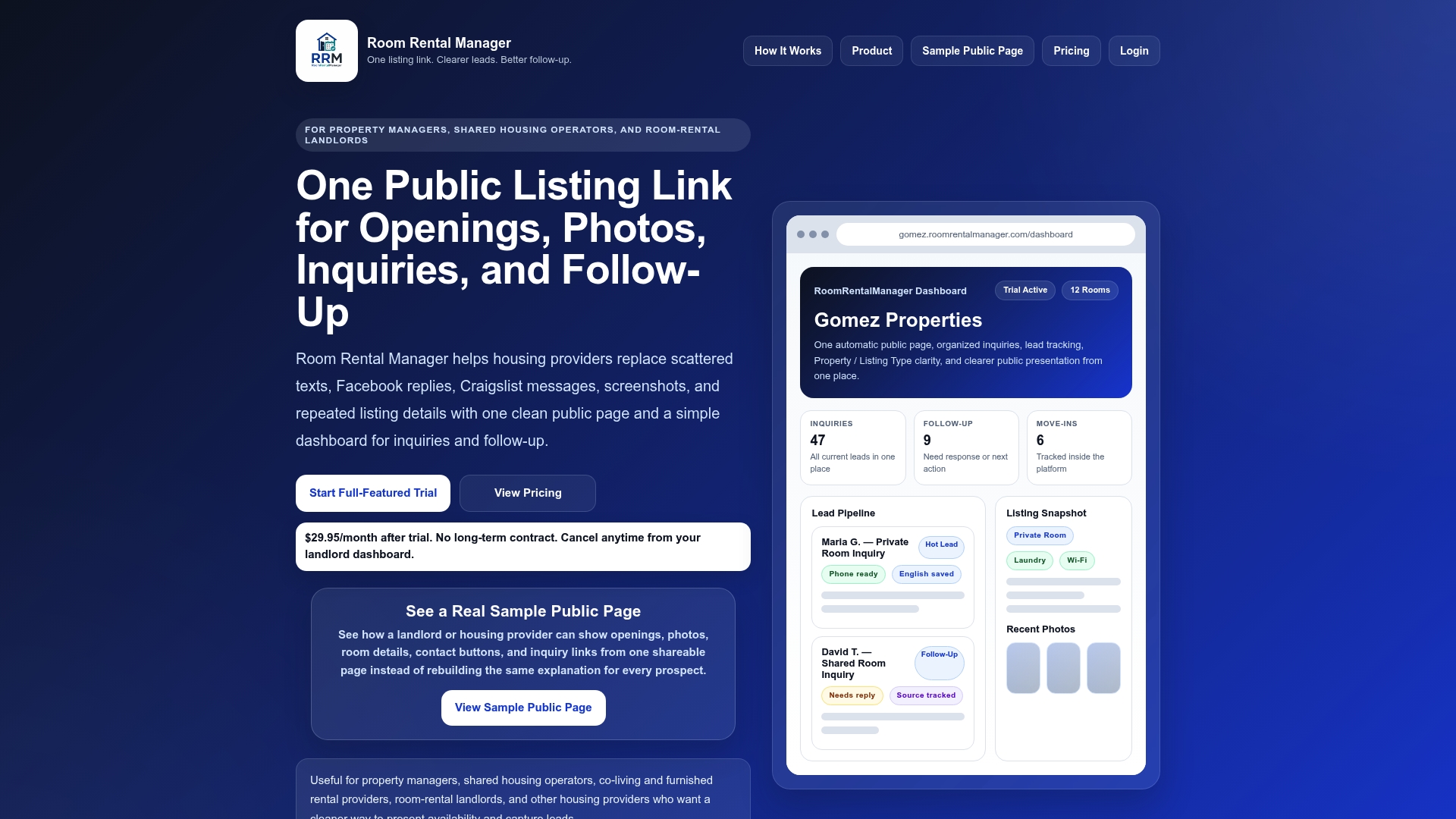
Room Rental Manager solves this by giving you one clean listing page that collects inquiries, tracks lead sources, and organizes follow-up from a single dashboard. Instead of piecing together a conversation from five different apps, you see every lead, its source, and its status in one place. The lead management software is built specifically for landlords who manage rooms and shared units, not large apartment complexes. Explore the full set of landlord resources to see how Room Rental Manager supports your leasing process from first inquiry to signed lease.
FAQ
What is the rental lead definition in property management?
A rental lead is a prospective tenant who has made contact and expressed interest in renting a property, entering the first stage of the leasing pipeline. Not every inquiry qualifies as a lead. Only contacts showing intent, timing alignment, and readiness to proceed should be classified as leads.
What does lead tracking mean in rentals?
Lead tracking in rentals means recording every inbound inquiry, assigning it a pipeline stage, and documenting each action taken until the lead converts or closes. It also includes tracking the source of each lead to identify which marketing channels produce the best tenants.
How do i know if a rental lead is qualified?
A qualified rental lead meets three criteria: a clear intent signal such as specific questions or saved listings, a move-in timeline within 30–60 days of your availability, and demonstrated readiness including income qualification and willingness to apply.
Why do rental leads fail to convert into applicants?
Most rental leads fail to convert because of income mismatch, an unrealistic move-in timeline, or unwillingness to complete a formal application and screening process. Diagnosing which of these issues causes the most drop-off in your funnel tells you exactly where to focus your qualification process.
What is rental lead source tracking and why does it matter?
Rental lead source tracking means recording where each inquiry originated, whether from Zillow, Facebook Marketplace, referrals, or your own listing page. This data shows which channels produce signed leases rather than just inquiry volume, letting you spend your marketing budget where it actually works.