

TL;DR:
- In 2026, rental listings must be detailed, legally compliant, and supported by structured metadata to attract qualified tenants. They now serve as trust-building tools, featuring unit-specific photos, total cost breakdowns, and Fair Housing language, not just basic ads. Effective listings enable landlords to stand out, improve search visibility, and connect with serious renters more efficiently.
A rental listing in 2026 is a published advertisement for a specific rental unit that communicates property details, rental terms, and compliance disclosures to attract qualified prospective tenants. The term "rental listing" has always described a property ad, but the rental listing definition 2026 demands far more than a price and a phone number. Today's listings function as trust-building documents that combine unit-level photography, structured digital metadata, and Fair Housing Act language standards into a single, transparent package. Understanding rental listings now means understanding how technology, law, and renter expectations have converged to raise the bar for every landlord and property manager posting a vacancy online.
What does a rental listing mean in 2026?
A rental listing is defined as a detailed, unit-specific advertisement that gives prospective tenants everything they need to evaluate a property before scheduling a tour. The industry term for this type of content, when published digitally, is a "property listing page," and it now carries both marketing and legal weight. The shift from generic apartment ads to compliance-aware, data-rich listing pages is the defining change in 2026 rental market terms.
The core purpose of a rental listing has not changed: attract qualified renters and convert interest into signed leases. What has changed is the standard of proof. Renters increasingly treat incomplete or vague listings as suspicious, preferring listings that show all essentials upfront. A listing that omits the square footage or hides fees behind "contact for details" signals to today's renter that something is wrong.
Listings have also shifted from generic ads to trust-building tools that use accurate unit details and immediate scheduling options to capture leads. This shift is not cosmetic. It reflects a fundamental change in how renters research housing, with most beginning their search on mobile devices and making shortlist decisions within seconds of viewing a listing page.
What key information does a 2026 rental listing contain?
A trustworthy rental listing provides core facts upfront: address, rent, bedroom and bathroom count, square footage, lease length, availability date, pet policy, and which utilities are included. These are not optional extras. Missing these basics or using pressure tactics like "apply fast, only one unit left" are recognized red flags that drive qualified renters away.
Here is what every complete 2026 rental listing must include:
- Rent and total monthly cost context. The advertised rent should be accompanied by a breakdown of fees, parking charges, and any pet rent so renters can assess real affordability at a glance.
- Bed and bath count, square footage, and floor plan. Renters use these figures to filter listings before they read a single word of description.
- Lease length and availability date. A listing without these two fields forces renters to contact the landlord for basic information, which most will not do.
- Pet policy and utility inclusions. Both directly affect monthly cost calculations and are among the top filters renters apply when searching.
- Unit-level photos and floor plans. The model unit era is ending. Renters demand real unit views, actual finishes, and floor plans of the exact available unit to improve conversion and reduce wasted tours.
- Fair Housing compliant language. Every word in the description must focus on property facts, not renter profiles.
- Verified contact information. A real name, a direct phone number or email, and a clear inquiry process signal legitimacy.
Pro Tip: Write the total monthly cost as a single number in the listing headline. "From $1,450/mo including water and trash" converts better than "$1,200/mo base rent" because renters normalize to total cost, not advertised rent alone.
The detail that separates a high-performing listing from a mediocre one is unit-level photography. Advertising model photos or outdated pictures increases tours from low-intent renters and wastes staff resources. A landlord who photographs the actual available unit, including the kitchen finishes, bathroom fixtures, and any quirks like a sloped ceiling or a small closet, builds credibility before the first conversation happens. This is the standard that quality leads require in 2026.
How has technology shaped rental listings in 2026?
Structured data is the technical backbone of a modern rental listing. Schema.org's RealEstateListing markup is used for webpages advertising specific properties for sale or rent and includes fields like "datePostedandleaseLength` that search engines and rental platforms read directly. This metadata tells Google, Zillow feeds, and aggregator platforms exactly what type of property is being advertised, how fresh the listing is, and what the rental terms are.
Here is how structured data improves a rental listing's performance in four concrete steps:
- Freshness signaling. The
datePostedfield tells search engines when the listing was published or updated. A listing with a current date ranks higher in time-sensitive searches than one with a stale or missing date. - Term clarity. The
leaseLengthfield prevents a listing from being misread as a for-sale property or a short-term rental when it is neither. Accurate metadata enables engines to update freshness signals and rental terms correctly, preventing listing mismatches. - Feed compatibility. Rental aggregators pull structured data to populate their own search results. A listing without proper markup may be excluded from feeds entirely or displayed with incorrect details.
- User experience improvement. When metadata matches the visible listing content, renters see consistent information across every platform where the listing appears, which builds trust before they even click through.
The most common pitfall is outdated or mismatched metadata. A landlord who updates the rent in the visible listing but forgets to update the schema markup creates a discrepancy that search engines flag and renters notice. Structured listing metadata improves search visibility and avoids misinterpretation as property for sale instead of rent, but only when it is maintained with the same care as the visible content.
Pro Tip: If you manage listings on your own website, run your listing URL through Google's Rich Results Test after every update. It takes 60 seconds and confirms whether your schema markup is being read correctly by search engines.

The practical implication for landlords is straightforward. A listing page that uses correct schema markup, current photos, and accurate metadata will outperform a plain-text Craigslist post in search visibility, lead quality, and renter trust. Technology has made the barrier to entry low. The landlords who use it correctly gain a measurable advantage in filling vacancies faster.
What legal rules govern rental listing language in 2026?
Fair Housing Act compliance is not optional, and the language rules apply to every word in a rental listing, including the headline, description, and any social media post that promotes the unit. The statute prohibits advertisements showing preference or limitation based on protected classes, which include race, color, national origin, religion, sex, familial status, and disability. This means the listing must describe the property, not the ideal tenant.
The following language patterns are prohibited or high-risk in 2026 rental listings:
- Phrases that signal family status. "Perfect for a single professional" or "ideal for couples" implies that families with children are not welcome.
- Religious or cultural references. "Near [specific religious institution], great for the community" can imply a preference for renters of that faith.
- Disability-related exclusions. "No modifications allowed" stated without context can be read as discouraging disabled applicants who have a legal right to request reasonable accommodations.
- National origin signals. Describing a neighborhood using language that implies a specific ethnic community as a selling point can cross into discriminatory advertising.
- Gender-coded language. "Master bedroom" is widely used and not currently prohibited, but phrases like "great for a working man" are clearly off-limits.
2026 compliance requires rental ads to focus strictly on property facts, avoiding wording that signals renter preferences or discrimination. The safe approach is to describe what the unit has, not who should live in it. "Three-bedroom apartment with two full baths, 950 square feet, hardwood floors, and in-unit laundry" is compliant. "Spacious family home in a quiet neighborhood" is borderline because "quiet neighborhood" has been used in Fair Housing complaints as coded language.
Pro Tip: Before publishing any listing, read the description aloud and ask: does any sentence describe a type of person rather than a feature of the property? If yes, rewrite it. This single check catches most compliance issues before they become legal problems.
Platforms like Zillow and Apartments.com have automated screening tools that flag potentially discriminatory language before a listing goes live. Landlords who post directly on their own websites or through social media do not have that safety net. Reviewing strong rental descriptions written with compliance in mind is one of the fastest ways to calibrate your own language standards.
How can renters compare rental listings effectively in 2026?
Renters who evaluate listings by advertised rent alone consistently underestimate their actual housing costs. Renters normalize to total monthly cost rather than advertised rent, factoring all fees and charges to assess affordability accurately. A $1,400/month apartment with $150 in parking, $75 in pet rent, and $200 in utilities that are not included costs $1,825 per month. A $1,600/month apartment with all utilities included and free parking costs $1,600. The second unit is cheaper, but the first one looks better in a search filter.
A practical scoring system helps renters cut through surface appeal and compare listings on equal terms. The table below shows the key factors and what to look for in each:
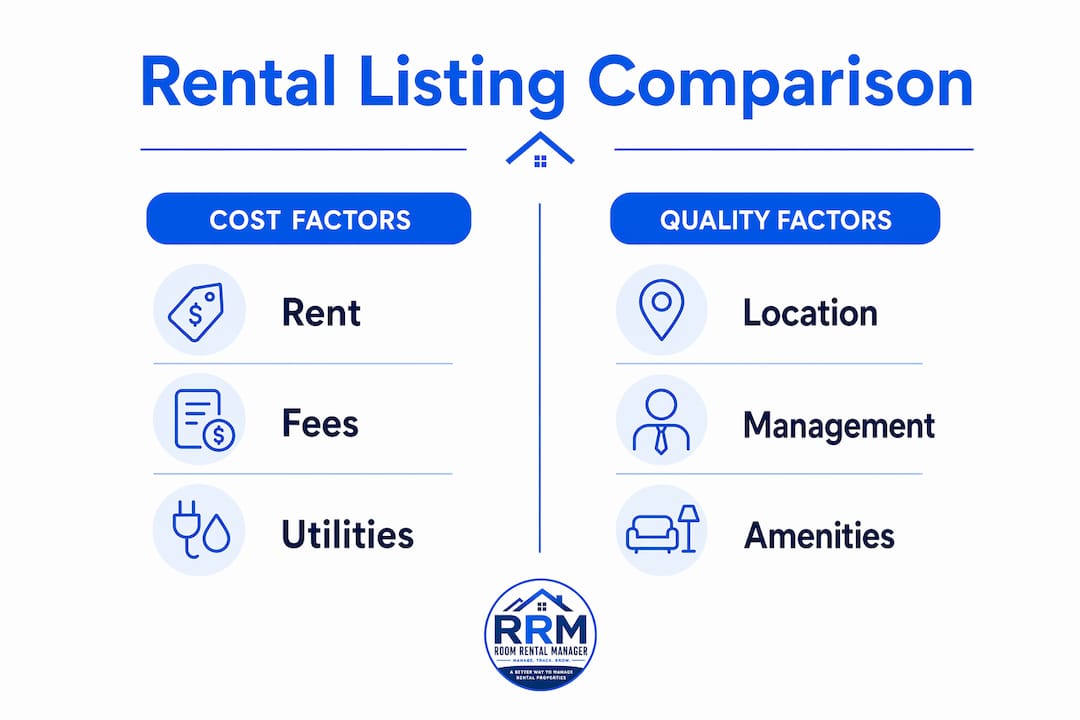
| Factor | What to evaluate |
|---|---|
| Total monthly cost | Add base rent, all fees, pet rent, and any utilities not included |
| Location and commute | Calculate actual travel time to work and key destinations, not just distance |
| Unit condition | Verify photos show the actual available unit, not a model or renovated version |
| Management reliability | Check Google reviews, response time to inquiries, and clarity of contact info |
| Lease terms | Confirm lease length, renewal options, and early termination penalties |
| Move-in costs | Add first month, last month, and security deposit to understand upfront cash required |
Beyond the numbers, renters should watch for specific red flags in listing content:
- Listings with no address or only a neighborhood name
- Photos that look professionally staged but show no unit-specific details like window views or actual appliances
- Listings that pressure immediate applications without allowing time to view the unit
- Contact information that leads only to a web form with no direct name or phone number
- Rent that is significantly below comparable units in the same area without explanation
A scoring system that accounts for rent, fees, location, and management reliability helps renters compare listings more effectively than gut feel alone. The goal is to make the comparison process repeatable. When you evaluate five listings using the same criteria, the right choice becomes obvious rather than emotional.
Key takeaways
A rental listing in 2026 is a compliance-aware, unit-specific advertisement that combines accurate property data, structured metadata, and Fair Housing language to attract qualified tenants and build trust before the first contact.
| Point | Details |
|---|---|
| Definition is more demanding | A 2026 rental listing must include unit-level photos, total cost context, and legal language, not just a price and address. |
| Structured data drives visibility | Schema.org fields like datePosted and leaseLength improve search ranking and prevent listing mismatches across platforms. |
| Fair Housing rules apply to every word | Descriptions must focus on property facts only; language implying renter preferences violates federal law. |
| Total cost beats advertised rent | Renters should calculate all fees, utilities, and pet charges to compare listings accurately. |
| Red flags are consistent | Missing basics, pressure tactics, and unverified contact info are reliable signals of a low-quality or fraudulent listing. |
Why rental listings are the landlord's most underrated asset
Most landlords treat a rental listing as a necessary chore. Post the price, add a few photos, and wait for calls. After years of watching how renters actually behave, I am convinced this is the single most expensive mistake a landlord can make.
The listing is not just an ad. It is the first impression, the qualification filter, and the trust signal all in one. A landlord who posts a vague listing with stock photos will attract high volumes of low-quality inquiries from renters who have no idea what they are applying for. That landlord then spends hours answering the same questions by text, email, and Facebook message before scheduling tours that go nowhere. The listing created that problem.
What I have seen work consistently is the opposite approach. Landlords who treat their listing page as a professional document, with real photos, a complete cost breakdown, clear lease terms, and compliant language, attract fewer total inquiries but far more serious ones. The renter who contacts you after reading a complete listing already knows the rent, the pet policy, the move-in date, and what the kitchen looks like. That conversation starts at a completely different level.
The technology piece is where most independent landlords fall behind. Schema markup and metadata sound technical, but the practical impact is real. A listing page that search engines can read correctly shows up when renters search for specific terms. A listing that is invisible to search engines relies entirely on paid platforms and word of mouth.
My honest advice: spend 30 extra minutes on your next listing. Write the total monthly cost, photograph the actual unit, check every sentence for Fair Housing compliance, and make sure your contact information is direct and verifiable. That 30 minutes will save you 10 hours of follow-up and produce a better tenant.
— JAMES
Build better listings with Room Rental Manager
Room Rental Manager gives landlords, property managers, and shared housing operators one clean public listing page for openings, photos, property details, and contact options. Instead of repeating the same information across texts, emails, and social media replies, you share one link and let the listing do the work.
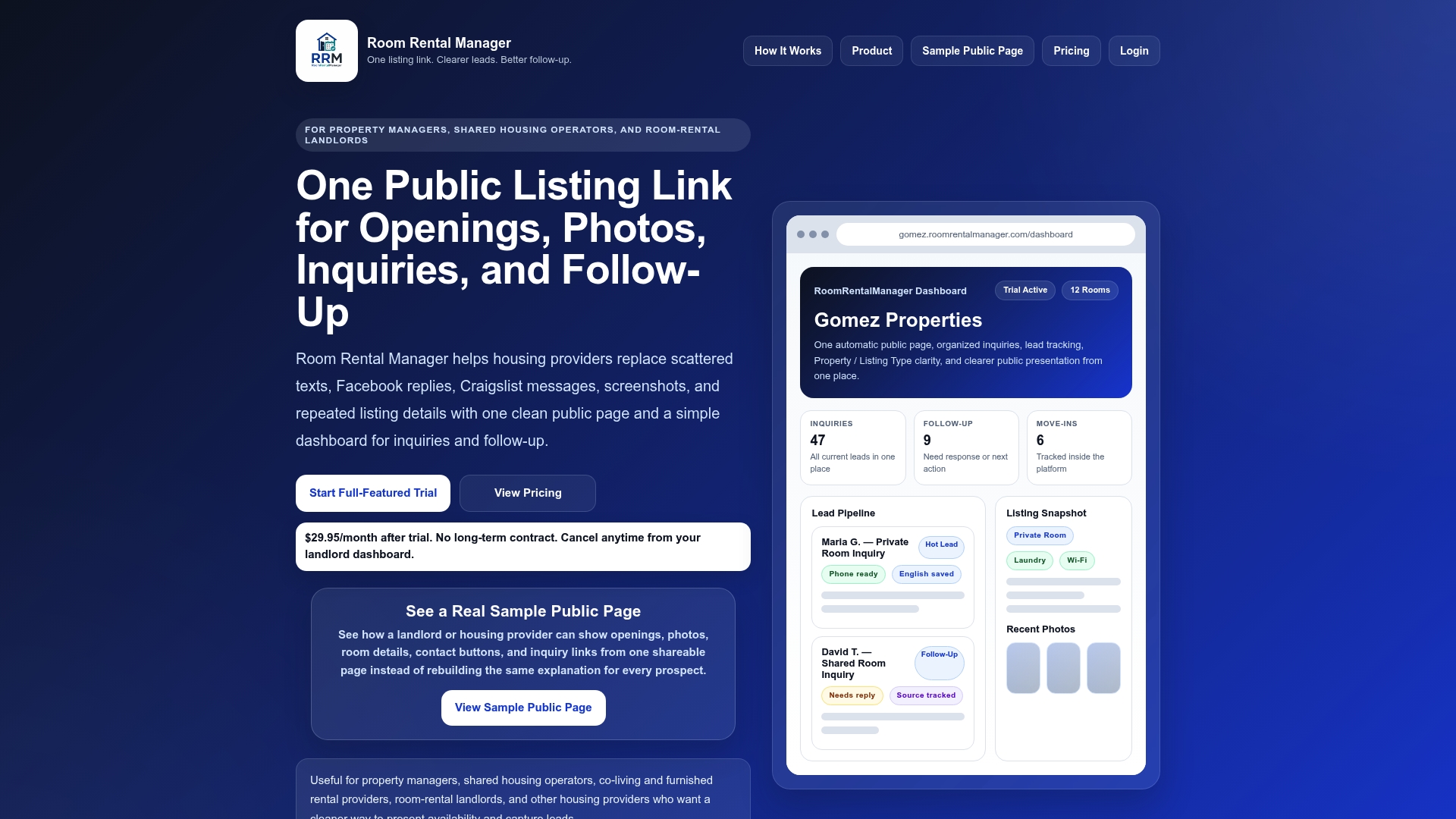
The platform is built specifically for room-rental landlords and furnished rental providers who need to present their properties professionally without a complicated setup. You can collect renter interest, track where leads come from, and manage follow-up from a single dashboard. Explore the full set of landlord tools and resources to see how Room Rental Manager supports every stage of the listing and leasing process. If you want to stop losing leads to disorganized follow-up, the rental inquiry tracking feature is the place to start.
FAQ
What is a rental listing in simple terms?
A rental listing is an advertisement for a specific rental unit that includes the price, property details, photos, and contact information so prospective tenants can evaluate and inquire about the unit.
What should a rental listing include in 2026?
A complete 2026 rental listing includes rent, total monthly cost with fees, bed and bath count, square footage, lease length, availability date, pet policy, utility inclusions, unit-level photos, and Fair Housing compliant language.
What is the Fair Housing Act's impact on rental listing language?
The Fair Housing Act prohibits rental listings from using language that shows preference or limitation based on protected classes like race, religion, sex, or familial status. Descriptions must focus on property features only.
How does structured data affect a rental listing's performance?
Schema.org's RealEstateListing markup, including fields like datePosted and leaseLength, helps search engines read listing details accurately, improving search visibility and preventing the listing from being misclassified as a for-sale property.
How should renters compare rental listings beyond the advertised rent?
Renters should calculate total monthly cost by adding base rent, parking fees, pet rent, and any utilities not included, then score listings on location, unit condition, management reliability, and lease terms to make an accurate comparison.