

TL;DR:
- Room rental involves landlords providing private bedrooms while sharing common spaces, with legal distinctions affecting rights and eviction processes. It offers significant income potential but requires careful management, written agreements, and compliance with local regulations. Success depends on proactive communication, proper screening, clear house rules, and suitable management tools to handle shared living dynamics effectively.
Room rental is one of the most misunderstood arrangements in housing. Most people assume it's just crashing in someone's spare bedroom with a handshake deal, but what does room rental mean in practice involves legal obligations, financial structures, and shared-living dynamics that can get complicated fast. Whether you're a landlord thinking about renting out extra rooms or a renter exploring affordable housing options, understanding the full picture matters. This guide breaks down the definition of room rental, its legal framework, financial realities, and practical tips so you can approach it with confidence.
Table of Contents
- Key takeaways
- What room rental means and how it works
- Legal and regulatory considerations
- Financial aspects of room rentals
- Managing expectations and making room rental work
- My honest take on room rental after years of watching it work and fail
- Put your room rental operation on solid footing
- FAQ
Key takeaways
| Point | Details |
|---|---|
| Room rental defined | A tenant gets exclusive use of a private bedroom but shares common areas like kitchens and bathrooms. |
| Legal distinctions matter | The difference between a lodger and a tenant changes your rights, eviction process, and landlord access. |
| Income potential is significant | Renting rooms individually can generate 40 to 100% more monthly income than a single whole-home lease. |
| Written rules prevent conflict | A signed house rules addendum attached to the lease reduces disputes over shared spaces and expectations. |
| Tax and insurance apply | Rent income is generally taxable, and standard homeowner insurance may not cover room rental activities. |
What room rental means and how it works
Room rental is a housing arrangement where a tenant has exclusive use of a private, typically lockable bedroom while sharing common areas of the property with other occupants or the owner. The shared spaces usually include the kitchen, at least one bathroom, the living room, and hallways. This is the core structure that separates room rental from leasing an entire apartment or house.
Understanding room rental means recognizing it as its own category of housing. It is not a sublease. It is not a hotel stay. It sits in a defined legal and practical space that comes with specific rights and responsibilities for both sides.
The two main types of room rentals
Private room rental is the most common format. You get one bedroom to yourself, often with a lock, and share the rest of the property. This is typical in houses where a landlord rents out two, three, or four individual bedrooms to separate tenants.
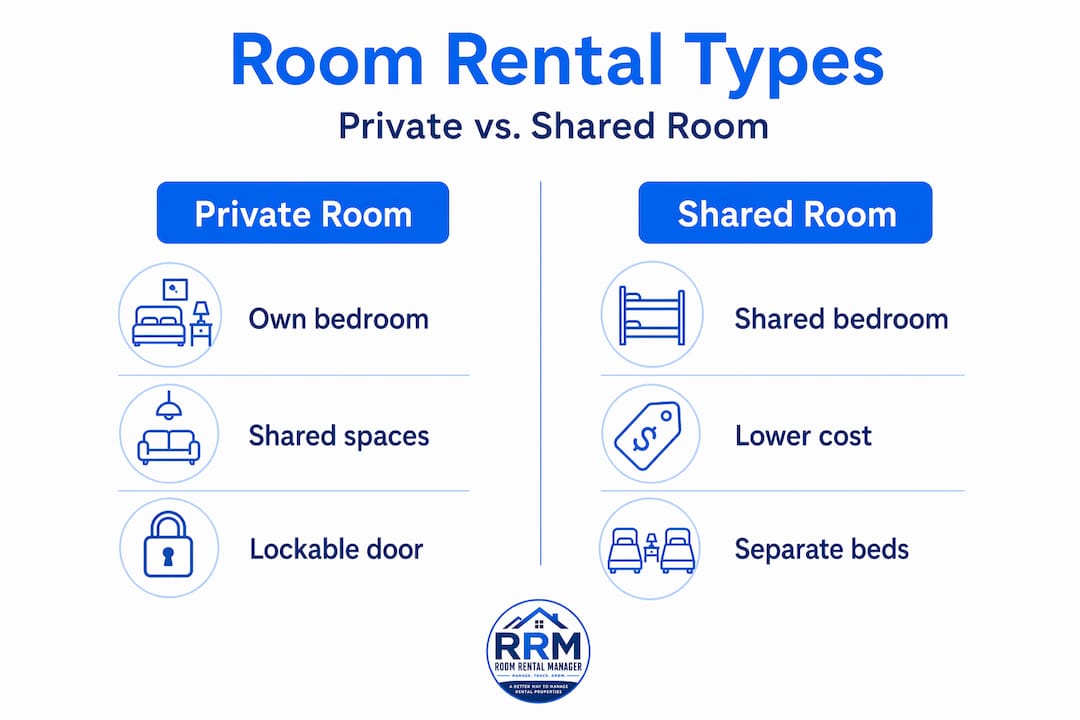
Shared room rental means two people occupy the same bedroom, usually with separate sleeping areas or bunk arrangements. This format is less common in the US but still exists in high-cost cities and student housing markets.
Here is a quick breakdown of how room rental compares to other housing types:
| Feature | Room rental | Whole apartment/house rental |
|---|---|---|
| Space rented | Private bedroom only | Entire unit |
| Common areas | Shared with others | Exclusive use |
| Monthly cost | Lower | Higher |
| Lease type | Per room or per occupant | Whole unit |
| Privacy level | Moderate | Full |
| Utilities | Often included | Usually separate |
Typical lease and payment structures
Room rentals are usually structured as month-to-month agreements or short-term leases, though annual leases exist. Rent is quoted per room per month, and utilities are frequently included in furnished room rentals, especially when landlords want to simplify billing across multiple tenants.
Common features of a room rental arrangement include:
- A private, lockable bedroom with agreed furnishings or an unfurnished space
- Shared access to kitchen, bathroom, laundry, and common living areas
- A written lease or rental agreement specific to that room
- Monthly rent paid directly to the landlord or property manager
- House rules governing behavior in shared spaces
Pro Tip: Always confirm what "furnished" means before signing. Some landlords include a bed and desk; others include full kitchen appliances, linens, and Wi-Fi. Get the list in writing.
Legal and regulatory considerations
Room rental sits in a legal gray area that catches both landlords and renters off guard. The moment money changes hands for the use of a room, you have created a legal relationship that carries real obligations on both sides.
Lodger vs. tenant
One of the most important legal distinctions in room rental is whether the occupant is classified as a lodger or a tenant. This classification affects everything from privacy rights to eviction procedures.
A lodger lives in a home where the owner also resides and typically has fewer privacy protections. The landlord retains the right to access common areas without notice. A tenant, by contrast, has a much stronger right to quiet enjoyment and requires a formal eviction process with proper legal notice to remove. Misclassifying an occupant creates serious legal risk for landlords who believe they can simply ask someone to leave without following proper procedures.
Key legal areas every landlord and renter should know
-
Zoning and HOA rules. Many municipalities regulate how many unrelated adults can occupy a single-family home. Some cities require permits if a property functions as a boarding house due to multiple room rentals. Check local ordinances and any HOA agreements before advertising.
-
Written lease agreements. Verbal agreements are almost impossible to enforce. Every room rental should have a written lease that specifies the rent amount, term, house rules, notice periods, and what happens if a tenant does not pay. This protects both parties.
-
Fair housing laws. Federal fair housing laws prohibit discrimination based on race, color, national origin, religion, sex, familial status, and disability. These laws apply to room rentals with some limited exceptions for owner-occupied buildings with a small number of units. When in doubt, treat every applicant by the same criteria.
-
Insurance. Standard homeowner insurance typically excludes rental activities. If you are collecting rent from a room, you may need a landlord endorsement or a separate landlord policy to cover liability and income loss. This is a commonly overlooked step.
-
Taxes. Rental income is taxable and must be reported on Schedule E once the room is rented for 15 days or more per year. The good news is that you can deduct a proportional share of mortgage interest, property taxes, utilities, and repairs against that income.
-
Eviction process. Even in an owner-occupied home, removing a tenant who refuses to leave often requires a formal eviction proceeding. Landlords who underestimate this process find themselves in lengthy and expensive situations. Know your local eviction laws before you sign anyone in.
Pro Tip: If you live in a state where tenant protections are strong, like California or New York, consult a local real estate attorney before renting your first room. The cost of one hour of legal advice is far less than the cost of a wrongful eviction claim.
For landlords looking to understand compliance requirements in specific regions, short-term rental setup guidance from local experts can clarify zoning, licensing, and safety obligations that apply to your property.
Financial aspects of room rentals
Room rental is not just about filling a spare bedroom. For landlords, it can be a substantial income strategy. For renters, it is often the most practical path to affordable housing in high-cost markets.
Income potential for landlords
The math on room rental is compelling. Renting four rooms at $800 to $1,000 each generates $3,200 to $4,000 per month. Leasing the same property as a single unit might bring in $2,000. That difference is not marginal. Renting individually can increase monthly income by 40 to 100 percent compared to single-unit leases, depending on the property and market.

Room rental prices vary widely. Furnished rooms in major US cities typically range from $600 to $1,500 per month, with a private bathroom or included utilities pushing the price toward the higher end. In the United Kingdom, the Rent-a-Room Scheme allows homeowners to earn up to £7,500 tax-free annually by renting furnished rooms in their primary residence, making it one of the most favorable tax frameworks for residential landlords in any major economy.
Cost advantages for renters
For renters, the appeal is straightforward. A private room in a shared house almost always costs less than a studio apartment in the same area. Utilities, internet, and sometimes cleaning are bundled in. You get a furnished space with no need to buy appliances or furniture. The flexibility of month-to-month terms means you are not locked into a 12-month commitment if your situation changes.
Key financial factors that influence room rental pricing include:
- Location. Urban proximity to jobs and transit drives prices up significantly.
- Private bathroom. An en-suite bathroom can add $150 to $300 per month to room rent.
- Furnishings. A fully furnished room with linens and kitchenware commands a premium.
- Utility inclusions. All-inclusive pricing simplifies budgeting and is attractive to renters.
- Lease flexibility. Month-to-month rooms often rent for more than rooms on a fixed term.
Landlords who want to attract quality tenants through well-crafted listings can learn how to create rental listings that fill vacancies faster by presenting photos, pricing, and details clearly in one place.
Managing expectations and making room rental work
The practical side of room rental is where most problems originate. Whether you are the landlord or the tenant, shared living requires intentional setup and honest communication from day one.
What landlords need to put in place
Written house rules should be signed as a formal addendum to the lease. Not a verbal chat. Not a text message. A document both parties sign. Cover guest policies, overnight visitors, quiet hours, kitchen cleanliness standards, trash responsibilities, and parking. Mismatched expectations in these areas cause the majority of conflicts in shared housing.
Tenant screening matters more in room rental than in whole-unit leasing because tenants are sharing physical space daily. Run credit and background checks, verify employment, and speak to previous landlords. The few hours you invest in screening pays off in months of conflict-free cohabitation.
Individual leases per room protect you as a landlord. When multiple unrelated tenants are all on one lease, one person's nonpayment or eviction can create legal complications for all of them. Separate leases let you address issues with one tenant without disrupting the others.
Pro Tip: Build a move-in checklist that documents the condition of both the private room and the shared spaces at the start of the tenancy. Photos with timestamps are your best protection against security deposit disputes.
Ongoing management tips for smooth shared living
Conflicts among multiple adults sharing kitchens and bathrooms are normal. They are not a sign that the arrangement is failing. What separates successful room rental properties from problematic ones is how conflicts are addressed before they escalate.
Consider these practices for day-to-day management:
- Schedule a brief monthly check-in with all tenants to surface issues early
- Hire a professional cleaning service for common areas to remove the most contentious source of friction
- Have a clear process for maintenance requests so tenants are not left waiting
- Use a digital tool to track payments, communications, and lease renewals rather than juggling texts and emails
- Respond to tenant concerns within 24 hours to signal that you are a responsive landlord
For landlords advertising across multiple channels, understanding how listing details attract quality leads can save you from fielding unqualified inquiries all day and help you fill rooms with tenants who are actually a good fit.
My honest take on room rental after years of watching it work and fail
By James
I've spent years watching landlords dive into room rental thinking it's passive income with minimal effort. They buy a house, rent out three bedrooms, and assume the money just flows. Sometimes it does. More often, there's a crash around month two when it turns out nobody agreed on whose job it is to clean the refrigerator.
What I've learned is that the financial case for room rental is genuinely strong. The income numbers are real. A landlord who rents three or four rooms individually almost always out-earns the landlord next door leasing the same floor plan as a single unit. The trade-off is management intensity. You are not just a landlord. You are managing a small community of people who share a home.
The privacy cost is real too. I've spoken to homeowners who rented a room in their own house and found themselves walking on eggshells in their own kitchen. The supplemental income versus privacy trade-off is not abstract. It shows up at 10pm when your tenant's friends are watching a movie in the living room.
Where I've seen room rental fail most consistently is in legal preparation. Landlords who skip written leases or assume they can remove a problem tenant with a text message get hit hard. The legal complexity of evicting even a lodger in many US states is genuinely surprising to first-timers. Get the paperwork right from the start and most problems become manageable. Skip it and even a cooperative tenant situation can spiral.
Room rental works. It works well when you treat it like the real business it is, not a casual side arrangement. The landlords I've seen thrive are the ones who put in the structure upfront, communicate honestly with their tenants, and use proper tools instead of trying to manage everything through text threads.
— James
Put your room rental operation on solid footing
Running a room rental without the right tools is like managing a restaurant from a notepad. You can do it, but you are creating unnecessary work and missing information that matters.
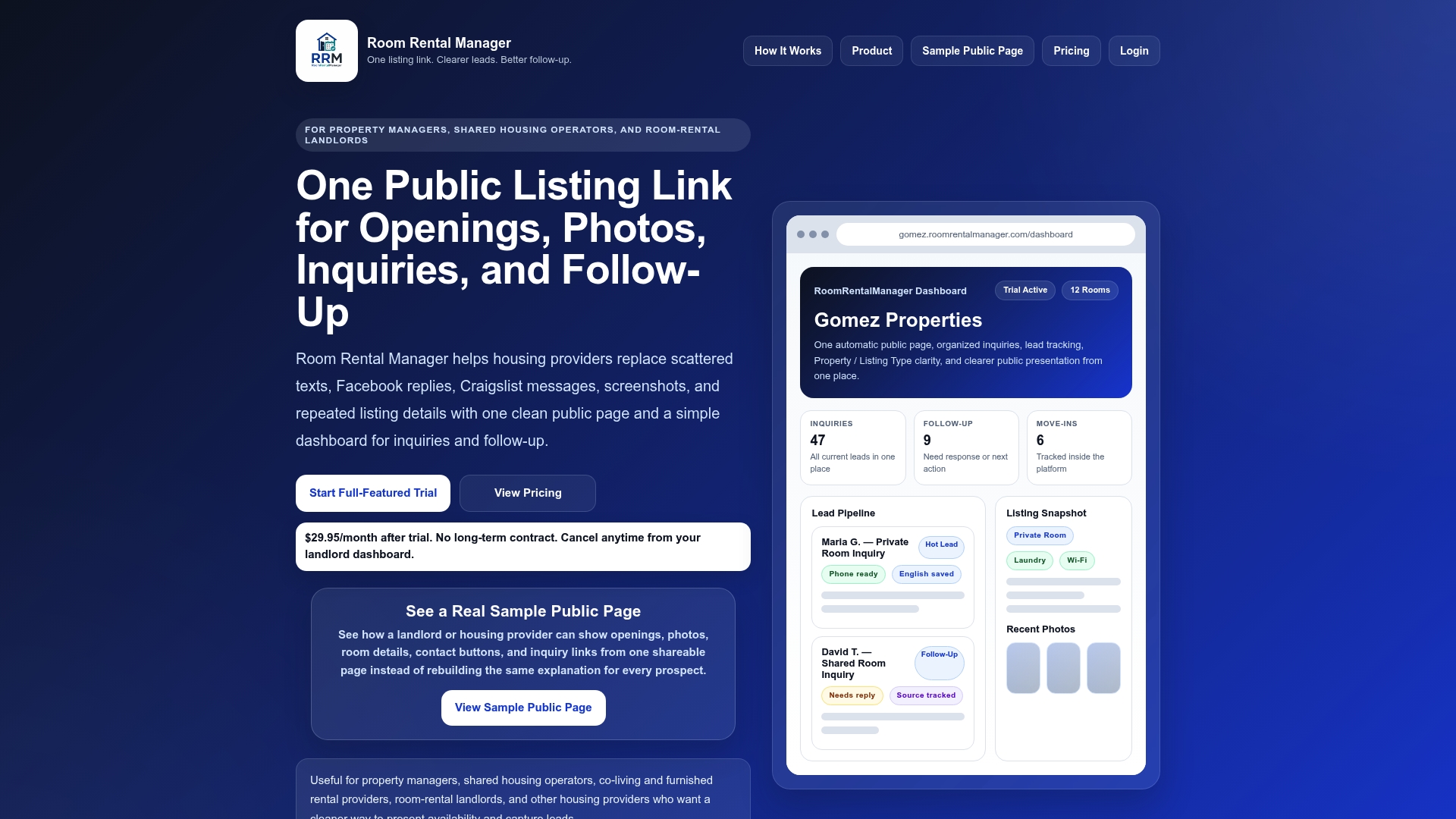
Room Rental Manager was built specifically for landlords managing one or more rooms across one or more properties. Instead of repeating the same details across texts, Craigslist messages, Facebook replies, and emails, you create one clean listing page that covers your photos, pricing, house rules, and contact options. Share one link, collect renter interest, track where your leads are coming from, and manage follow-up from a single dashboard. Explore room rental software built for exactly this type of landlord, or browse the full suite of landlord resources to strengthen every part of your operation.
FAQ
What does room rental mean?
Room rental means a tenant pays to use a private bedroom exclusively while sharing common areas like the kitchen and bathroom with other occupants or the property owner. It differs from leasing an entire apartment because the tenant does not have sole use of the whole property.
What does room rental vacancy mean?
A room rental vacancy means one of the private bedrooms in a shared property is currently unoccupied and available for a new tenant. Landlords track vacancies per room rather than per property because each bedroom can turn over independently.
What is a room rental lead?
A room rental lead is an inquiry from a prospective tenant who has expressed interest in renting a specific room. Leads are generated through listing platforms, social media posts, referrals, or direct contact and represent the first step in the tenant qualification process.
How are room rental leads qualified?
Landlords qualify room rental leads by verifying income, running credit and background checks, contacting previous landlords, and confirming that the applicant's lifestyle and schedule are compatible with current tenants in the shared space.
What is room rental lead conversion?
Room rental lead conversion is when a prospective tenant moves from inquiry to a signed lease. Conversion rate matters because high-volume inquiries with low conversion usually signal that the listing is attracting the wrong audience or that the screening process has gaps.