

TL;DR:
- Most property listings are marketing tools designed for public promotion, not official legal documents.
- Public records, maintained by government entities, verify ownership, liens, and tax history but do not reflect current market activity.
Most landlords and tenants have searched for a property online and assumed whatever they found was the full picture. It rarely is. Understanding what is a public property listing, how it differs from MLS-internal data, and how it relates to government property records can change how you market a rental, vet a property, or protect yourself in a transaction. These three data types are routinely confused for the same thing. They are not. This article breaks down exactly what each one means, where the data comes from, and what it should actually be used for.
Table of Contents
- Key takeaways
- What is a public property listing in real estate
- Public property records: a completely different beast
- Comparing listing types side by side
- How to find public property listings and records
- My take on what most people get wrong
- Get your rental seen with Room Rental Manager
- FAQ
Key takeaways
| Point | Details |
|---|---|
| Public listings are marketing tools | A public property listing is consumer-facing marketing content, not an official legal document. |
| MLS ≠ fully public | Some MLS listing types, like office exclusives, are never shared with public websites. |
| Public records confirm ownership | Government records show deeds, liens, and tax history but do not reflect current market activity. |
| Landlords control public exposure | How and where a listing appears publicly depends on the listing type and syndication choices made upfront. |
| Combine data sources | Relying on one source alone creates blind spots; cross-referencing listings with records gives the clearest picture. |
What is a public property listing in real estate
The term "public property listing" is commonly used to describe any real estate marketing presentation visible to the general public on consumer-facing websites. In industry terms, this is often called a publicly marketed listing, a property advertisement distributed through channels accessible to anyone browsing online. Think of what you see on popular home search portals: photos, price, square footage, contact information, and a description written to attract buyers or renters.
Not all listings are public by default. Multiple Listing Services, better known as the MLS, share listing data with public websites through a system called IDX (Internet Data Exchange) and broader syndication feeds. When a seller or landlord works with a licensed agent, the agent typically submits the listing to the MLS, which then distributes it to consumer portals. That distribution to public sites is what makes a listing "public" in the marketing sense.
The nuance is that the MLS also contains listings that are not distributed publicly. Two specific exemptions matter here:
- Office Exclusive listings: These limit viewing to broker agents within one brokerage and are never shared with public websites. Sellers use them for privacy reasons, particularly celebrities or high-profile property owners.
- Delayed Marketing Exempt listings: These delay public syndication for a set period, meaning the property exists in the MLS but does not appear on public search portals until the delay expires.
This distinction matters if you are a tenant or buyer relying entirely on public search results. You may never see a portion of available inventory. For landlords, choosing the wrong listing exemption by accident can quietly kill your marketing reach before a single lead comes in.
Pro Tip: Under MLS rules, listings must be submitted to the shared database within one business day after marketing begins. If your agent delays that submission, your public exposure is being cut short.
For rental-specific properties, public listings often exist entirely outside the MLS. Landlords who rent rooms or smaller units frequently post on classified platforms or maintain their own listing pages, which function as public listings without MLS involvement at all.
Public property records: a completely different beast
Public property records are not marketing materials. They are official government-maintained documents that establish the legal history of a property. Understanding public property listings requires knowing that these records exist in a separate universe from what you see on a search portal.

Recorded deed data establishes legal ownership, while assessor data feeds property tax valuations. Both sit in county-level databases, generally accessible through the county recorder's office, the county assessor's office, or an online portal. They are public in the legal sense: available to anyone who requests them, maintained by government agencies, and considered authoritative for legal purposes.
Here is a quick reference for what public records actually contain versus what a marketing listing tells you:
| Data Type | Public Property Records | Marketing Listing |
|---|---|---|
| Ownership | Yes, via recorded deed | Sometimes listed, but not verified |
| Sale/transfer history | Yes | Rarely |
| Tax assessment value | Yes | No |
| Liens and mortgages | Yes | No |
| Current asking price | No | Yes |
| Photos and description | No | Yes |
| Listing agent contact | No | Yes |
| Current market status | No | Yes |
The critical point in that table: public records reflect the last recorded events and lag behind real-time market activity. A property could be listed for sale, go under contract, and close, all while the public record still shows the prior owner. County offices update records after documents are filed, processed, and recorded, which can take weeks.
For landlords, public records are most useful for due diligence before purchasing a property. They reveal whether a title is clean, whether there are outstanding liens, and what the tax burden looks like. For tenants, they can confirm that the person advertising a rental actually owns the property they claim to be renting.
Pro Tip: County property search portals like Miami-Dade's public database are updated continuously but may not reflect the absolute latest data. Cross-check with at least one additional source, such as a title company search or the recorder's office directly, before making a major decision.
Public property information pulled from these records can include ownership history, recorded mortgages, liens, zoning classification, and parcel identification numbers. Practitioners who evaluate property risk combine assessor, recorder, and lien data together to build a full picture of any given parcel.
Comparing listing types side by side
People mix up public marketing listings, MLS internal data, and government public records constantly, and the confusion is understandable. The word "public" appears in the name of both marketing listings and government records. But each type has distinct update schedules and intended uses.
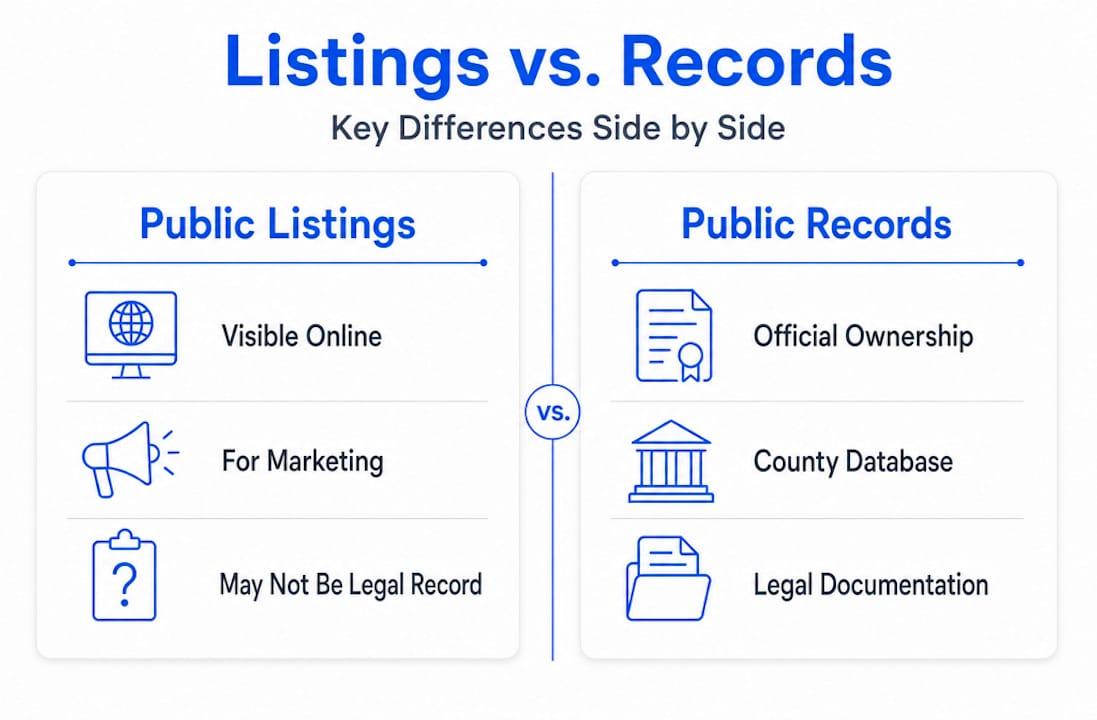
Here is how they compare at a practical level:
| Feature | Public Marketing Listing | MLS Internal Data | Public Property Records |
|---|---|---|---|
| Purpose | Attract buyers/renters | Agent coordination | Legal documentation |
| Who controls it | Seller/landlord/agent | MLS board rules | Government |
| Update frequency | Real-time (or near) | Within 1 business day | Weeks after filing |
| Verifies ownership | No | No | Yes |
| Shows current price | Yes | Yes | No |
| Accessible to public | Yes | Partial (via IDX) | Yes |
Two risks stand out when people conflate these data types. First, MLS listings do not guarantee legal ownership verification. A listing can name a seller who is not the actual deed holder, especially in complex estate situations or fraudulent listings. Legal ownership must always be confirmed through recorded deed filings in the public record.
Second, the property marketing role of a public listing is to generate interest, not to document fact. Descriptions, photos, and feature lists in a listing are the seller's or landlord's marketing choices. They are not sworn statements.
For tenants evaluating a rental, the most reliable practice is to check both the marketing listing and the public record. The listing tells you what the landlord wants you to know. The record tells you what the government has on file.
- Marketing listings are best for: current availability, pricing, photos, and contacting the landlord or agent
- MLS data is best for: understanding market activity, comparable sales, and days on market
- Public records are best for: confirming ownership, checking for liens, and reviewing tax assessment history
How to find public property listings and records
Whether you are a landlord trying to understand your exposure or a tenant doing your homework, knowing where to look makes all the difference.
-
Search public real estate portals. Consumer-facing real estate websites pull data from MLS feeds via IDX syndication. Search by address, zip code, or neighborhood. Results will show currently marketed properties with agent contact details. These are your public real estate listings.
-
Check your county assessor or recorder's office. Most counties maintain a public property database searchable by address, owner name, or parcel number. This is where you access official deed records, tax assessments, and lien information. Search "[your county name] property appraiser" or "property records" to find the right portal.
-
Use aggregator platforms for rental listings. For room rentals and smaller units outside the traditional MLS, platforms like Craigslist or Facebook Marketplace function as public listing channels. Landlords who use a dedicated public listing page, such as one created through room rental software, can share a single link across all those channels without duplicating effort.
-
Access lien and mortgage records separately. Deed records and mortgage records are often maintained in different county offices. Search the county recorder specifically for mortgages and liens, which are separate from the assessor's tax records.
-
Cross-verify before making decisions. No single source is complete. A public rental availability page shows current availability but not ownership history. A county record shows history but not current availability. Use both.
One nuance that catches tenants off guard: lease agreements can become public if they are filed in court during a dispute or if a government rent control program requires registration. In most standard rental situations, your lease stays private. But if a tenancy ends in litigation or falls under local rent regulation, elements of the agreement may appear in searchable public records. This is worth knowing before you sign anything with unusual terms.
Pro Tip: When accessing public property records online, look for the date the record was last updated on the portal. If it is more than a few weeks old, call the county office directly to confirm the current status before relying on it for a legal or financial decision.
The role of marketing in property sales and rentals is real, but marketing data and legal data must be treated as separate tools, not interchangeable ones.
My take on what most people get wrong
I have watched landlords lose weeks of rental income because they chose the wrong listing type without realizing it. And I have seen tenants sign leases on properties with unresolved liens because they trusted the marketing listing and never looked at the public record.
The core misunderstanding is this: most people treat "public listing" as a status rather than a choice. It is a choice. Whether a property appears publicly depends on the listing type selected, the syndication settings applied, and the platform used. A landlord can have an active MLS entry and still have zero public visibility if an exemption was applied.
What I have learned from watching this play out repeatedly is that the landlords who fill vacancies fastest are not necessarily the ones with the best properties. They are the ones who understand how exposure works and control it deliberately. They know that getting a listing into public syndication quickly, sharing it across multiple channels, and presenting it consistently is what drives inquiries.
On the tenant side, I think the underused tool is the county property record. Most tenants never look up the ownership history of a rental they are considering. A five-minute search can reveal whether the landlord is underwater on the mortgage, whether there are active liens, or whether the property taxes are delinquent. Any of those facts could affect your tenancy. A landlord facing foreclosure is a landlord who may not be around to return your deposit.
The other thing I want to flag is a misconception about privacy. Many tenants assume their lease is entirely confidential. That is true in most cases, but not all. Government rent registrations and court filings can expose lease terms. If you are in a jurisdiction with rent stabilization or control, your rent amount might be more visible than you think.
The smartest approach, for both landlords and tenants, is to treat these data sources as complementary rather than redundant. A marketing listing shows intent. A public record shows history. Together, they show the full picture.
— JAMES
Get your rental seen with Room Rental Manager
Managing a public rental listing should not mean pasting the same description into a dozen different platforms and hoping someone responds. Room Rental Manager gives landlords one clean, shareable listing page that includes photos, property details, contact options, and an inquiry form, all in one place.
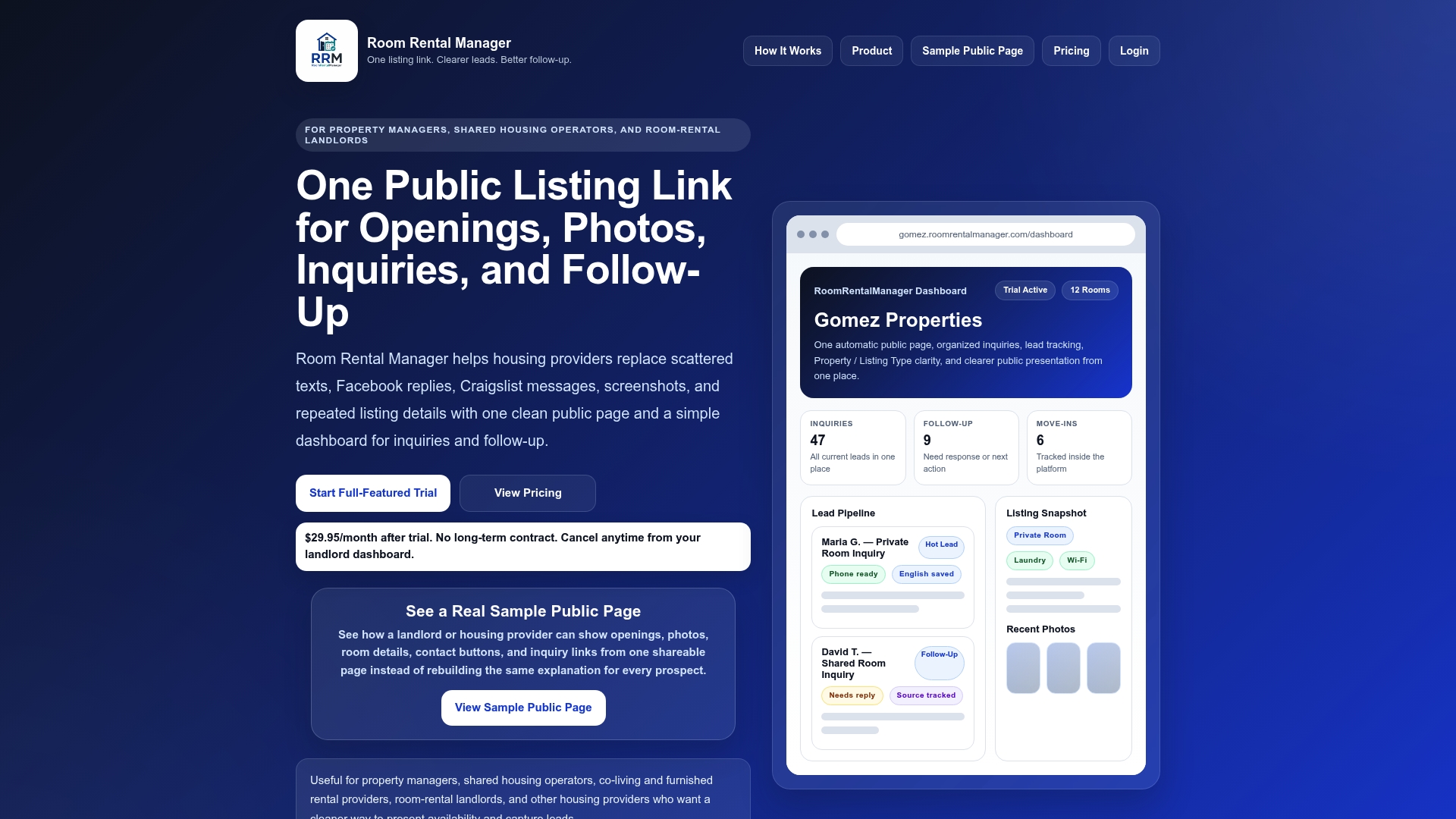
Instead of fielding the same questions through texts, emails, and Facebook messages, you share one link. Room Rental Manager also tracks where your inquiries come from, so you can see which channels are actually driving interest and follow up with leads from a single dashboard. For landlords who want to present their rentals professionally without the administrative chaos, landlord rental software is the practical next step. You can also explore the full landlord resource hub for guides on listing visibility, tenant outreach, and rental marketing best practices.
FAQ
What is a public property listing?
A public property listing is a real estate marketing presentation visible to anyone on consumer-facing websites, including photos, pricing, and contact details. It is distributed through MLS syndication or direct platform posting and is distinct from official government property records.
How is a public listing different from public property records?
A public listing is marketing content created by a landlord or agent to attract interest. Public property records are government-maintained legal documents that confirm ownership, tax history, and liens. They serve different purposes and are updated on completely different timescales.
Are all MLS listings visible to the public?
No. Some MLS listings are exempt from public distribution. Office exclusive listings stay within one brokerage, and delayed marketing listings are withheld from public syndication for a set period. Only standard listings are shared with consumer websites via IDX feeds.
Can tenants access public property records?
Yes. County assessor and recorder offices maintain searchable public property databases. Tenants can look up ownership history, deed transfers, and whether there are active liens or mortgages on a property before signing a lease.
Can a lease agreement show up in public records?
In most cases, lease agreements are private. However, lease terms can become public if the agreement is filed in court during a dispute or if local rent control programs require registration with a government agency.