

TL;DR:
- A shared housing listing advertises a room within a residence where tenants split rent, utilities, and common areas, emphasizing social expectations over just space. Different formats, like flatshares, home-sharing, or co-living, vary in privacy, cost, and service levels, requiring careful interpretation of details and rules. Effective listings are specific, transparent, and reflect household culture, helping match tenants to compatible, well-informed housemates while platforms influence the ease and quality of the process.
A shared housing listing is an advertisement for a room or space within a residence where multiple tenants live together and split rent, utilities, and common areas. Known in the industry as share accommodation or co-living, these listings appear on peer-to-peer platforms, managed co-living sites, and local government programs. They serve two audiences at once: renters looking for affordable rooms and hosts or landlords offering available space. Understanding how these listings work, what they contain, and where to find them is the fastest way to cut through the noise and find a living situation that actually fits your life.
What is a shared housing listing and how does it work?
A shared housing listing is, at its core, an ad that communicates what space is available, what it costs, and who the ideal housemate looks like. Flatmate defines it as two or more people sharing a property while splitting costs, which captures the financial logic behind the arrangement. The listing is the first point of contact between a host and a potential renter, so every detail it includes or omits shapes the quality of that match.

The mechanics are straightforward. A host or current tenant posts a listing describing the room type, monthly rent, utility arrangements, and household expectations. Prospective renters browse, filter, and reach out. What happens next depends on the platform and the model. Some platforms handle screening, payments, and lease agreements automatically. Others leave all of that coordination to the people involved.
Shared housing listings differ from standard apartment listings in one critical way: they describe a social arrangement, not just a physical space. A listing that says "quiet household, no overnight guests, shared kitchen" is communicating lifestyle expectations, not just square footage. That distinction matters enormously when you are deciding whether to apply.
Boston's shared living resources emphasize that successful shared housing depends on managing daily interpersonal relations as much as the physical space itself. This means a listing that skips over household rules and shared expectations is already setting up potential conflict before anyone signs a lease.
What types of shared housing listings exist?
Shared housing is not a single category. It covers several distinct living models, and the listing format reflects those differences directly.
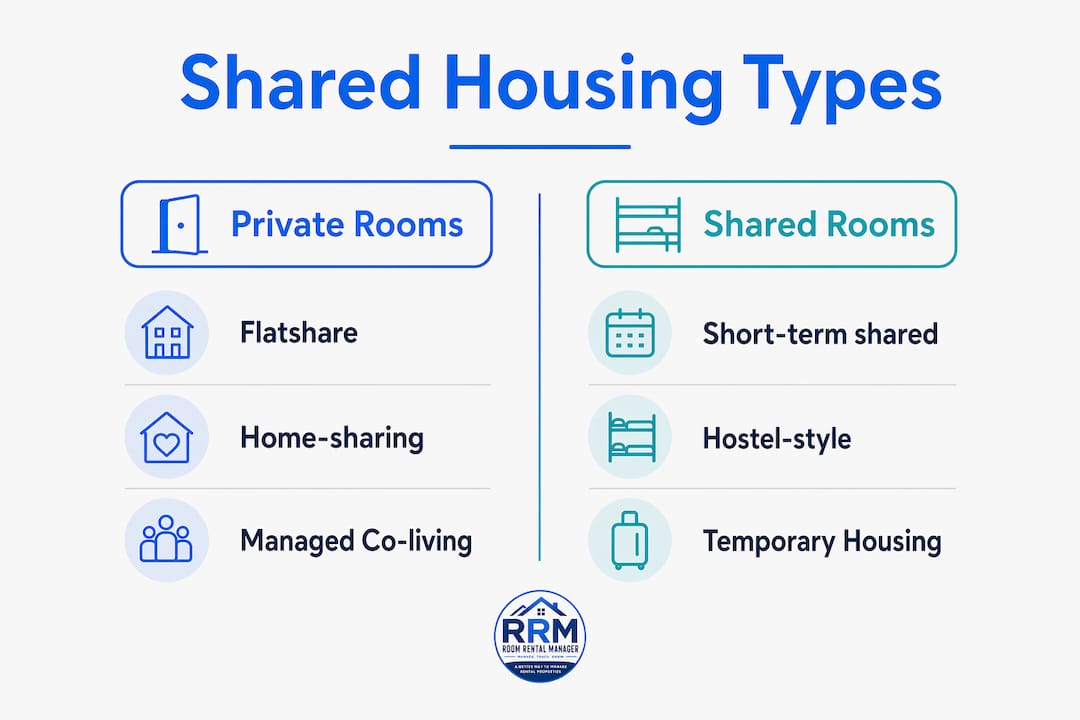
| Listing type | Privacy level | Utilities included | Best for |
|---|---|---|---|
| Flatshare / roommate listing | Private bedroom | Usually separate | Budget renters, students |
| Home-sharing program | Private bedroom | Sometimes included | Seniors, long-term renters |
| Managed co-living | Private bedroom | Yes, bundled | Professionals, relocators |
| Short-term shared room | Shared sleeping space | Often included | Travelers, hostel-style stays |
Flatshare and roommate listings are the most common format. One tenant or landlord advertises a private bedroom in a shared apartment or house. Renters split rent and utilities, and they coordinate household rules among themselves. These listings appear heavily on peer-to-peer platforms and give renters the most control over their living situation.
Home-sharing programs work differently. Bellingham's home-sharing program requires homeowners to live in the property and matches them with renters for a minimum stay of one month or more. The program includes background checks, secure payments, and customizable agreements. Some arrangements even include chore-sharing or work-trade components negotiated beyond simple rent payment. This model suits older homeowners with spare rooms and renters who prefer a more structured, vetted arrangement.
Managed co-living is the most full-service option. Operators like PadSplit offer weekly bundled rent that covers a private furnished room plus utilities, with an average savings of $420 per month compared to traditional rentals. Move-in can happen within one day of booking. These listings look more like hotel-style offers than traditional rental ads, with all-in pricing and identity screening built into the process.
Short-term shared rooms sit at the opposite end of the privacy spectrum. A shared room listing means guests share the sleeping space itself with others, similar to a hostel. This is the most budget-friendly and social option, but it is not suitable for anyone who needs a private space to work or sleep on their own schedule.
Pro Tip: When reading any listing, look for whether "shared" refers to the bedroom or just the common areas. That single distinction changes the entire living experience.
How to interpret shared housing listings effectively
Reading a shared housing listing well is a skill. Most people skim for price and location, then follow up with questions that the listing already answered. Here is a more deliberate approach.
-
Check the rent structure first. Does the listed price include utilities, or are they split separately? Marketplace-style listings typically require tenants to coordinate utilities themselves, while operator-style co-living bundles these services. A $900 room with utilities included may cost less than an $800 room where you split electricity, internet, and water.
-
Identify what is private and what is shared. The listing should specify whether you get a private bedroom, a private bathroom, or only a shared bathroom. If it does not say, ask before visiting. Ambiguity here causes the most common post-move-in complaints.
-
Read the house rules as a compatibility test. Rules about guests, noise, cleaning schedules, and kitchen use are not restrictions. They are signals about the household's culture. If the rules feel like a mismatch with your lifestyle, the listing is not for you, regardless of price.
-
Evaluate the photos critically. Detailed photos and descriptions reduce mismatches and improve compatibility between housemates. A listing with no photos of the bedroom, bathroom, or kitchen is a red flag. Good listings show the actual space, not just the building exterior.
-
Look for screening or eligibility criteria. Some listings specify gender preferences, age ranges, or employment status. Home-sharing programs often require background checks on both sides. Knowing the criteria upfront saves time for everyone.
-
Research the platform's protections. Platforms like Roomster allow free profile creation with location, budget, and preference filters plus secure messaging. Others, like Nesterly, provide identity verification and automated payments that reduce risk for both hosts and renters. The platform's features directly affect how safe and smooth the process will be.
Pro Tip: Before contacting a host, write down three non-negotiables for your living situation. If the listing does not address all three, ask about them in your first message. It saves both parties time.
How to create a shared housing listing that attracts the right housemates
A listing that attracts the wrong people wastes everyone's time. The goal is not to get the most inquiries. It is to get the right ones.
Listings Project recommends that hosts be transparent about routines and expectations to reduce conflict before it starts. That advice translates directly into listing structure. Here is what every strong shared housing listing includes:
- Room type and size. State clearly whether it is a private bedroom, a shared room, or a furnished space. Include square footage if possible.
- Total monthly cost. List the rent and specify what is included. If utilities are split, give an estimate of the monthly average.
- Photos of every shared space. Kitchen, bathroom, living room, and the bedroom itself. Natural light, clean staging, and multiple angles build trust immediately.
- Household composition. How many people currently live there? What are their general schedules and lifestyles? This context helps renters self-select.
- House rules and preferences. Preferences like tidiness, noise level, and guest policies are not just marketing. They filter compatible renters and decrease day-to-day conflicts after move-in.
- Lease terms and move-in date. Month-to-month, six-month, or annual? Available immediately or in 30 days? Clarity here prevents wasted conversations.
The most common mistake in shared housing listings is vagueness. Phrases like "looking for a good vibe" or "clean and respectful tenant" communicate nothing specific. Replace them with concrete statements: "We cook dinner together on Sundays," "No smoking anywhere on the property," or "We work from home and need quiet between 9 a.m. and 5 p.m." Specificity attracts compatible people and repels incompatible ones, which is exactly what a good listing should do.
For landlords managing multiple rooms, a rental listing page that consolidates all details, photos, and contact options in one place eliminates the repetitive back-and-forth of answering the same questions across texts, emails, and social media messages.
Pro Tip: Write your listing as if you are describing the household to a friend, not writing a legal document. Warmth and specificity together attract the best applicants.
Popular platforms and programs for shared housing
The platform you choose shapes the entire experience of finding or listing shared housing. Each option trades off cost, convenience, screening depth, and speed differently.
Peer-to-peer platforms like Roomster operate in 192 countries and let users search with filters for location, budget, and lifestyle preferences. They are free to join and fast to use, but screening is largely self-managed. These platforms work well for renters who are comfortable vetting housemates independently and want maximum choice.
Managed co-living operators like PadSplit handle the logistics entirely. Pricing is all-in, identity verification is built in, and move-in timelines are measured in hours rather than weeks. The tradeoff is less flexibility in negotiating terms. What you see in the listing is what you get.
Government-supported home-sharing programs like Bellingham's, which runs on the Nesterly platform, occupy a middle ground. They provide verification, automated payments, and customizable agreements while keeping the arrangement personal and community-rooted. These programs often target specific populations, such as seniors with spare rooms or renters who need below-market housing.
Curated listing communities like Listings Project focus on quality over volume. Listings tend to be more detailed and the community self-selects for transparency and compatibility. These work best for renters who prioritize finding a good social fit over finding the cheapest available room.
For landlords and hosts comparing options, room rental resources that consolidate platform comparisons and listing best practices can cut the research time significantly. The right platform depends on three factors: how quickly you need to fill the room, how much screening support you want, and whether you prefer bundled or separate billing.
Key takeaways
Shared housing listings are the entry point to communal living, and the quality of a listing determines the quality of the match that follows.
| Point | Details |
|---|---|
| Core definition | A shared housing listing advertises a room in a home where tenants split rent, utilities, and common spaces. |
| Listing types vary widely | Flatshares, home-sharing programs, managed co-living, and short-term shared rooms each have distinct privacy levels and cost structures. |
| Read listings as compatibility tests | House rules, photos, and utility terms reveal whether a household fits your lifestyle before you ever visit. |
| Specificity attracts better matches | Transparent preferences and detailed descriptions reduce conflict and improve housemate compatibility after move-in. |
| Platform choice shapes the experience | Peer-to-peer platforms offer flexibility; managed operators offer convenience; government programs offer structure and community support. |
What I have learned from years of watching shared housing listings succeed and fail
The listings that generate the worst outcomes share one trait: they optimize for speed over clarity. A host who writes a vague listing to attract more applicants ends up with more conversations, more viewings, and more mismatches. The time saved upfront gets paid back with interest in conflict, turnover, and re-listing.
The listings that work are almost always uncomfortable to write. They require hosts to state preferences that feel personal, rules that feel strict, and expectations that feel presumptuous. But that discomfort is the point. Shared housing succeeds when daily interpersonal relations are managed proactively, not reactively. A listing that communicates "we are quiet after 10 p.m. and we expect the kitchen cleaned after every use" is not demanding. It is honest. And honesty at the listing stage is what prevents the 2 a.m. argument three months in.
I have also seen renters make the mistake of treating a listing as a final answer rather than a starting point. A listing tells you what the host chose to share. It does not tell you what they forgot to mention, what they assumed was obvious, or what they were too polite to say directly. The best renters ask specific questions before committing. Not "is it a good place to live?" but "what does a typical weekday evening look like in the house?" That question reveals more than any listing ever will.
My honest recommendation: if you are searching for shared housing, treat the listing as a filter, not a destination. If you are creating one, treat it as a conversation starter that does your screening work before you ever pick up the phone.
— JAMES
Manage your shared housing listings without the chaos
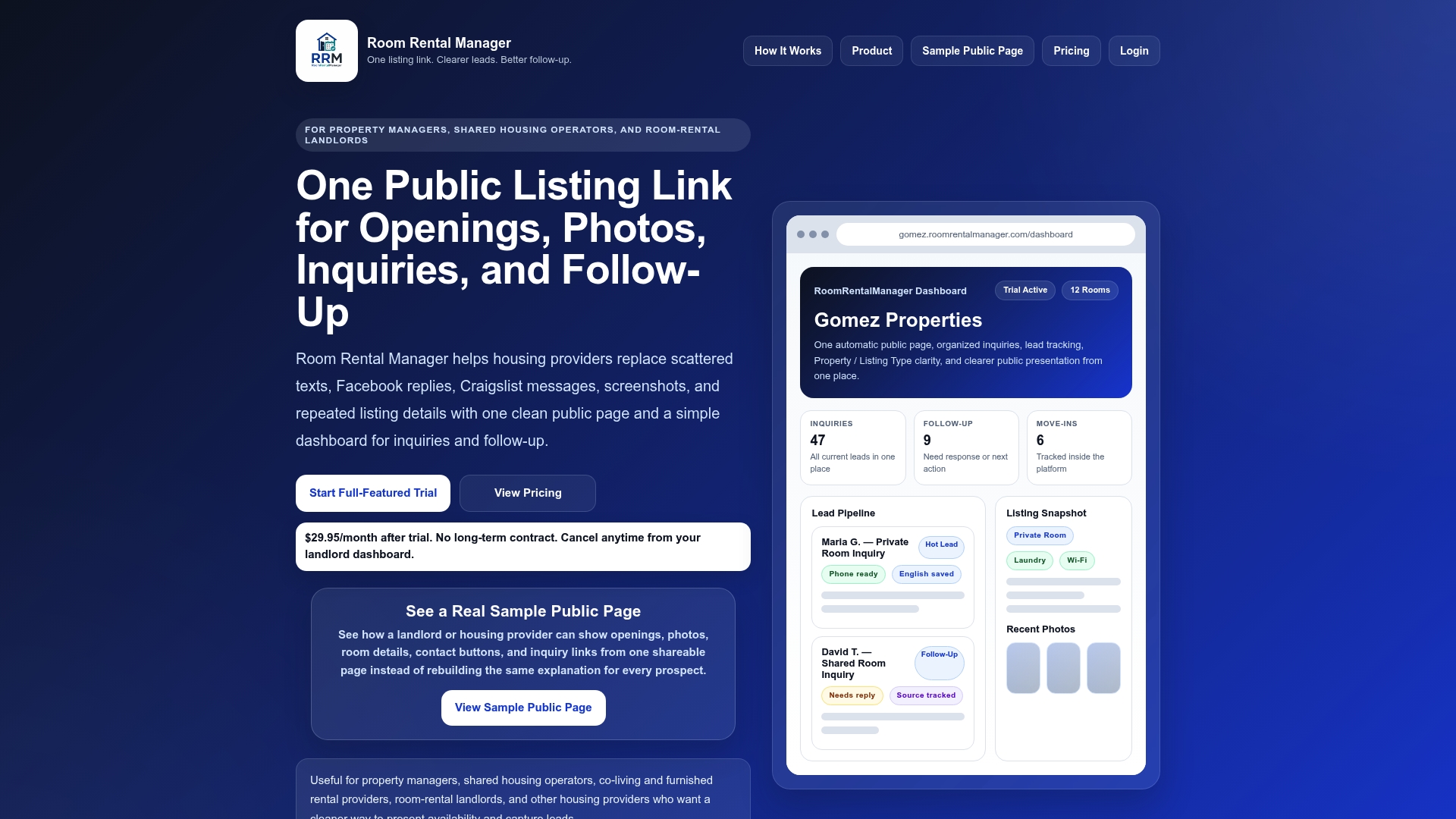
Posting a shared housing listing across multiple platforms, then fielding inquiries through texts, emails, Facebook messages, and Craigslist replies is exhausting and error-prone. Room Rental Manager solves that by giving landlords, hosts, and shared housing operators one clean public listing page that consolidates photos, room details, pricing, and contact options in a single shareable link. You track every inquiry, follow up from one dashboard, and never lose a lead in a message thread again. For anyone managing shared housing listings seriously, room rental software that centralizes your process is not a luxury. It is the difference between filling rooms fast and filling them late. Explore the full toolkit at Room Rental Manager.
FAQ
What does a shared housing listing include?
A shared housing listing typically includes the room type, monthly rent, utility arrangements, photos, house rules, and the host's preferences for a housemate. Detailed listings that cover shared versus private spaces and household expectations produce better matches and fewer conflicts after move-in.
What is the difference between co-living and a standard roommate listing?
A standard roommate listing requires tenants to coordinate utilities, rules, and payments independently, while managed co-living operators bundle all services into one weekly or monthly price. PadSplit, for example, includes utilities and furnishings in a single all-in rate with identity verification built in.
Where can I find shared housing listings?
Shared housing listings appear on peer-to-peer platforms like Roomster, curated communities like Listings Project, managed co-living operators like PadSplit, and local government programs like Bellingham's home-sharing initiative. The best platform depends on your budget, timeline, and how much screening support you want.
Is a shared room the same as a private bedroom in shared housing?
No. A shared room means you share the sleeping space itself with other occupants, similar to a hostel. A private bedroom in shared housing means you have your own enclosed sleeping area while sharing common spaces like the kitchen and bathroom with housemates.
How do I avoid bad matches when using shared housing listings?
Read house rules as a compatibility test, ask specific questions about daily routines before visiting, and prioritize listings with detailed photos and clear utility terms. Transparent preferences in a listing filter out incompatible renters before either party invests significant time.