

TL;DR:
- Managing multiple rental inquiries at once requires automation tools and organized workflows. Automated responses, centralized dashboards, and AI leasing agents ensure quick replies, efficient qualification, and seamless scheduling. These systems help landlords fill vacancies faster while reducing missed leads and no-shows.
Managing multiple rental inquiries simultaneously is the process of receiving, qualifying, and responding to many prospective tenant contacts at once, across phone, email, text, and listing platforms, without losing leads or slowing down your response time. For landlords and property managers handling high inquiry volume, the gap between a fast reply and a delayed one is often the difference between filling a vacancy and losing a qualified tenant. Modern automation tools and standardized workflows make it possible to handle multiple rental requests at scale, even without a full leasing team. This guide covers the tools, processes, and best practices that keep every inquiry moving forward.
How to manage multiple rental inquiries simultaneously
The core challenge is not volume. It is the lack of a system. Without one, landlords toggle between texts, emails, Facebook Marketplace messages, Craigslist replies, and voicemails, losing context with every switch. The solution is a centralized inquiry management system backed by automation.
AI leasing agents like Ria by Rently and platforms like PropertyBots and Leasey.AI are built specifically for this problem. They respond instantly, qualify prospects with scripted questions, schedule tours, and send follow-ups, all without human involvement in the first touchpoint. Automated lead response systems integrate with 48+ rental platforms, maintaining instant replies and a consistent brand voice without extra staffing. That kind of reach means no inquiry from Zillow, Apartments.com, or Facebook goes unanswered.
Speed is the most important variable in lead conversion. Replies within 5 minutes convert significantly better than delayed responses, because prospects contact multiple landlords at once and move on quickly. Automation closes that window by responding the moment an inquiry arrives, day or night.
What tools and technologies enable simultaneous rental inquiry management?
The right tools turn a chaotic inbox into a managed pipeline. The table below compares the main categories of technology landlords use to handle multiple rental requests at once.
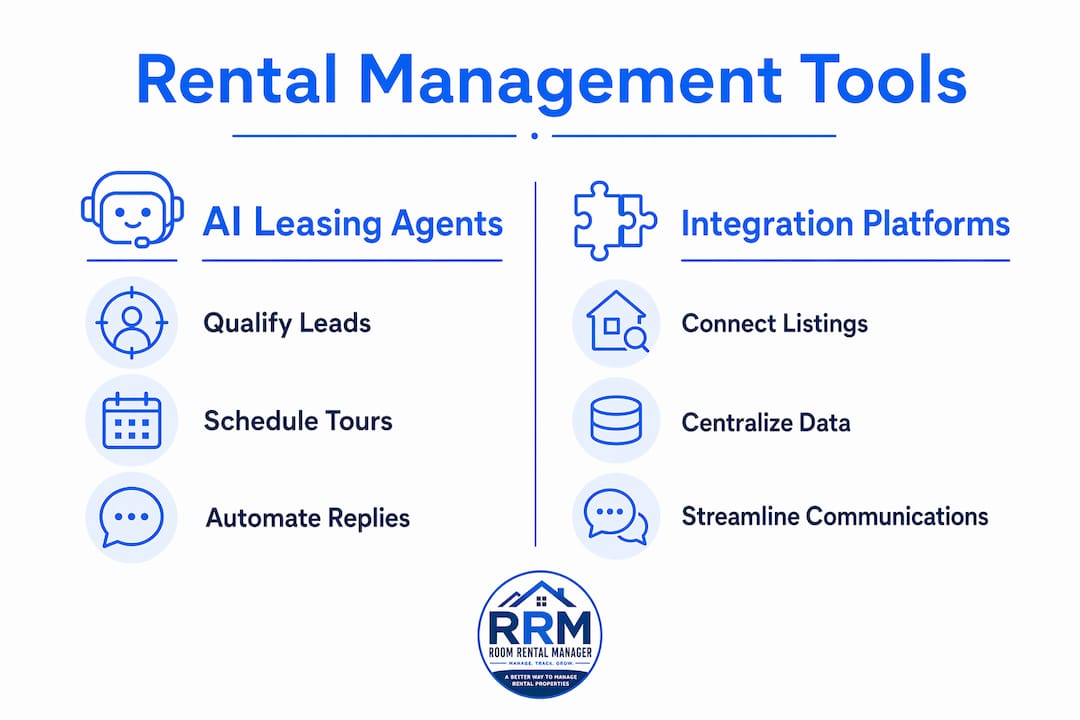
| Tool type | Primary function | Example platforms |
|---|---|---|
| AI leasing agents | Qualify leads, schedule tours, answer FAQs | Ria by Rently, PropertyBots |
| Automated response systems | Instant replies across listing platforms | Leasey.AI |
| Property management software | Centralized dashboards, applicant tracking | AppFolio, Buildium, TenantCloud |
| Inquiry tracking tools | Status tracking, lead source reporting | Room Rental Manager |
| Self-serve scheduling | Calendar-based tour booking in chat | PropertyBots |
PropertyBots, for example, reports the ability to handle over 1,800 leads and more than 100 concurrent voice calls without downtime. That scale is not achievable with a human team alone. It means a landlord with 10 listings can run a leasing operation that responds like a 50-unit property management company.
Key capabilities to look for in any platform:
- Instant response: The system replies within seconds of an inquiry arriving, regardless of the channel.
- Qualification scripts: The AI asks pre-set questions about move-in date, budget, and household size before a human ever gets involved.
- Tour scheduling: Qualified prospects pick a showing time directly in the chat, eliminating phone tag.
- Follow-up sequences: Automated reminders go out before tours and after no-responses.
- Channel integration: The platform pulls inquiries from Zillow, Apartments.com, Craigslist, and Facebook into one dashboard.
Pro Tip: Set your AI qualification script to ask three questions maximum. Longer scripts cause drop-off. Ask for move-in date, budget, and number of occupants, then route qualified leads to your calendar.
How to organize workflows to handle multiple rental inquiries efficiently
Workflow organization is where most landlords fail. They treat every inbound contact the same way, which creates bottlenecks and missed leads.

The first step is separating inquiry types. Property managers handle about 42 inbound calls daily, split roughly 60% maintenance requests and 40% leasing inquiries. When both types land in the same queue, leasing calls get buried under maintenance tickets. That is workflow collision, and it costs you tenants.
Build two separate intake paths. Maintenance requests go to one queue with their own response protocol. Leasing inquiries go to a dedicated pipeline with qualification steps, tour scheduling, and follow-up automation. This separation alone reduces the cognitive load on any human managing the process.
A repeatable workflow for leasing inquiries looks like this:
- Receive inquiry from any channel (text, email, listing platform, phone).
- Auto-respond within 60 seconds with a greeting and qualification questions.
- Score the lead based on answers: move-in date, budget, occupants, and any deal-breakers.
- Route qualified leads to a self-serve calendar link for tour scheduling.
- Send automated reminders 24 hours and 2 hours before the scheduled tour.
- Follow up post-tour with an application link and a deadline.
- Archive or re-engage leads who did not schedule within 72 hours.
Using a single standardized system prevents cognitive overload as your portfolio grows. The goal is to make every inquiry follow the same path, so nothing falls through the cracks because someone forgot a step.
Pro Tip: Use one rent collection method and one communication channel per tenant relationship. Mixing Venmo, Zelle, and bank transfer across tenants creates accounting errors and confusion that spills into your inquiry management time.
What are best practices for responding to and nurturing multiple rental leads?
Speed and consistency are the two non-negotiable standards for lead nurturing at volume.
Automated reminders reduce tour no-shows by up to 40%. That single metric justifies automation for any landlord running more than two or three showings per week. A no-show wastes a time slot that could have gone to another qualified prospect.
Best practices for nurturing simultaneous rental inquiries:
- Respond within 5 minutes. Prospects contact multiple landlords at once. The first to reply with useful information wins the attention.
- Be transparent about multiple applications. Tell prospects upfront that you are reviewing several applications and give them a clear timeline. This reduces follow-up pressure and builds trust.
- Use self-serve scheduling. A calendar link in your first reply eliminates the back-and-forth of finding a mutual time. Platforms like PropertyBots embed this directly in the chat conversation.
- Automate re-engagement. If a prospect goes quiet after the first message, send a follow-up at 24 hours and again at 72 hours. Many landlords give up after one attempt and lose a tenant who was simply busy.
- Track inquiry status. Every lead should have a status: new, contacted, qualified, scheduled, toured, applied, or closed. Without status tracking, you cannot prioritize your follow-up time.
The biggest mistake landlords make is treating inquiry management as a communication task. It is a sales pipeline. Every lead has a stage, and your job is to move them forward or disqualify them quickly so you can focus on the ones who will convert.
Rental inquiry tracking tools give you a live view of where every prospect stands, so you spend your time on the right conversations instead of digging through old texts to remember who said what.
What integrations and management systems support efficient handling of multiple inquiries?
A centralized dashboard is only as good as the data flowing into it. Integrations determine whether your system is a single source of truth or just another inbox.
| Integration type | What it connects | Why it matters |
|---|---|---|
| Listing platforms | Zillow, Apartments.com, Rent.com, Facebook Marketplace | Pulls all inquiries into one place automatically |
| Calendar sync | Google Calendar, Outlook | Prevents double-booking and enables self-serve scheduling |
| CRM tools | AppFolio, Buildium, TenantCloud | Syncs qualified leads with full conversation history |
| Communication tools | SMS, email, voice | Keeps all contact in one thread per prospect |
| Inquiry tracking | Room Rental Manager | Tracks lead source, status, and follow-up history |
The practical benefit of full integration is that a leasing agent or landlord never has to ask "where did this lead come from?" The system logs the source, the conversation, and the current status automatically. When a qualified lead moves to the application stage, the full conversation history transfers with them.
For landlords managing rental leads from Craigslist and Facebook Marketplace, integration is especially important. Those platforms generate high volume but low organization. Without a system pulling those inquiries into a tracked pipeline, they disappear into message threads that are nearly impossible to manage at scale.
Room Rental Manager gives landlords a single public listing page that collects inquiries from any channel, tracks lead sources, and manages follow-up from one dashboard. That means a landlord sharing one link across Craigslist, Facebook, and text messages gets every response in one place, with no copy-pasting or screenshot-saving required. For landlords running shared housing or rent-by-the-room setups, where multiple rooms generate simultaneous inquiries, this kind of centralization is not optional. It is the only way to stay organized.
Common challenges and troubleshooting when juggling rental requests
Even with good tools, specific problems appear repeatedly when landlords try to handle high inquiry volume.
Challenge 1: Context-switching penalties. Human agents lose efficiency every time they switch between a maintenance call and a leasing inquiry. AI handles concurrent workflows without that efficiency loss, making it the right tool for peak periods when both inquiry types spike at once.
Challenge 2: After-hours inquiries. Most prospects search for rentals in the evening. A landlord who only responds during business hours misses a large share of inbound interest. Automation solves this by responding instantly at any hour.
Challenge 3: Overlapping calls. A single phone line cannot handle two calls at once. AI voice platforms can handle 100+ concurrent calls, meaning no prospect hears a busy signal.
Challenge 4: Stale leads. A lead that does not hear back within 24 hours is often lost. Set automated re-engagement sequences to trigger at 24 and 72 hours for any lead that has not booked a tour.
Challenge 5: Lead quality drift. When you receive high volume, it is tempting to lower your qualification standards to fill vacancies faster. Review your qualification criteria monthly. If you are scheduling tours with prospects who consistently fail your screening criteria, tighten the qualification script.
Pro Tip: Build a manual override into your automation. If a prospect sends a message that clearly does not fit your standard qualification flow, a human should be able to step in and take over the conversation without losing the thread history.
The most effective approach to property inquiry management combines automation for speed and volume with human judgment for edge cases. Neither alone is sufficient.
- Audit your missed leads monthly. Pull a report of inquiries that never reached the tour stage and identify where they dropped off.
- Test your response time. Send a test inquiry from a personal email and time how long your system takes to reply.
- Review qualification scripts quarterly. Adjust questions based on the types of tenants who are actually converting.
- Check your calendar integration. A broken calendar sync causes double-bookings, which destroys trust with prospects.
- Monitor your no-show rate. If it rises above 20%, add an additional reminder or switch to a shorter booking window.
Key takeaways
Managing multiple rental inquiries simultaneously requires automation, workflow separation, and centralized tracking working together as one system.
| Point | Details |
|---|---|
| Speed determines conversion | Responding within 5 minutes converts significantly more leads than delayed replies. |
| Separate inquiry types | Route maintenance and leasing inquiries into different workflows to prevent collision and missed leads. |
| Automation handles volume | AI platforms can manage 1,800+ leads and 100+ concurrent calls, covering what no human team can match. |
| Self-serve scheduling reduces friction | Letting prospects book tours directly in chat eliminates phone tag and cuts no-show rates by up to 40%. |
| Centralized tracking is non-negotiable | A single dashboard showing every inquiry's status, source, and history prevents leads from going stale. |
What I've learned from watching landlords get this wrong
Most landlords who struggle with inquiry volume are not failing because they lack tools. They are failing because they added tools without changing their process. I have seen landlords set up an AI leasing agent and then manually re-answer every question the AI already handled, because they did not trust the system. That doubles the workload instead of cutting it.
The landlords who get this right do one thing differently: they commit to the workflow before they commit to the tool. They decide what a qualified lead looks like, what the tour scheduling process is, and what happens after a no-show, before they turn on any automation. The tool then executes the process they already designed.
The other mistake I see constantly is over-engineering. A landlord with three units does not need an enterprise-grade AI voice platform. A simple rental listing follow-up system with automated reminders and a status tracker will outperform a complex setup that nobody maintains. Start with the minimum viable system that covers your actual inquiry volume, then add complexity only when the volume demands it.
The payoff for getting this right is real. Landlords who respond faster, qualify consistently, and follow up automatically fill vacancies faster and spend less time on the phone. That is not a technology outcome. It is a process outcome that technology makes possible.
— JAMES
Room Rental Manager makes inquiry management practical
Landlords who manage multiple rooms or properties need a system that works without constant attention. Room Rental Manager gives you one public listing page that collects every inquiry in one place, regardless of where the prospect found you.
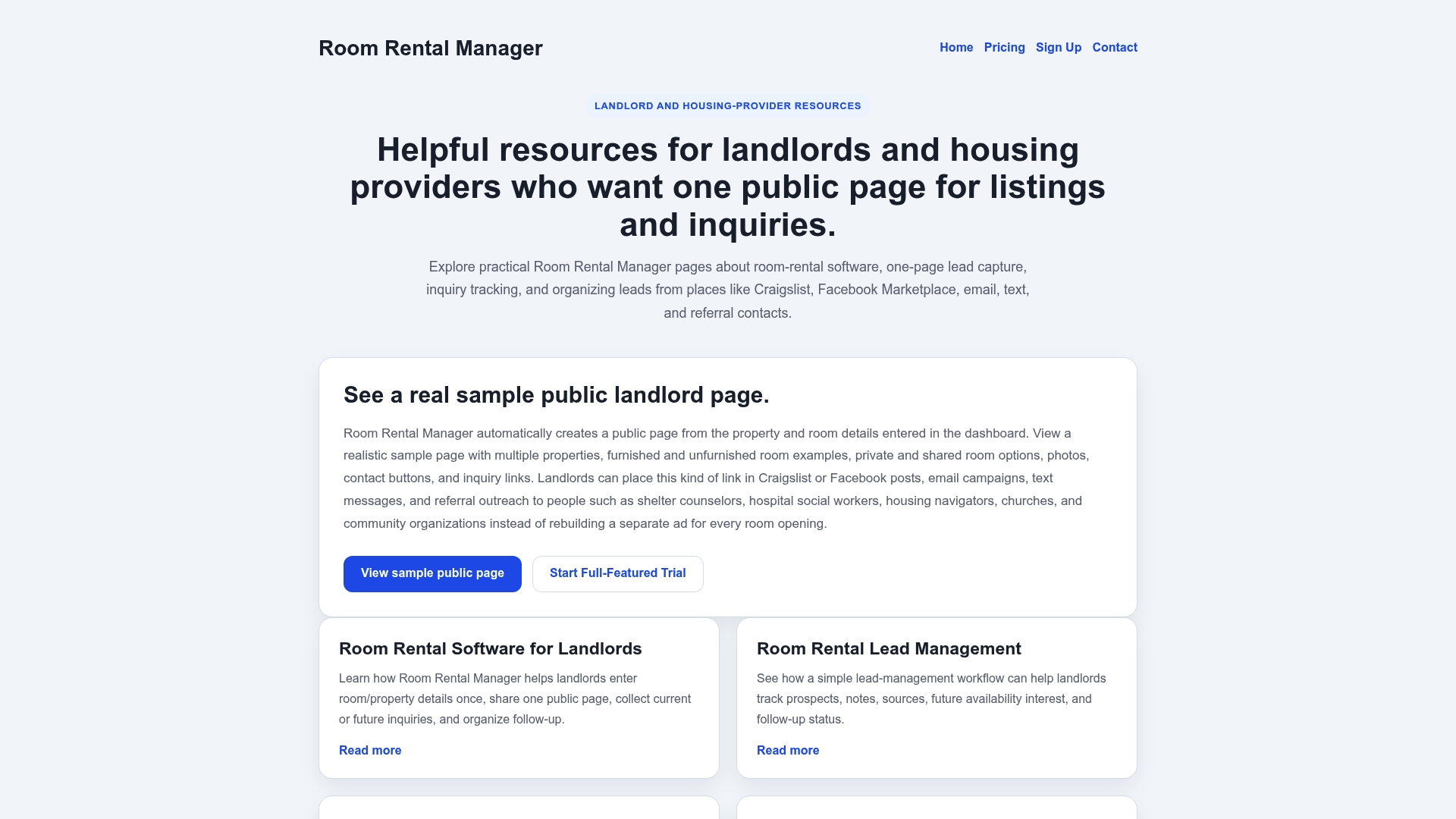
From that single dashboard, you can track lead sources, manage follow-up, and see exactly where each prospect stands in your pipeline. The rental property inquiry management tools inside Room Rental Manager are built for small landlords and shared housing operators who need organization without complexity. Whether you are managing a single shared house or a portfolio of room rentals, Room Rental Manager keeps your inquiries organized and your responses consistent. Visit Room Rental Manager to see how rental listing inquiry management works in practice.
FAQ
How fast should I respond to a rental inquiry?
Respond within 5 minutes of receiving an inquiry. Prospects contact multiple landlords simultaneously, and delayed replies cause significant conversion loss.
Can one person realistically handle multiple rental inquiries at once?
One person cannot handle simultaneous inbound calls or instant replies across multiple platforms without automation. AI leasing agents and automated response systems handle the volume; the landlord handles decisions.
What is the biggest cause of missed rental leads?
Workflow collision between maintenance requests and leasing inquiries is the primary cause of missed leads, not total inquiry volume. Separating the two into distinct pipelines solves most of the problem.
How do I reduce no-shows for property tours?
Automated reminders sent 24 hours and 2 hours before a scheduled tour reduce no-show rates by up to 40%. Self-serve scheduling also improves show rates because prospects choose a time that works for them.
Do I need expensive software to organize rental inquiries?
No. A centralized inquiry tracker with automated follow-up covers the core need for most small landlords. Tools like Room Rental Manager provide applicant follow-up and lead tracking without enterprise-level cost or complexity.