
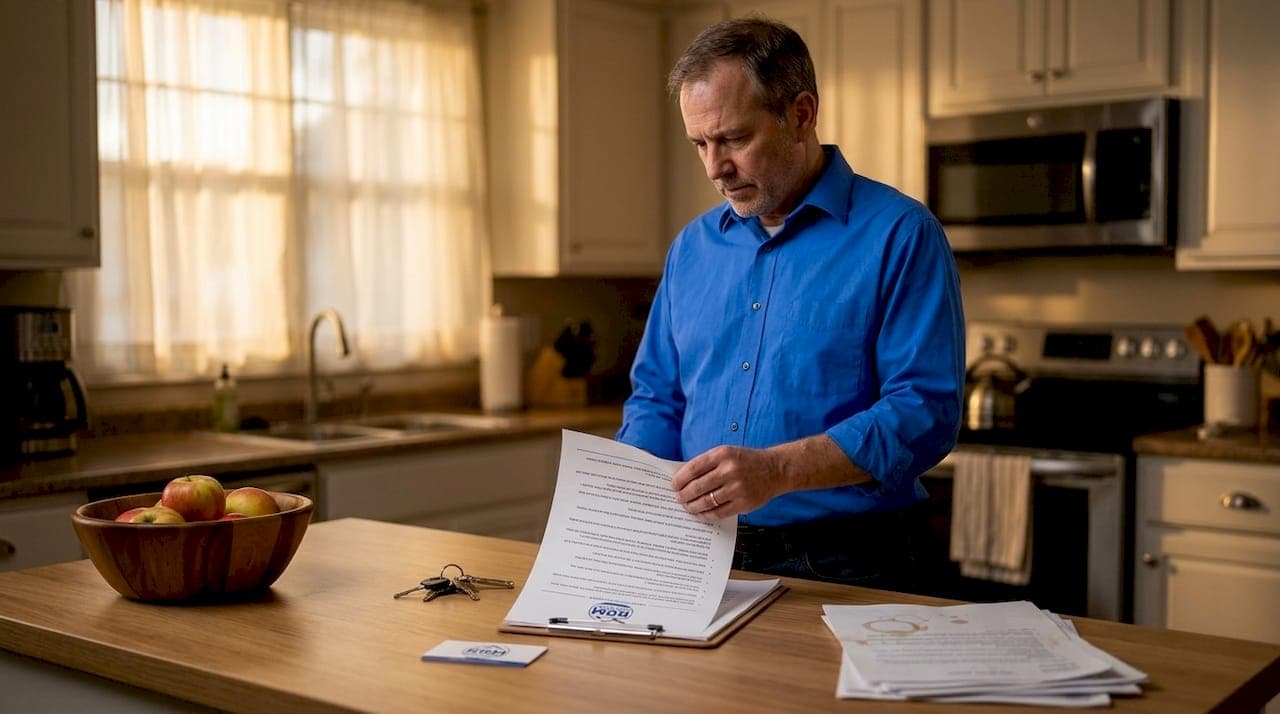
Running a shared rental without clear house rules is like managing a restaurant without a menu. Everyone has different expectations, and when those expectations clash, you end up with conflict, damaged property, and tenants who don't renew. Whether you manage one room or twenty, the rules you set from day one determine how smoothly your property runs, how quickly you resolve disputes, and whether tenants treat your investment with respect.
Table of Contents
- Key categories to include in your room rental house rules
- Detailed house rule examples for each category
- Comparison table: Summary of example house rules by category
- Mistakes to avoid and best practices when setting house rules
- Our take: Why clear, customized rules are the backbone of landlord success
- Streamline your rental: Tools and resources for easier house rule management
- Frequently asked questions
Key Takeaways
| Point | Details |
|---|---|
| Cover all categories | Address rent, utilities, noise, guests, cleaning, repairs, and subletting in your house rules. |
| Be clear and specific | Simple, direct rule statements prevent disputes and strengthen enforcement. |
| Document everything | Have tenants review and sign rules to ensure understanding and accountability. |
| Customize for your property | Adapt rule templates to suit your unique building, tenant mix, and local regulations. |
| Regularly review rules | Schedule periodic reviews and updates to keep house rules relevant and effective. |
Key categories to include in your room rental house rules
Now that we've recognized the risks of unclear rules, let's break down the main categories every landlord should address for a successful shared rental.
Every room rental situation is different, but the categories that cause the most friction are almost always the same. Rent and utilities, quiet hours, guest policies, cleaning responsibilities, maintenance reporting, and subletting rules are the six pillars of any solid house rules document. Miss even one, and you create a gray area that tenants will fill with their own interpretation, which rarely matches yours.
A well-structured house rules document does more than prevent arguments. It also protects you legally. When a tenant claims they didn't know overnight guests weren't allowed, or that they thought the landlord would handle all cleaning, a signed document with specific rules shuts that conversation down fast. House rules for shared housing also include concrete mechanisms and edge-case policies such as rent and utility splits, quiet hours with clear start and end times, guest and subletting permissions, and maintenance and repair procedures.
The categories to cover in your house rules document include:
- Rent and utilities: Payment due dates, accepted payment methods, late fees, and how costs are divided
- Quiet hours: Specific start and end times, noise level expectations, and rules for common areas
- Guest policy: How many guests are allowed, how long they can stay, and whether overnight guests require notice
- Cleaning responsibilities: Who cleans what, how often, and what "clean" actually means in shared spaces
- Repairs and maintenance: Who to contact, how quickly issues should be reported, and what tenants are responsible for
- Subletting: Whether subletting is allowed at all, and if so, what the approval process looks like
Landlords who cover all six categories consistently fill vacancies faster because serious renters trust landlords who communicate clearly from the start. You can also find sample house rules for shared rentals to see how other operators structure their documents.
Pro Tip: After presenting your house rules, require tenants to sign and date a copy. Keep one for your files and give them one for reference. This single step eliminates most "I didn't know" disputes before they start. You can explore comprehensive landlord resources to find templates and tools that make this process easier.
Detailed house rule examples for each category
With the categories defined, let's look at precisely how each rule might be phrased in a way that removes ambiguity and is easy to enforce.
Vague rules create vague behavior. Telling tenants to "be respectful" means nothing enforceable. Telling them that quiet hours begin at 10 pm and end at 7 am every day, including weekends, gives everyone a clear standard. Here are specific, ready-to-use rule statements for each major category.
Rent and utilities
- "Rent is due on the 1st of each month. A $50 late fee applies to any payment received after the 5th."
- "Utilities are split equally among all tenants. Each tenant's share will be calculated and invoiced by the landlord by the 3rd of each month."
- "Rent must be paid by bank transfer or certified check. Cash payments are not accepted."
Quiet hours
"Quiet hours are from 10 pm to 7 am every day, including weekends and holidays. During quiet hours, music, TV, and conversations must be kept at a volume that cannot be heard outside your room."
This kind of specificity matters. A rule that says "keep noise down at night" will be interpreted differently by every tenant in the building.
Guest policy
- "Tenants may have guests visit between 8 am and 11 pm. Overnight guests must be approved by the landlord at least 24 hours in advance."
- "No single guest may stay more than three consecutive nights or more than six nights per calendar month without written landlord approval."
- "Tenants are responsible for their guests' behavior and any damage caused during their visit."
Cleaning responsibilities
- "Each tenant is responsible for cleaning their own room and private bathroom weekly."
- "Shared spaces, including the kitchen, living room, and hallways, must be cleaned by all tenants on a rotating schedule posted on the refrigerator."
- "Dishes must be washed and put away within 24 hours of use. No dishes may be left in the sink overnight."
Repairs and maintenance
- "All maintenance issues must be reported to the landlord within 48 hours of discovery via text or email."
- "Tenants may not attempt repairs, modifications, or installations without prior written landlord approval."
- "Damage caused by tenant negligence will be deducted from the security deposit."
Subletting
- "Subletting any portion of the rental unit is strictly prohibited without prior written approval from the landlord."
- "Unauthorized subletting is grounds for immediate lease termination."
Using plain rule statements and documented agreements is one of the most effective ways to reduce disputes and protect yourself legally. Review rental management best practices regularly to keep your documents current with evolving tenant expectations.
Pro Tip: Frame rules in positive, action-focused language wherever possible. Instead of "No loud music after 10 pm," try "Please keep all audio at a level that cannot be heard outside your room after 10 pm." Positive framing reduces defensiveness and increases compliance without softening the rule itself.
One more tool worth using is lead management software that lets you share your house rules with prospective tenants before they even apply, which filters out renters who aren't a good fit early in the process.

Comparison table: Summary of example house rules by category
These detailed examples can seem overwhelming at first, but a side-by-side table makes it easier to visualize how a complete set of house rules comes together.
The table below gives you a quick-reference view of strong rule statements across every major category. Use it to audit your existing document or build a new one from scratch.
| Category | Example rule statement | Why it works |
|---|---|---|
| Rent payment | "Rent is due the 1st; $50 late fee after the 5th" | Specific date and consequence |
| Utility split | "Utilities split equally; invoiced by the 3rd" | Clear method and timeline |
| Quiet hours | "10 pm to 7 am daily, including weekends" | No ambiguity about timing |
| Guest visits | "Guests allowed 8 am to 11 pm; overnight needs 24-hour notice" | Defines both access and process |
| Guest duration | "Max 3 consecutive nights or 6 nights per month" | Prevents long-term unauthorized occupancy |
| Cleaning (private) | "Tenant cleans own room and bathroom weekly" | Individual accountability |
| Cleaning (shared) | "Rotating schedule posted in common area" | Shared responsibility with structure |
| Dishes | "Washed and put away within 24 hours" | Specific and enforceable |
| Maintenance | "Report issues within 48 hours via text or email" | Clear channel and timeline |
| Repairs | "No modifications without written approval" | Protects property from unauthorized changes |
| Subletting | "Prohibited without prior written landlord approval" | Legal protection, no gray area |
Example categories such as rent share and due dates, security deposit deductions, move-out cleaning expectations, quiet hours, guest limits, repairs and maintenance procedures, and subletting policies form the backbone of any enforceable house rules document.
Using a table like this also helps you spot gaps. If you look at your current house rules and can't fill in a row, that's a missing policy waiting to become a dispute. Explore rental management software that lets you store, update, and share your rules digitally so tenants always have access to the current version.
Mistakes to avoid and best practices when setting house rules
While examples are helpful, it's just as important to understand what not to do. Let's cover the most common mistakes and the best ways to ensure rules are effective.
Even landlords with good intentions make rule-setting errors that undermine their authority and lead to messy situations. Here are the five most common mistakes and how to avoid each one.
-
Using vague language. Words like "reasonable," "appropriate," and "timely" mean different things to different people. Replace them with specific numbers, times, and actions. "Timely" becomes "within 48 hours." "Reasonable noise" becomes "audio not audible outside your room."
-
Failing to document. Verbal agreements are almost impossible to enforce. Every rule, every exception, and every update must be in writing. Plain rule statements and documented agreements are your first line of defense when a dispute escalates.
-
Skipping tenant input. Rules that feel imposed without any input tend to generate resentment and passive resistance. When you're onboarding a new tenant, walk through the rules together and invite questions. You don't have to change anything, but the act of listening builds buy-in.
-
Inconsistent enforcement. If you let one tenant slide on quiet hours but penalize another, you've created a fairness problem that can spiral into bigger conflict. Apply rules consistently to everyone, every time.
-
Overlooking edge cases. What happens when a tenant's family member needs to stay for two weeks due to a medical emergency? What if a tenant wants to work from home and needs daytime quiet? Edge cases are inevitable. Address the most likely ones in your rules so you have a framework to reference when they come up.
"The most effective house rules are written clearly, distributed at move-in, signed by all tenants, and revisited annually. Landlords who treat rules as living documents rather than one-time paperwork see significantly fewer disputes over time."
Best practices for ongoing rule management include reviewing your house rules at every lease renewal, communicating any changes in writing at least 30 days in advance, and requiring a fresh signature whenever rules are updated. These habits protect you legally and signal to tenants that you run a professional operation.
Landlords who follow these practices also tend to see better listing results because their reputation for clear communication attracts higher-quality applicants. For ideas on building long-term tenant relationships, long-term rental strategies offer additional frameworks worth reviewing.
Our take: Why clear, customized rules are the backbone of landlord success
We've covered the practical and procedural sides. Now, let's step back for a candid perspective on why personalization and ongoing adjustment matter just as much as having great examples.
Templates are a starting point, not a finish line. We've seen landlords download a generic house rules document, hand it to tenants without reading it themselves, and then wonder why disputes keep happening. The problem isn't that they had rules. The problem is that the rules didn't reflect their actual property, their actual tenants, or their actual city.
A landlord managing four rooms in a college neighborhood needs different quiet hour rules than one managing two rooms in a suburban family home. A property with a shared laundry room needs specific laundry rules that a property with in-unit washers doesn't. Rules that don't match reality get ignored, and ignored rules are worse than no rules because they undermine your authority across the board.
The landlords we've seen succeed long-term are the ones who treat their house rules as a living document. They update it when something unexpected happens. They ask new tenants what questions they had during move-in and use those questions to fill gaps. They don't see a rule change as a failure. They see it as a sign that their system is working.
Tenant feedback is genuinely underrated here. Most landlords never ask tenants what parts of the house rules were confusing or felt unfair. The ones who do ask often discover small friction points they can fix easily, which dramatically improves the tenant relationship. Explore the landlord resource library to find tools that support this kind of ongoing, adaptive management approach.
Pro Tip: When you bring in a new tenant, pilot your current house rules for 30 days and then check in. Ask what felt unclear or hard to follow. You'll learn more from that one conversation than from months of guessing why small conflicts keep surfacing.
Streamline your rental: Tools and resources for easier house rule management
If you're ready to put these best practices into action, here are resources and tools that make the process seamless for landlords.
Managing house rules manually across texts, emails, and printed documents is a recipe for confusion. When a rule changes, you need to update every version, notify every tenant, and track who acknowledged the update. That's a lot of administrative work for a document that should be making your life easier, not harder.
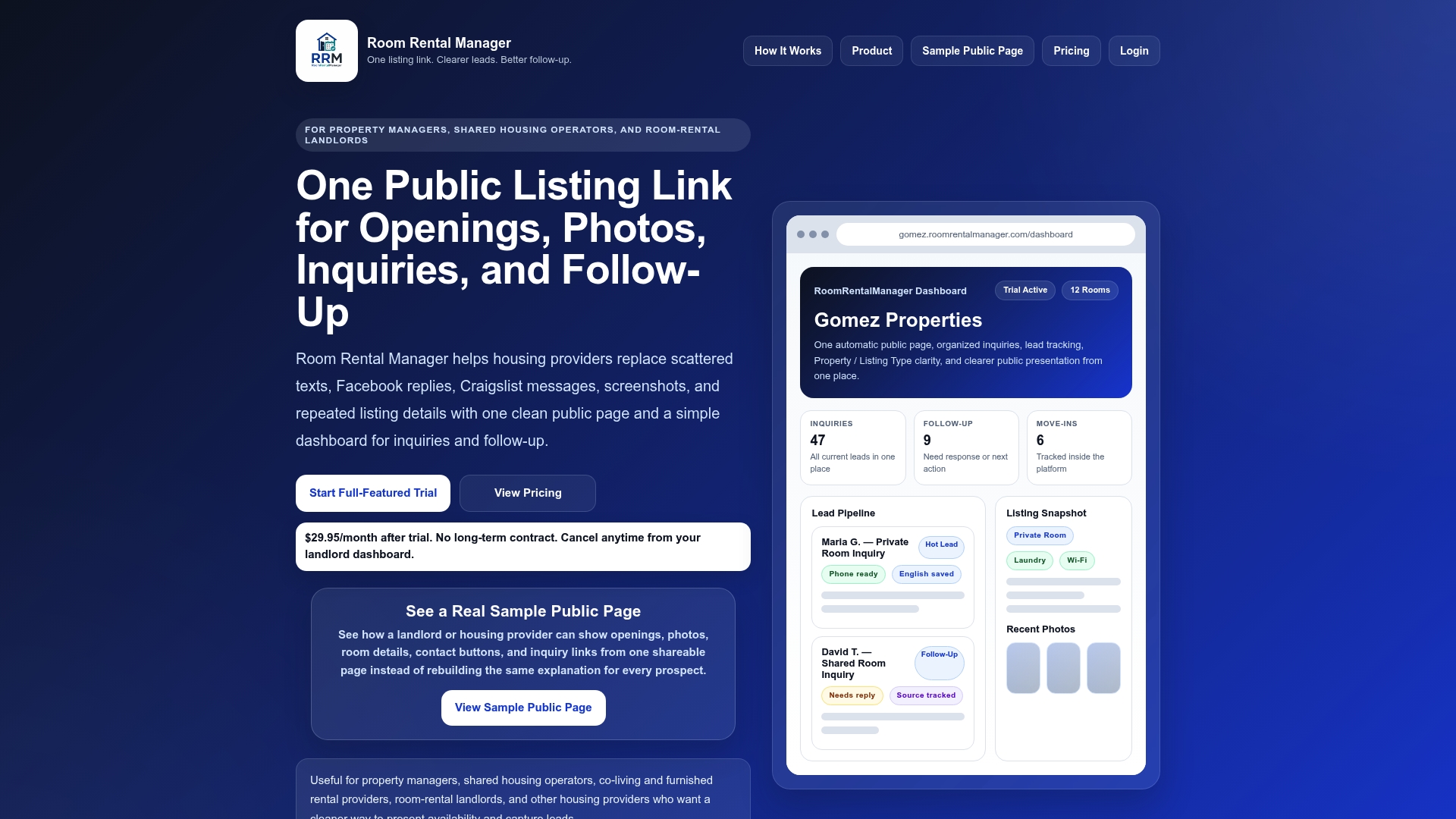
Room Rental Manager gives landlords one clean, centralized place to manage their rental information, including the details prospective tenants need to understand your property's expectations before they ever sign a lease. Instead of repeating the same information across multiple channels, you share one link. Tenants see your listing, your rules, and your contact options in one place. You track who's interested, follow up efficiently, and present your rental professionally from a simple dashboard.
Whether you're building your first house rules document or overhauling a system that isn't working, the landlord resources available through Room Rental Manager give you templates, tools, and frameworks built specifically for shared housing operators. And when you're ready to see how the full platform works, the software for room rental landlords is designed to reduce the administrative load so you can focus on running a better rental.
Frequently asked questions
What should be included in house rules for room rentals?
Include clear policies for rent splits, utility payments, quiet hours, guest and subletting permissions, cleaning responsibilities, and repair reporting procedures. House rules for shared housing should also cover edge-case policies such as maintenance procedures and who to contact for issues.
How do you fairly split rent and utilities in a shared rental?
Fair splits are often calculated by room size, amenities, or divided equally among all tenants. Always document the method in your house rules, and make sure all tenants agree in writing before move-in. Rent and utility splits are one of the most common sources of conflict in shared housing, so specificity here is critical.
What are common mistakes landlords make with house rules?
Landlords often use vague wording, fail to document rules in writing, or overlook tenant feedback, which results in disputes and weak enforcement. Plain rule statements and documented agreements are the most reliable way to prevent these problems.
How can landlords enforce house rules effectively?
Have tenants sign the rules at move-in, update documents as needed, and communicate infractions and changes clearly and promptly in writing. Consistent enforcement across all tenants is essential because selective enforcement creates fairness complaints that are harder to resolve than the original rule violation. Documented agreements give you the paper trail you need when enforcement becomes necessary.