

TL;DR:
- Landlords often make mistakes in pricing, screening, photos, and language that reduce tenant interest. These errors extend vacancy periods and increase costs by attracting unqualified applicants or violating fair housing laws. Regularly updating listings, setting clear criteria, and using honest photos help attract quality tenants efficiently.
Rental listing mistakes landlords make are specific errors in pricing, tenant screening, property presentation, and legal compliance that reduce tenant interest and extend vacancy periods. The most damaging errors are not always obvious. A listing can look complete on the surface while quietly repelling qualified applicants through vague screening criteria, misleading photos, or a single phrase that triggers a fair housing violation. This article covers the most common landlord advertising mistakes, explains why each one costs you money, and gives you practical fixes you can apply today.
1. Pricing the rental wrong from the start
Incorrect pricing is the single most damaging error in rental advertising. Underpricing attracts unqualified tenants and reduces your income, while overpricing pushes the vacancy period out further than necessary. Both outcomes hurt your bottom line.

Pricing works as a filter. A rent set too low draws applicants who may not meet income thresholds for higher-cost housing. A rent set too high simply goes unanswered. The goal is a price that reflects the local market and attracts applicants who can comfortably afford it.
Use comparable listings on Zillow, Apartments.com, or Facebook Marketplace to anchor your price. Pull at least five active listings within a one-mile radius with similar square footage, bedroom count, and amenities. Adjust up or down based on your unit's condition, included utilities, and parking.
- Check comparable listings every 30 days, not just at vacancy.
- Factor in seasonal demand. Spring and summer typically see stronger rental activity.
- Price to the market, not to your mortgage payment.
Pro Tip: If you receive more than 20 inquiries in the first 48 hours, your price is likely too low. If you receive fewer than 5 in the first week, it may be too high. Use inquiry volume as a real-time pricing signal.
2. Leaving screening criteria vague or unstated
Vague screening criteria is one of the most common landlord errors, and it wastes more time than almost any other listing mistake. When a listing does not state income requirements, credit expectations, or background check policies, every applicant assumes they qualify.
Clear screening criteria deters unqualified applicants immediately and saves significant administrative time. A simple statement like "gross monthly income must be at least 3x the monthly rent" filters out applicants who cannot meet the threshold before they ever contact you.
State your requirements directly in the listing body. Do not bury them in a separate document or wait until the showing to reveal them. Applicants who do not qualify will self-select out, and those who do will come prepared.
| Vague language | Clear language |
|---|---|
| "Good income required" | "Gross monthly income must be 3x rent" |
| "Clean background preferred" | "No felony convictions within 7 years" |
| "Good credit needed" | "Minimum credit score of 620 required" |
| "References required" | "Two verifiable landlord references required" |
- State income requirements as a specific multiplier of rent.
- List your minimum credit score threshold.
- Specify whether you run criminal background checks and what disqualifies an applicant.
- Note pet policies, including breed and weight restrictions if applicable.
Pro Tip: Link your listing to a tenant screening workflow so applicants can review requirements and submit information in one place. This cuts back-and-forth communication significantly.
3. Using low-quality or misleading photos
Poor-quality photos such as dark, cluttered, or low-resolution images reduce tenant interest before a single word of the listing is read. Photos are the first filter a prospective tenant applies. If the images look unprofessional, the listing gets skipped.
The opposite problem is equally damaging. Misleading descriptions and touched-up photos are increasingly classified as illegal misleading actions under updated consumer protection laws. Omitting visible defects or using wide-angle lenses to exaggerate room size can expose you to legal liability and destroy tenant trust the moment they walk through the door.
Good photos build trust and increase inquiries. Shoot during daylight hours, declutter every room, and photograph all major spaces including the kitchen, bathroom, bedroom, living area, and any outdoor space. Use a smartphone with a wide-angle lens or hire a real estate photographer for larger units.
"Effective rental marketing requires consistent, professional images across all platforms and truthful, updated descriptions to build trust and avoid tenant fall-throughs." — How To Write A Rental Listing That Attracts The Right Tenants
- Photograph every room, not just the best-looking ones.
- Show the actual condition of the unit, including any known wear.
- Use consistent lighting across all images.
- Update photos after any renovation or significant change.
Pro Tip: Post the same photo set across every platform you use. Inconsistent images across Zillow, Facebook Marketplace, and your own listing page create confusion and signal disorganization to serious applicants.
4. Writing unprofessional or off-putting descriptions
Listing tone signals landlord personality. Aggressive or all-caps listings repel high-quality tenants by signaling an overbearing landlord before any contact is made. A description written in all caps, filled with exclamation points, or loaded with warnings and threats tells applicants more about you than about the property.
Professional renters, the ones with stable income and good rental history, read listing language carefully. They are not just evaluating the unit. They are evaluating whether they want to enter a relationship with you as their landlord. A description that reads like a legal warning document or an angry notice sends them elsewhere.
Write descriptions in plain, factual language. Lead with the most important details: bedroom and bathroom count, square footage, rent, included utilities, and available date. Follow with amenities, neighborhood highlights, and proximity to transit or employment centers. End with your contact method and next steps.
- Avoid ALL CAPS for any reason.
- Do not use phrases like "serious inquiries only" or "no time wasters." These signal distrust.
- Proofread for typos. Errors in a listing suggest carelessness in property management.
- Keep sentences short and factual. Describe what is there, not what you hope tenants will feel.
The quality of your listing details directly affects the quality of leads you receive. Listings that are specific, honest, and professionally written attract applicants who read carefully and show up prepared.
5. Violating fair housing rules through listing language
Fair housing advertising violations often arise from subtle language patterns rather than overt discrimination. Phrases like "ideal for singles," "no kids," "great for young professionals," or "walk to church" can trigger legal complaints under the Fair Housing Act. None of these phrases describe the property. All of them describe a preferred tenant.
The rule is straightforward: describe the property, not the person you want to live in it. Stating "two-bedroom unit near downtown" is legal. Stating "perfect for a young couple" is not. The distinction matters because fair housing complaints carry significant financial and reputational consequences.
Audit your listing language before publishing. Remove any reference to the ideal tenant's age, family status, religion, national origin, race, sex, or disability. Replace subjective descriptions with objective property features.
Phrases to remove from your listings:
- "Ideal for singles" or "perfect for couples"
- "No kids" or "adults only" (unless the property qualifies as senior housing under federal law)
- "Walk to church" or "near mosque" (implies religious preference)
- "Great for students" or "professionals only"
- "Quiet neighborhood" (can be interpreted as a coded reference to race or national origin)
Replace them with:
- Square footage and room dimensions
- Proximity to specific transit lines, schools, or employment districts
- Included appliances and utilities
- Lease term and available move-in date
- Pet policy stated as a factual rule, not a preference
Avoiding discriminatory language protects you legally and keeps your listing focused on what actually matters to qualified applicants: the property itself.
6. Ignoring the impact of listing format and platform choice
A well-written listing posted on the wrong platform, or formatted poorly, reaches the wrong audience. Landlords who post only on Craigslist in 2026 miss a large share of the rental market that now searches on Zillow, Apartments.com, Facebook Marketplace, and dedicated room-rental platforms. Platform diversity is not optional for competitive markets.
Format matters as much as content. Listings with no paragraph breaks, no bullet points, and no clear structure are harder to read on mobile devices. Most rental searches happen on phones. A wall of text loses the reader before they reach your contact information.
Structure your listing with a clear header, a short description paragraph, a bulleted amenities list, and a direct call to action. This format works across platforms and makes your listing easier to scan. For landlords managing multiple rooms or shared housing units, a rental availability page consolidates all openings into one shareable link, which reduces the need to repost the same information repeatedly.
Pro Tip: Review your listing on a mobile device before publishing. If you have to pinch and scroll to read the key details, reformat it. Mobile readability directly affects how many inquiries you receive.
7. Failing to respond to inquiries quickly
Slow response times cause prospective tenants to lose interest and move on. Qualified renters, the ones with options, do not wait. They submit inquiries to multiple listings simultaneously and respond to whoever contacts them first. A 24-hour delay often means a lost applicant.
Speed builds trust. A fast, professional response signals that you are organized and responsive, which is exactly what a good tenant wants in a landlord. A slow or disorganized response signals the opposite.
Set a personal rule: respond to every inquiry within two to four hours during business hours. Use a consistent message template that confirms receipt, provides the next steps, and answers the most common questions upfront. Tools like Room Rental Manager's rental inquiry tracking let you see all incoming leads in one place so nothing falls through the cracks.
8. Treating the listing as a one-time task
Treating rental marketing as a one-time task rather than an ongoing system drives tenants away and extends vacancy periods. A listing posted once and left unchanged becomes stale. Platforms deprioritize old listings in search results. Prices drift out of alignment with the market. Photos become outdated after renovations or seasonal changes.
Active monitoring of pricing, platforms, and messaging keeps your listing competitive. Treat your rental listing the way a retailer treats a product page: refresh it regularly, test different descriptions, and update photos when the unit changes.
- Refresh your listing every two to three weeks to maintain platform visibility.
- Revisit pricing monthly against current comparable listings.
- Update photos after any renovation, deep clean, or seasonal change.
- Track which platforms generate the most inquiries and allocate your time accordingly.
Pro Tip: Keep a simple log of inquiry sources. If Facebook Marketplace generates three times more leads than Craigslist, shift your effort there. Data from your own listings is the most reliable guide you have.
The role of a rental listing in 2026 has expanded beyond a simple ad. It is now a landlord's first point of professional contact with prospective tenants. Listings that are not maintained signal neglect, and that signal reaches qualified applicants before you ever speak to them.
Key takeaways
The most costly rental listing mistakes landlords make are preventable errors in pricing, screening, presentation, and compliance that directly reduce tenant quality and increase vacancy time.
| Point | Details |
|---|---|
| Price as a filter | Set rent based on comparable listings to attract qualified applicants and avoid long vacancies. |
| State screening criteria clearly | Publish income, credit, and background requirements in the listing to filter unqualified applicants upfront. |
| Use honest, quality photos | Accurate, well-lit photos build trust and reduce fall-throughs at showing stage. |
| Audit for fair housing language | Remove any phrase that describes a preferred tenant type rather than a factual property feature. |
| Treat listings as ongoing | Refresh pricing, photos, and descriptions regularly to stay competitive and maintain platform visibility. |
What I have learned from watching landlords get their own listings wrong
The most consistent pattern I see is landlords who treat their listing as a formality rather than a sales document. They write it once, post it, and wait. When inquiries are slow or applicants are poor quality, they blame the market. The market is rarely the problem.
The listings that perform well share one trait: they are written for the applicant, not for the landlord. They answer the questions a qualified renter actually has. What is the rent? What are the requirements? What does the unit look like right now, not after a filter? What happens after I inquire? When those questions are answered clearly and honestly, the right applicants apply and the wrong ones do not.
The fair housing piece is where I see the most avoidable risk. Landlords do not intend to discriminate. They write phrases like "great for young professionals" because it sounds appealing. It is not appealing to a fair housing investigator. The fix is simple: describe the property, not the person. Every listing should pass a one-question test. Does this sentence describe a physical feature of the unit? If not, cut it.
The other thing I would push back on is the idea that a good listing is a one-time effort. The landlords who fill vacancies fastest are the ones who treat their listings like a live document. They check inquiry volume, adjust pricing, and update photos after every turnover. That discipline is not complicated. It just requires treating rental marketing as part of the job, not an afterthought.
— JAMES
How Room Rental Manager helps you avoid these listing errors
Landlords who manage inquiries through texts, emails, and scattered notes miss leads and lose qualified applicants to faster competitors. Room Rental Manager gives you one clean public listing page for your openings, photos, and contact options, so every applicant gets the same professional first impression.
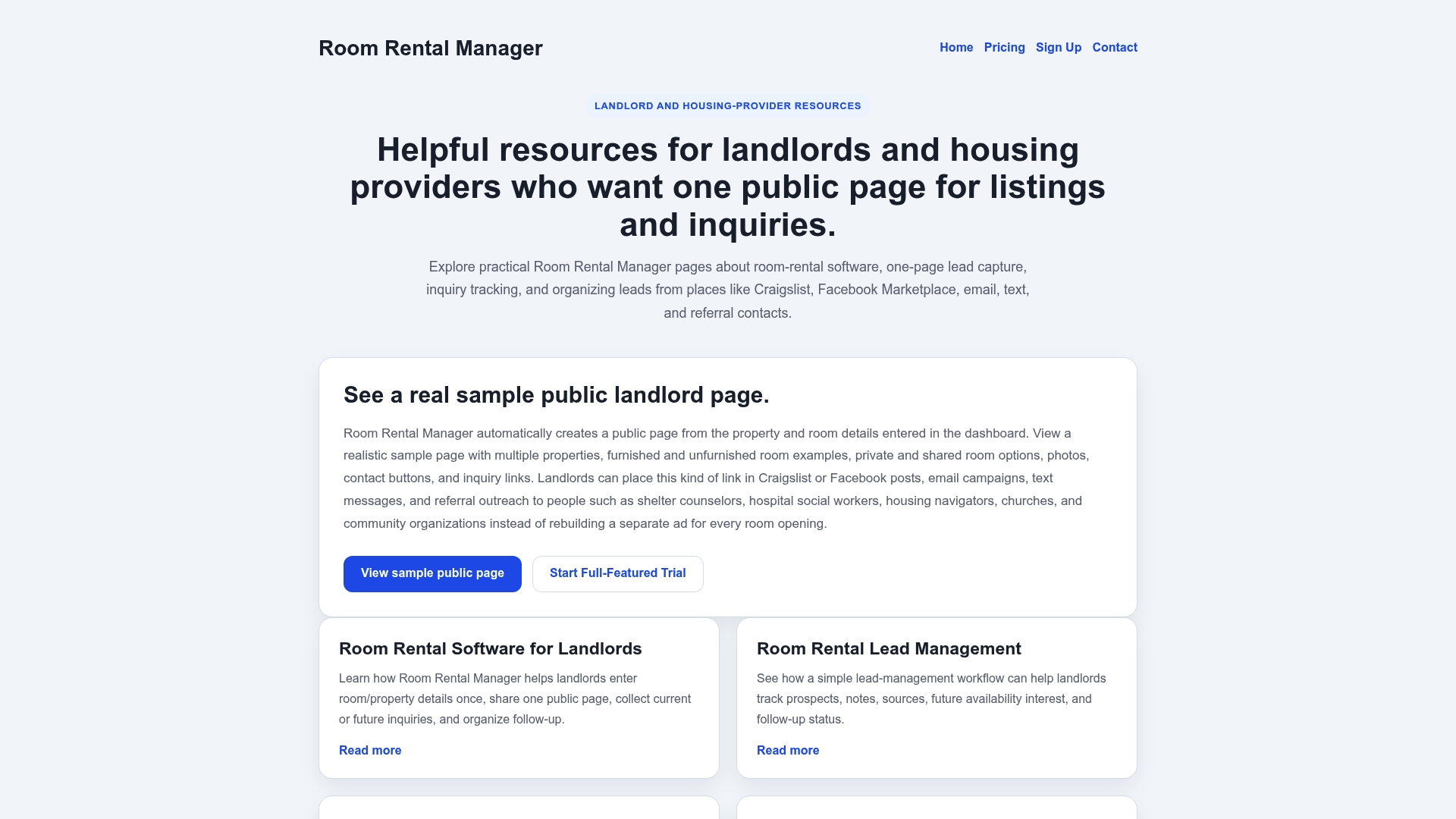
From there, rental listing inquiry management keeps every lead organized in one dashboard. You can track where inquiries come from, follow up without losing threads, and move applicants through your process with a structured rental application workflow. For landlords managing shared housing or multiple rooms, Room Rental Manager's small landlord rental management tools replace the copy-paste routine with a single shareable link that works across every platform you use.
FAQ
What are the most common rental listing mistakes landlords make?
The most common errors are incorrect pricing, vague screening criteria, low-quality or misleading photos, unprofessional listing language, and fair housing violations. Each one reduces the quality of applicants and extends vacancy time.
How do I avoid fair housing violations in my rental listing?
Describe only the physical features of the property and avoid any language that implies a preferred tenant type. Phrases like "ideal for singles" or "no kids" can trigger fair housing complaints even when no discrimination is intended.
Why does listing tone matter for attracting good tenants?
Aggressive or all-caps listings repel high-quality tenants by signaling an overbearing landlord. Professional renters evaluate the landlord's communication style as much as the property itself.
How often should I update my rental listing?
Refresh your listing every two to three weeks to maintain platform visibility, and revisit pricing monthly against current comparable listings. Stale listings rank lower in search results and signal neglect to prospective tenants.
What screening criteria should I include in a rental listing?
State your minimum income requirement as a multiplier of rent, your minimum credit score, your background check policy, and your pet policy. Clear screening criteria filter unqualified applicants before they contact you, saving time on both sides.