

TL;DR:
- A well-structured rental ad with specific facts and a clear call to action attracts serious tenants quickly.
- Tailor your description by platform, focus on transparency, and test different openings to improve inquiry rates.
A compelling room rental description is a concise, fact-based listing that gives serious tenants exactly what they need to decide quickly. Most landlords write inventory lists. The ones who fill vacancies faster write sales pitches grounded in specifics. This guide covers the key elements, phrasing techniques, and common mistakes to avoid when you write compelling room rental descriptions that attract qualified tenants and reduce time on market. Tools like Grammarly and the Hemingway App can sharpen your final draft, but the structure and facts you choose matter far more than polish.
What makes a compelling room rental description work?
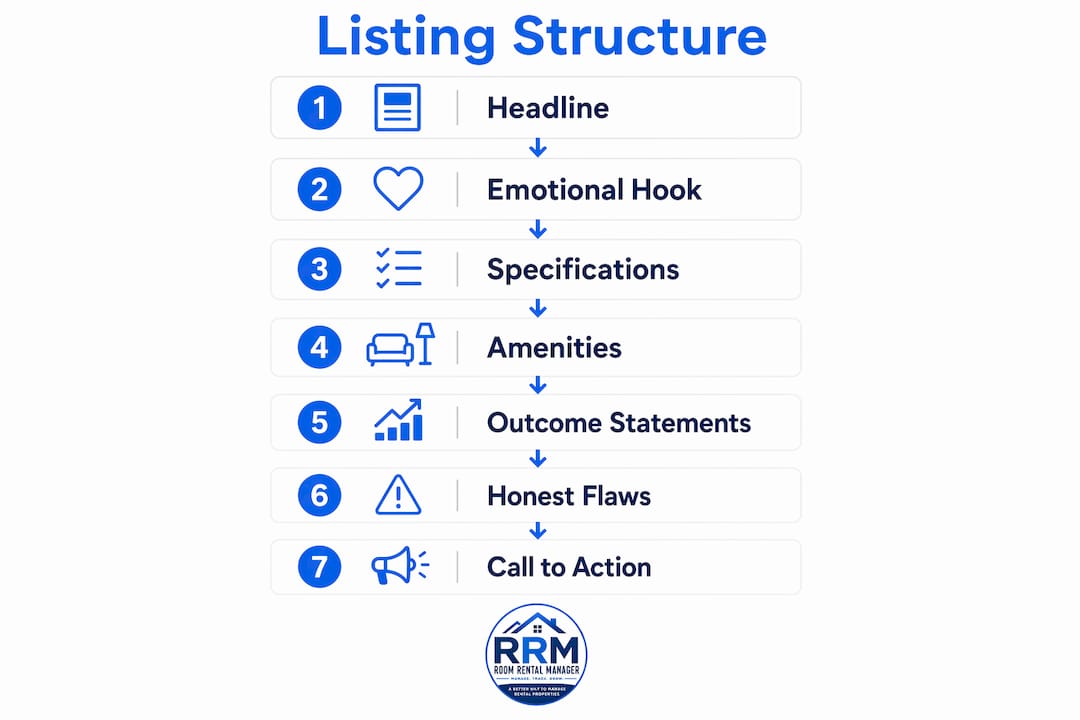
A structured rental listing format with a headline, emotional hook, specs, amenities, and a call to action increases inquiries by 30% compared to unstructured descriptions. That number reflects a simple truth: tenants scan listings fast, and a clear structure keeps them reading. The ideal description length sits between 150 and 300 words. Longer does not mean better.

Front-loading price, bed and bath count, and location in the headline and first two lines lifts click-through rates by approximately 15%. Tenants filter by budget and location before anything else. If those facts are buried in paragraph three, many qualified renters never reach them.
Replacing vague adjectives with checkable facts builds tenant trust and speeds decision-making. "5-minute walk to the 14th Street subway station" is more persuasive than "close to public transport." The first claim is verifiable. The second is noise.
Key elements to include in your rental listing
Every effective rental listing follows a predictable structure. Tenants expect it, and search platforms reward it.
The seven-part structure
- Headline — Include price, bedroom count, and neighborhood. Example: "$950/mo Private Room in Capitol Hill, Seattle — Available Now."
- Opening hook — One or two sentences that paint a picture of the experience. Sensory-focused openings convert 60% better than standard amenity lists.
- Room specs — Square footage, bed size, closet space, natural light, and floor level.
- Amenities — List only what is included. Wi-Fi, parking, laundry, kitchen access, and utilities deserve their own line.
- Location details — Name the nearest transit stop, grocery store, or landmark. Specifics beat generalities every time.
- House rules — Pets, smoking, guests, and quiet hours. State these plainly.
- Call to action — Tell the tenant exactly what to do next. "Text or email to schedule a showing this week" outperforms "contact me for more info."
The call to action deserves more attention than most landlords give it. Closing with authentic, gentle urgency referencing peak booking lead times of 45–60 days improves inquiry timeliness without feeling pushy. A phrase like "rooms typically rent within two weeks of listing" is honest and motivating.
Pro Tip: Write your amenities as a bullet list, not a paragraph. Bullets are faster to scan and reduce the chance a tenant misses a detail that matters to them.
The most overlooked element is the opening hook. Most landlords open with "Large room available in shared house." That sentence answers nothing a tenant cares about emotionally. Try "Wake up to morning light in a quiet, tree-lined block two blocks from Prospect Park" instead. The facts are still there. The feeling is what makes someone click.
How to write the description: style, phrasing, and mistakes to avoid
The AIDA framework, which stands for Attention, Interest, Desire, and Action, applied to rental listings produces measurably higher engagement. Attention comes from the headline. Interest builds through specific room details. Desire forms when the tenant pictures their life in the space. Action follows a clear, direct CTA.
Common mistakes that kill inquiry rates
- Generic hype phrases. "Cozy," "charming," and "must-see" signal nothing. Every landlord uses them. Replace each one with a fact.
- Feature dumps without context. Listing 20 amenities in a row exhausts the reader. Group related items and lead with the two or three that matter most to your target tenant.
- Hiding trade-offs. Transparency about noise, stairs, or a smaller room size reduces tenant fall-throughs and complaints. Tenants who know the trade-offs upfront are far less likely to back out after viewing.
- No clear next step. Ending with "feel free to reach out" is passive. Tell tenants exactly how to contact you and when you are available.
- Overselling the location. "Minutes from everything" means nothing. "Four blocks from the Red Line Davis stop" means something.
Concise, information-dense listings around 200 words outperform longer adjective-heavy descriptions by reducing reading drop-off and increasing quality inquiries. More words create more chances to lose the reader. Every sentence should earn its place.
Pro Tip: Write three different opening lines for the same listing and read them aloud. Testing several opening lines to find the most emotionally resonant hook dramatically increases conversions. The one that sounds most natural is usually the one that performs best.
One counterintuitive move that works: mention one honest flaw. "The room is on the smaller side at 120 square feet, but the oversized closet and private bathroom make it feel much larger." That sentence builds more trust than a description that reads like a brochure. Tenants who respond after reading it are already pre-qualified for the trade-off.
You can find strong rental description examples that show this approach in practice across different room types and price points.
How to tailor your description for different platforms and tenants
Platform-specific adjustment of description length and terminology helps target distinct tenant groups and improves listing performance on each channel. A Craigslist post and a Zillow listing serve different audiences and need different approaches.
Platform adjustments at a glance
| Platform | Ideal length | Tone | Key focus |
|---|---|---|---|
| Craigslist | 150–200 words | Direct, no-frills | Price, availability, house rules |
| Zillow / Apartments.com | 200–300 words | Professional, detailed | Specs, amenities, location |
| Facebook Marketplace | 100–150 words | Conversational | Photos, quick facts, CTA |
| Airbnb / short-term | 250–300 words | Experiential | Lifestyle, sensory details, local tips |
| Furnished Finder | 200–250 words | Functional | Furnishings, utilities, lease terms |
Short-term tenants respond to lifestyle language. Long-term tenants want specifics about utilities, lease terms, and house rules. Adjust your hook accordingly. For a travel nurse on Furnished Finder, open with "All utilities included, fast Wi-Fi, and a dedicated workspace." For a young professional on Zillow, open with the neighborhood and commute time.
Avoiding discriminatory language is not optional. The Fair Housing Act prohibits statements that express preference for or against tenants based on race, color, religion, sex, national origin, disability, or familial status. Phrases like "perfect for young professionals" or "ideal for a single person" cross that line. Describe the property, not the preferred tenant.
Local SEO specifics also matter. Naming the neighborhood, a nearby landmark, or a transit line helps your listing appear in searches like "room for rent near downtown Austin" or "furnished room Capitol Hill Seattle." Generic location language like "great area" does nothing for search visibility.
- Use the neighborhood name in the headline and again in the body.
- Name the nearest transit stop, not just "public transit nearby."
- Include the zip code in listings that allow it.
- For furnished rentals, check out furnished rental description examples that use location specifics effectively.
What tools actually help you write better rental ads?
The right tools reduce the time it takes to write, edit, and post a listing without sacrificing quality.
Writing and editing tools
| Tool | Best for | Cost |
|---|---|---|
| Grammarly | Grammar, clarity, tone checks | Free / paid plans |
| Hemingway App | Sentence length and readability | Free online |
| Google Docs | Drafting and sharing with co-managers | Free |
| Room Rental Manager | Listing management, inquiry tracking, lead follow-up | Paid |
Grammarly catches grammar errors and flags passive voice. The Hemingway App highlights sentences that are too long or hard to read. Both tools take less than five minutes to run on a 200-word description. That five minutes pays off when your listing reads more clearly than the competing post two doors down.
Room Rental Manager goes further than editing. It gives landlords one clean public listing page that combines photos, room details, contact options, and an inquiry form. Instead of answering the same questions across texts, emails, and Facebook messages, you share one link. The platform also tracks rental inquiry sources so you know which platforms are sending the most leads.
Pro Tip: After posting, track how many inquiries you receive in the first 72 hours. If the number is low, rewrite the opening hook first. The headline and first two lines drive the majority of clicks.
Photos and virtual tours work alongside your text, not instead of it. A great description with weak photos still loses to a mediocre description with bright, clean images. Stage the room before shooting: remove clutter, open blinds for natural light, and photograph from the corner of the room to show depth. The AIDA framework applied to listings treats Instagram-ready visuals as part of the emotional connection that drives bookings.
For a deeper look at what details drive quality leads, the landlord's guide to quality leads covers listing structure and tenant filtering in more detail.
Key Takeaways
A compelling room rental description combines a structured format, specific facts, and a direct call to action to attract qualified tenants and reduce vacancy time.
| Point | Details |
|---|---|
| Structure drives results | Use a seven-part format: headline, hook, specs, amenities, location, rules, and CTA. |
| Front-load critical info | Place price, bed count, and location in the headline and first two lines to lift click-through rates. |
| Replace adjectives with facts | "5-minute walk to Davis Red Line stop" outperforms "close to transit" every time. |
| Disclose trade-offs honestly | Naming one real flaw filters out poor-fit tenants and builds trust with serious ones. |
| Match platform and tenant type | Adjust length, tone, and focus for Craigslist, Zillow, Airbnb, and Furnished Finder separately. |
What I've learned writing rental descriptions that actually fill rooms
Most landlords treat the listing description as an afterthought. They write it in five minutes after taking photos, post it everywhere, and wonder why they get low-quality inquiries or none at all. I've seen this pattern repeatedly, and the fix is almost always the same: the description is either too vague or too long.
The single biggest shift I've seen landlords make is moving from feature lists to outcome statements. "Private bathroom" is a feature. "You won't share a bathroom with anyone" is an outcome. Tenants respond to outcomes because they are already imagining living in the space. Your job is to make that imagination easier, not harder.
Transparency is the other thing most landlords resist. They worry that mentioning a small room or a noisy street will scare tenants away. The opposite is true. The tenants who respond after reading an honest description are already pre-qualified. They know what they are signing up for. That means fewer no-shows, fewer complaints after move-in, and longer tenancies. Hiding flaws does not reduce vacancy. It just delays problems.
The last thing I would tell any landlord is to test your opening line. Write two or three versions and ask someone outside the rental business to read them cold. The one that makes them say "that sounds nice" is the one to use. Your instinct about your own property is almost always wrong because you already know the space. The reader does not.
— JAMES
How Room Rental Manager helps you manage listings and inquiries
Writing a great description is only half the work. The other half is managing the inquiries that come in without losing track of serious tenants.
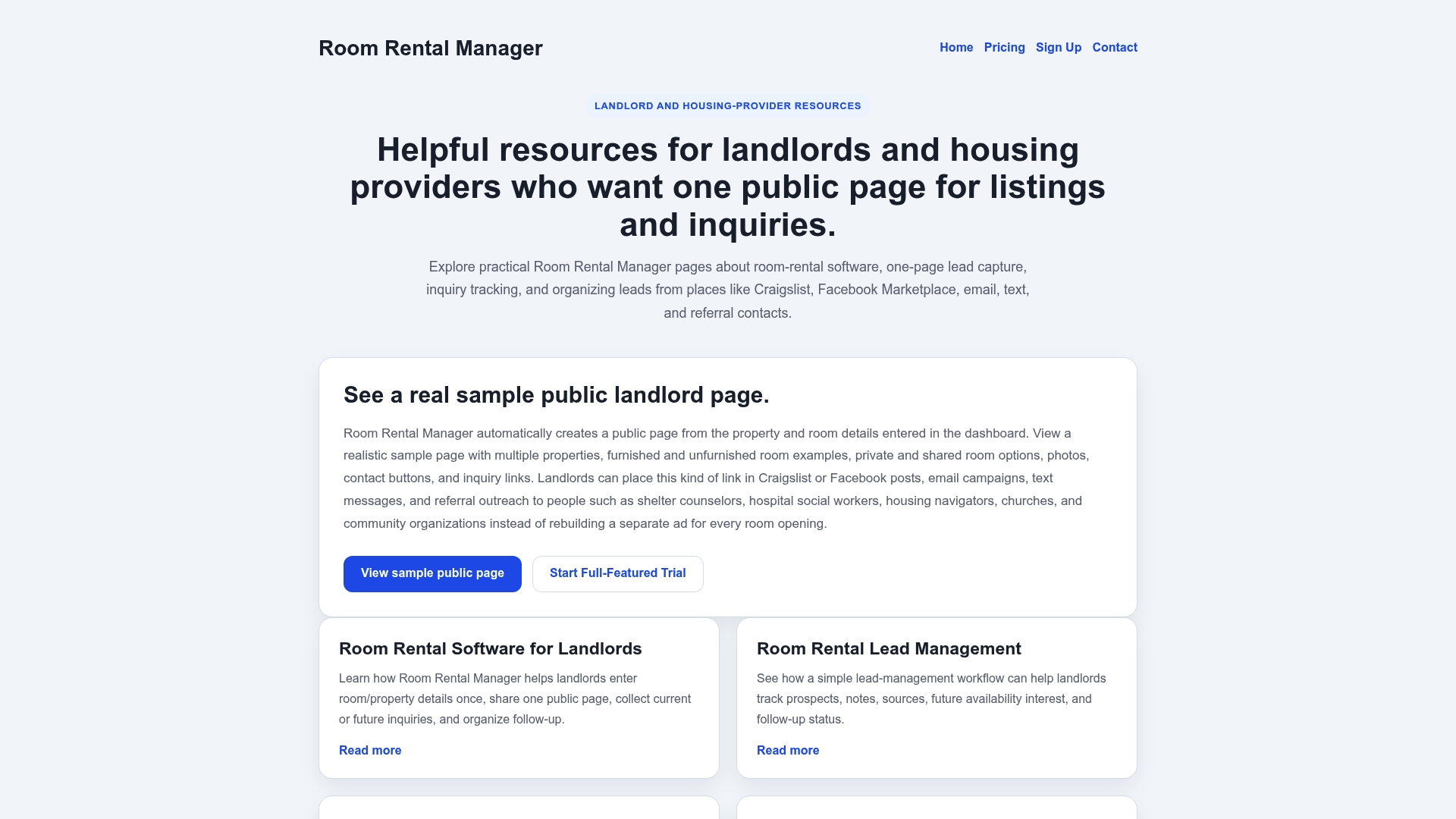
Room Rental Manager gives landlords one clean public listing page that holds your photos, room details, pricing, and contact form in one place. Share a single link instead of retyping details across Craigslist, Facebook, and text messages. The platform tracks where each inquiry comes from, so you know which platforms are worth your time. You can manage applicant follow-up and keep every lead organized from one dashboard. For landlords renting multiple rooms, the rent by the room software handles listings and inquiries across all your units without the spreadsheet chaos.
FAQ
What is the ideal length for a room rental description?
The ideal length is 150–300 words. Listings around 200 words that prioritize specific facts over adjectives generate the highest quality inquiries.
How do I write a rental description that attracts serious tenants?
Front-load price, location, and bed count in the headline, use checkable facts instead of vague adjectives, and disclose any trade-offs honestly. Serious tenants self-select when the listing is specific and transparent.
Should I use the same description on every platform?
No. Adjust length, tone, and focus for each platform. Craigslist works best with short, direct copy. Zillow and Apartments.com reward more detail. Airbnb and short-term platforms respond to lifestyle and sensory language.
What is the AIDA framework and how does it apply to rental listings?
AIDA stands for Attention, Interest, Desire, and Action. Applied to rentals, the headline grabs attention, room details build interest, lifestyle language creates desire, and a clear CTA drives the inquiry.
How do I avoid Fair Housing Act violations in my listing?
Describe the property, not the preferred tenant. Avoid phrases that express preference based on race, sex, religion, national origin, disability, or familial status. Stick to facts about the room, amenities, and lease terms.